
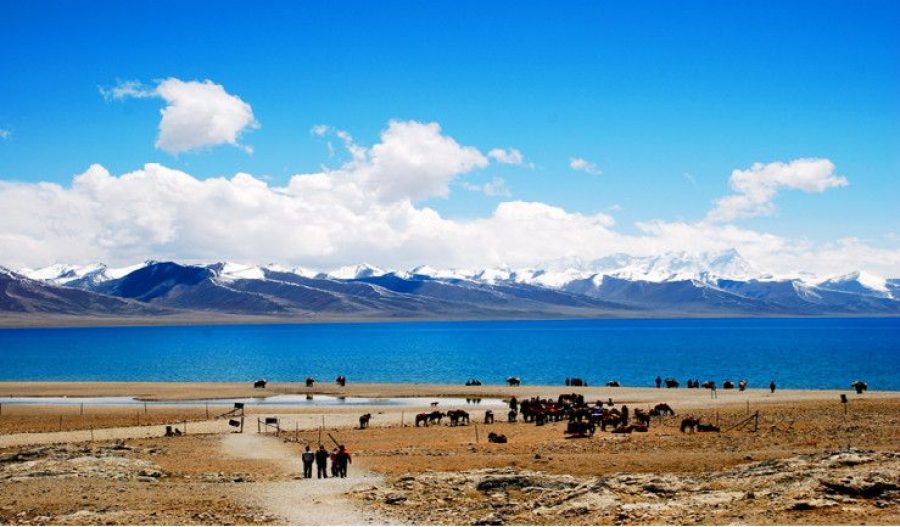
With sheer serenity, its awe inspiring beauty is the ultimate pursuit of travelers around the world. In Tibetan, Namtso literally means “the heavenly lake”.
[vc_row][vc_column width=”1/4″][vc_separator color=”black” border_width=”10″][vc_custom_heading text=”China”][vc_separator color=”black” border_width=”2″][vc_widget_sidebar sidebar_id=”sidebar-page”][/vc_column][vc_column width=”3/4″][vc_column_text]
With sheer serenity, its awe inspiring beauty is the ultimate pursuit of travelers around the world. In Tibetan, Namtso literally means “the heavenly lake”. It is one of the three saint lakes of Tibet, covered with a veiling of mystery and pure sanctity. Vast grassland spreads around the lake and contributes to the Namtso Lake looks more charming together with the bright blue sky and white clouds. The lake is nestled in a county of Lhasa. It is the biggest salt lake of Tibet and the second biggest of China.
The formation of the lake is due to the activities of Himalaya Mountain and the glaciers. Nowadays, the surface of the lake is sinking and there are various ancient lines of the lake surface in the past, with the highest one about 80 meters off the current lake surface. In the north, there are continuous hills and in the south situated the major peak of Tanggula Mountains, which has an altitude of 7111 meters. The lake occupies a vast territory about 1900 square kilometers, with the deepest point about 33 meters. The water of Namtso Lake comes from the melted ice of the Tanggula Mountains and numerous streams around the lake..
Moreover, the lake has abundant variety of creatures.The water is very clean, transparent and appears sky blue. Namtso is crowned as the head of the three saint lakes in Tibet and a famous pilgrimage place for Tibetan Buddhism. There is Zaxi Temple on the Zaxi Island which is located in the center of the lake. It is the place pilgrim must worship.
Subscribe to the latest edition now by clicking here.
If you would like to comment on this story or anything else you have seen on World Travel Magazine, head over to our Facebook page or message us on Twitter.
And if you liked this story, subscribe to our bi-monthly World Travel Magazine, a handpicked selection of editorial features and stories from Global Destinations, Inspire Me, Insider, Style File, Wellness & Travel, City Travel, Suite Life, At Leisure, Short Breaks and much more.
[/vc_column_text][/vc_column][/vc_row]