If cities had a gender (masculine/feminine), Saigon would be feminine (‘elle’ or ‘she’) and Hanoi would be rather masculine (‘il’ or ‘he’).
[vc_row][vc_column width=”1/4″][vc_separator color=”black” border_width=”10″][vc_custom_heading text=”Hanoi”][vc_separator color=”black” border_width=”2″][vc_widget_sidebar sidebar_id=”sidebar-page”][/vc_column][vc_column width=”3/4″][vc_column_text]
If cities had a gender (masculine/feminine), Saigon would be feminine (‘elle’ or ‘she’) and Hanoi would be rather masculine (‘il’ or ‘he’). Hanoi, Vietnam’s administrative capital could be pictured as a grumpy old man with the conservative seat of the government and tired teachers with foggy glasses in the city renowned for learning and keeping traditions. Ho Chi Minh City (HCMC), formerly named Saigon until 1976, is a racier younger lady. A very elegant one, located some 1,100 kilometres away from her ‘husband’.
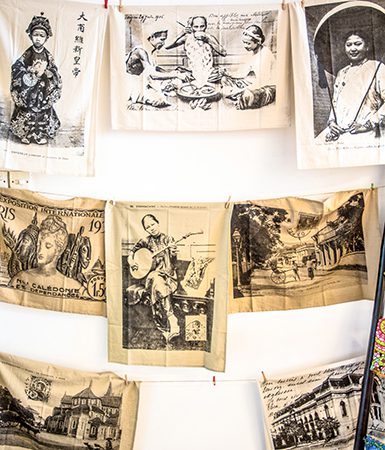
Vintage photos printed on fabric displayed at Saigon Kitch
Vietnam has opened up significantly following the Doi Moi policy and economy reforms since 1986, followed by its entry into the World Trade Organization in January 2007. After years of trade, embargoes and marginalisation, the country is reconnecting to the world, thanks in large part to an increased access to the internet. Saigon is nurturing a creative, free-thinking young generation which has designs for its future, while Viet Keu (Vietnamese who lived overseas), are returning, bringing with them money, ideas and skills much needed in the new economy.
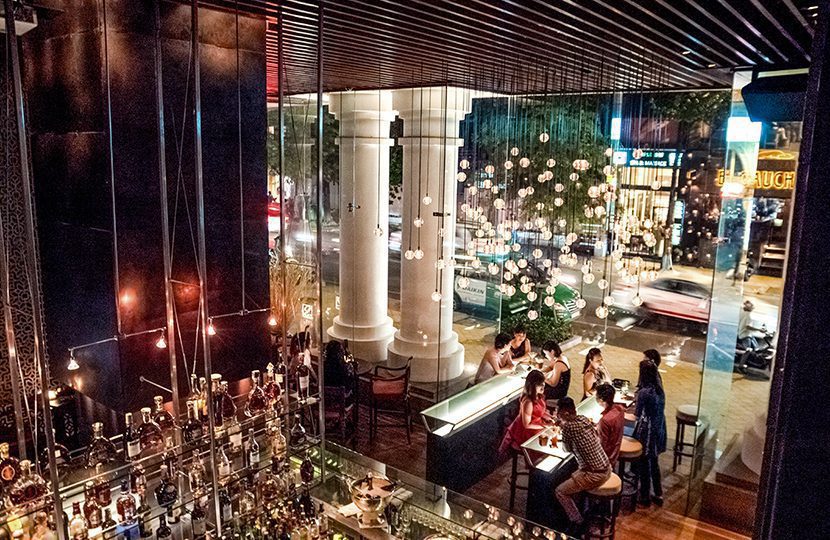
The largest city in Vietnam, Saigon is a thriving ‘lady’, bursting with energy and has much to offer with something new popping up every month: bars and craft beer houses, industrial style or well-hidden galleries, hipster hostels and renovated luxury hotels. After a smooth luxury Mercedes car transfer from the airport, head to District 1, the obvious choice for its central location and stylish boutiques lining Dong Khoi Street. Check in at Park Hyatt Saigon, a colonial-style hotel, an elegant French ‘lady’. A sanctuary of peace in the middle of frenzy dynamic Saigon, more like a ‘home away from home’. After the completion of extensive renovations during the summer of 2015, Park Hyatt reopened with a fresh new look to redefine its personalised, urban luxury experience. While the hotel maintained the signature French-colonial feel, a palette of white and ivory had brightened the public areas and elegant Park Lounge. Numerous crystal chandeliers have been added, reflecting the sunlight that streams in through the ceiling-height windows. The hotel’s 245 rooms and suites have been completely renovated, refreshed with lighter tones, handcrafted furniture, Vietnamese textiles and local artwork. Technological upgrades include in-room iPads; Nespresso machines; and a sensor lighting system. The Park Lounge is the rendezvous place to meet and connect discerning travellers with the local Vietnamese haute-society. saigon.park.hyatt.com
Subscribe to the latest edition now by clicking here.
If you would like to comment on this story or anything else you have seen on World Travel Magazine, head over to our Facebook page or message us on Twitter.
And if you liked this story, subscribe to our bi-monthly World Travel Magazine, a handpicked selection of editorial features and stories from Global Destinations, Inspire Me, Insider, Style File, Wellness & Travel, City Travel, Suite Life, At Leisure, Short Breaks and much more.
[/vc_column_text][/vc_column][/vc_row]