|
Listen To Article
|
Here is a confession: right up until the moment you slid off the side of that small boat, you were looking for a reason not to.
You had flown across most of a planet to get here — to Vava’u, a scatter of green islands in the north of Tonga, where the South Pacific goes a blue so clean it looks invented — and now, with the water actually beneath you, some ancient and sensible part of your brain was filing an urgent complaint. It had questions. It wanted to know, for instance, what you were doing at the edge of an ocean whose floor you could not see, preparing to swim toward an animal longer than the boat you’d arrived on. The blue went down and down beneath the hull and did not stop. That was the thing that undid you at first — not the whales, but the depth. The sheer unlit fact of it. The way the sea holds so much of itself back.
They only let four of you in the water at a time. You have a licensed guide, and you go when she says go, and you do not — ever — dive down toward them. You stay at the surface. The whale decides. If it wants to leave, it leaves, and you watch forty tons of muscle fold back into the dark and you let it. The rules are strict and they should be, and somewhere in the briefing you understood that the entire encounter is built on one radical premise: you are not in charge here. You are a guest of something that was singing in these waters ten million years before your species learned to be afraid of anything.
The season opens in mid-July and runs to October — these warm months when the humpbacks come to Vava’u to calve and to rest, mothers and their new babies in the shallows between the islands. You had come at the very start of it. And so you spent the morning the way everyone does: scanning the horizon, half-hoping, until the guide said there, quiet as a held breath, and pointed at a soft white smudge rising off the water a kilometre out. A blow. A whale exhaling. Your heart did something complicated.
She cut the engine. She read the water the way you’d read a face. And then, so gently it barely registered as an instruction: slip in. No splash. Stay together. Wait.
View this post on Instagram
The complaint in your brain got very loud, right up until you put your face in the water. And then it stopped.
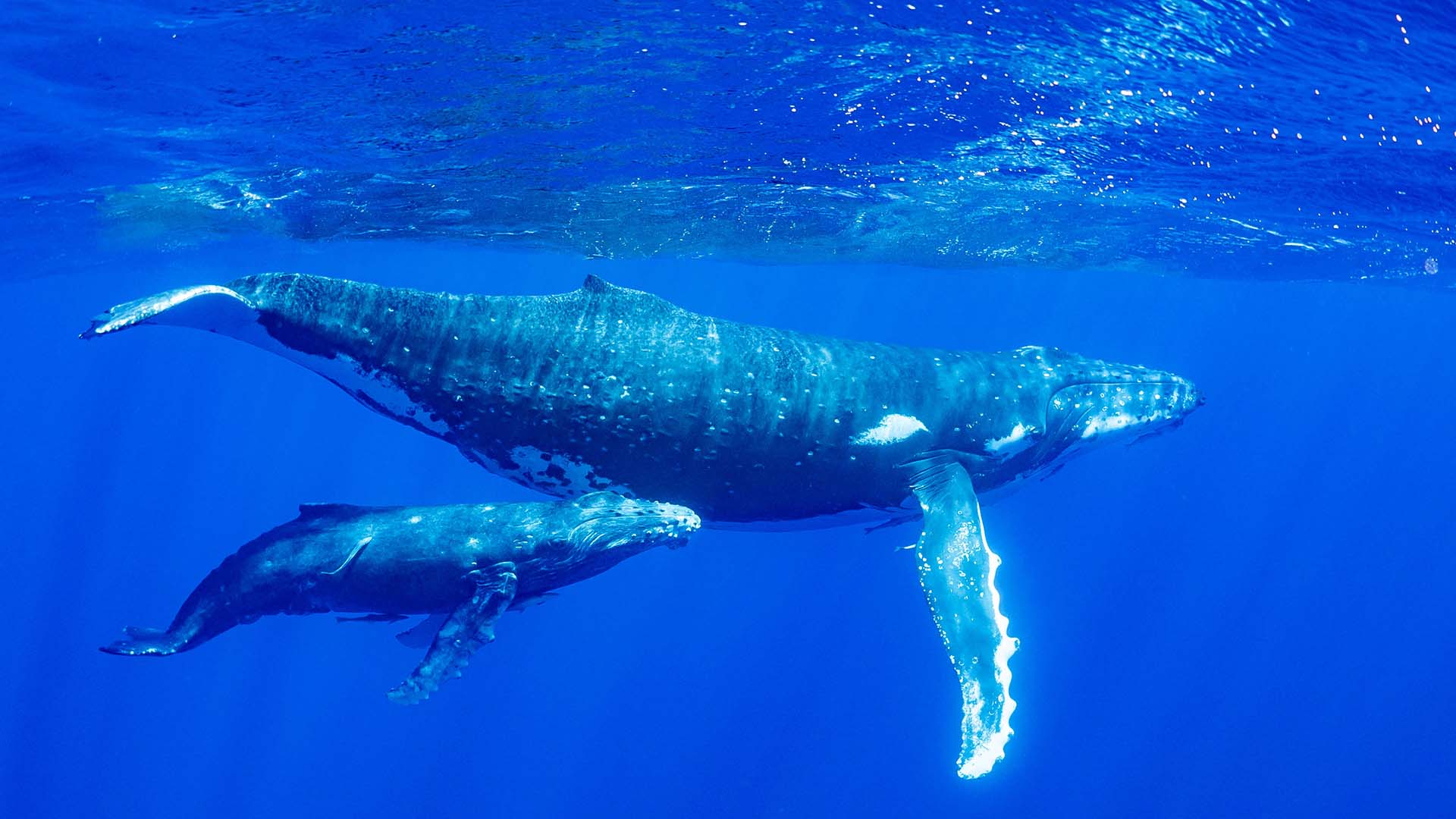
Because rising through the blue below you, unhurried, enormous, came a shape. Then two. A mother humpback and her calf, lifting toward the surface like the ocean was handing them up to you. You had braced for something monstrous. What arrived instead was the gentlest thing you have ever seen move. The calf came first — curious, clumsy, close, all that unearned trust — turning to look at you the way small creatures look at everything, as though the world were a room it had just been let into. And behind it, holding still in the deeper blue, the mother. Watching. Letting her baby come near you. Trusting you, a stranger dropped from the surface, with the only thing she had.
And then the mother’s eye met yours.
You have no words for what passed between you, and you have stopped trying to find them, because the ones you reach for are all too small. It was not a human look. That is exactly why it undid you. It was older than human, patient in a way nothing on land is patient, and it held you — not the way a camera holds a subject, but the way a room holds you when no one in it needs you to be anything at all. She saw you. She was not afraid. And the fear you had carried across an entire planet simply dissolved, the way salt dissolves, completely and without a trace, into water that was suddenly not empty at all.
That was the thing you’d gotten wrong. You had thought the depth was a void. It was full. It had been full the whole time.
You surfaced with tears in your mask, which is a ridiculous and specific problem, and a laugh you could not explain rising up out of you in bubbles, and the guide grinning because she has seen it a hundred times and it undoes her a hundred times. Here is the part no one warns you about either: an encounter with something that vast and that old does not make you feel small. It does the opposite. It makes you feel enormous — expanded, let in, briefly enrolled in a world far bigger than the one you’d been rationing yourself inside.
Where to stay, if you go: Mounu Island Resort, a barefoot dot of a place in the middle of the whale grounds, close enough that the blows are your morning weather. Or take a liveaboard and let the archipelago drift past while you sleep above the singing.
At World Travel Magazine we keep circling one quiet truth, and Vava’u handed it to me whole: the experiences that rearrange us are almost always waiting on the far side of a fear we very nearly let win.
So this is where it ends — back on the boat, salt drying on your skin, tears and laughter refusing to sort themselves out, the ocean vast and no longer empty in every direction. A person who very nearly did not get in the water. And who will never quite be the same for having done it. ◼
Subscribe to the latest edition now by clicking here.
© This article was first published online in July 2026 – World Travel Magazine.