|
Listen To Article
|
Venice, In a Minor Key. The first thing you should understand about the Arsenale is that it was built to make ships, not to show art, and that the difference is the whole point.
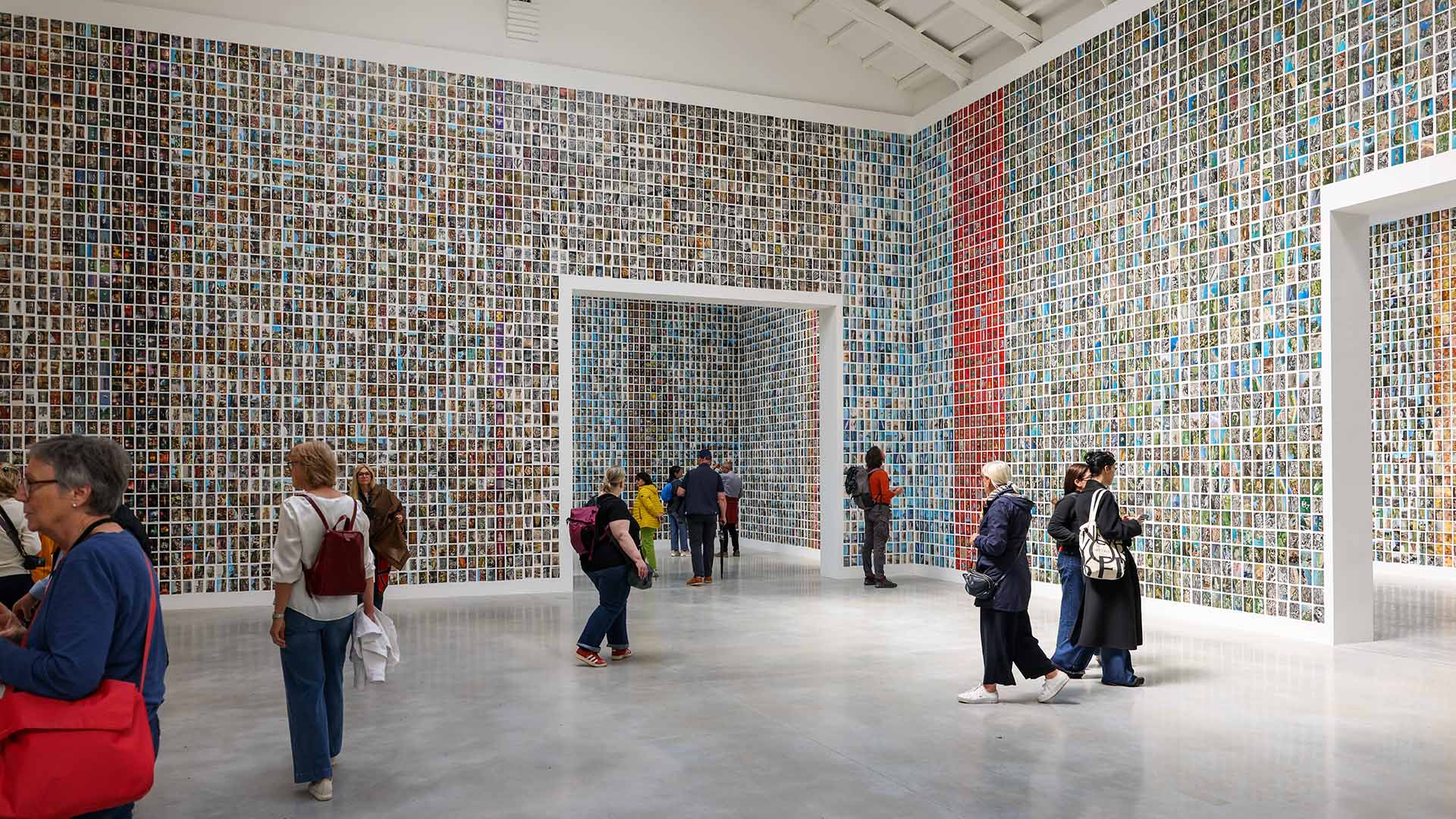
Walk into the Corderie, the long rope-making hall that anchors the eastern end of the Biennale, and before you register a single work you register the building’s arithmetic. The hall runs for more than three hundred metres. The brick vaults overhead were sized to the length of a Venetian galley’s rigging, because rope was spun in a straight line and the Republic needed a room long enough to spin it in one uninterrupted pass. The columns marching down the centre are not decorative. They hold up a roof under which an empire’s navy was once assembled at the rate of a warship a day. You are walking through a factory floor that predates the idea of the museum by four centuries, and the art has to answer to it.
Most of the time, in most years, the art loses. The Arsenale flatters ambition, and ambition is exactly the wrong thing to bring into a room this honest. The vaults expose anything overscaled or underthought. You can see, from thirty metres away, when a work is shouting to fill the space rather than earning it.
This year, the room has met its match, and it has done so by agreeing, for once, to be quiet.
The 61st International Art Exhibition of La Biennale di Venezia, titled In Minor Keys, runs from 9 May to 22 November 2026. It is the exhibition Koyo Kouoh conceived before her death in May 2025, realised by La Biennale with the full support of her family and the team she had already chosen. To say the exhibition honours her is to understate the mechanism: her thinking is the load-bearing structure of the whole thing. In Minor Keys takes its phrase from music, where the minor key is not a lesser key but a different emotional grammar, the register of interiority, of things felt rather than declared. Kouoh built an exhibition around slowness, listening, and reconnection. She was interested in what art does when it stops performing for the market and starts speaking at conversational volume.
That thesis, it turns out, is also a set of instructions for how to be in Venice this autumn. Read it as a travel philosophy and the whole city reorganises itself around you.
Because here is the practical intelligence the exhibition is quietly handing you: the right way to do Venice in a Biennale year is the exhibition’s own way. Slower. Quieter. Attentive to what is actually in front of you rather than the list of what you are supposed to have seen. And the season conspires. September and October are the connoisseur’s window: the July crush gone, the light turning long and low across the lagoon, the exhibition settled into its contemplative final act. In October the hours shift earlier, ten in the morning until six in the evening, which sounds like a bureaucratic footnote until you understand what it does to a day. It means the last hour of viewing now falls in the softest light of the afternoon, and it means the rooms empty while the sun is still up, and it means you can stand alone in front of a work at half past five with the guards beginning to think about their evening and the whole apparatus of the art world exhaling around you.
Learn to move through the Biennale the way Kouoh wanted the art to be received, and the difference is total.
Start at the Giardini early on a weekday, and start on foot. The public gardens Napoleon carved out of the eastern edge of the city are the older half of the Biennale, a park of national pavilions built across a century of competing architectural egos. The pavilions are a lesson in themselves, a walkable archive of how thirty nations chose to represent themselves in brick and concrete and glass, but the reason to arrive early is simpler than architecture. Before ten, the gravel paths are empty, the plane trees are still holding the night’s cool, and you can give a pavilion the ten unhurried minutes it was designed to be given. By noon that same room is a scrum. The art has not changed. Your capacity to receive it has.
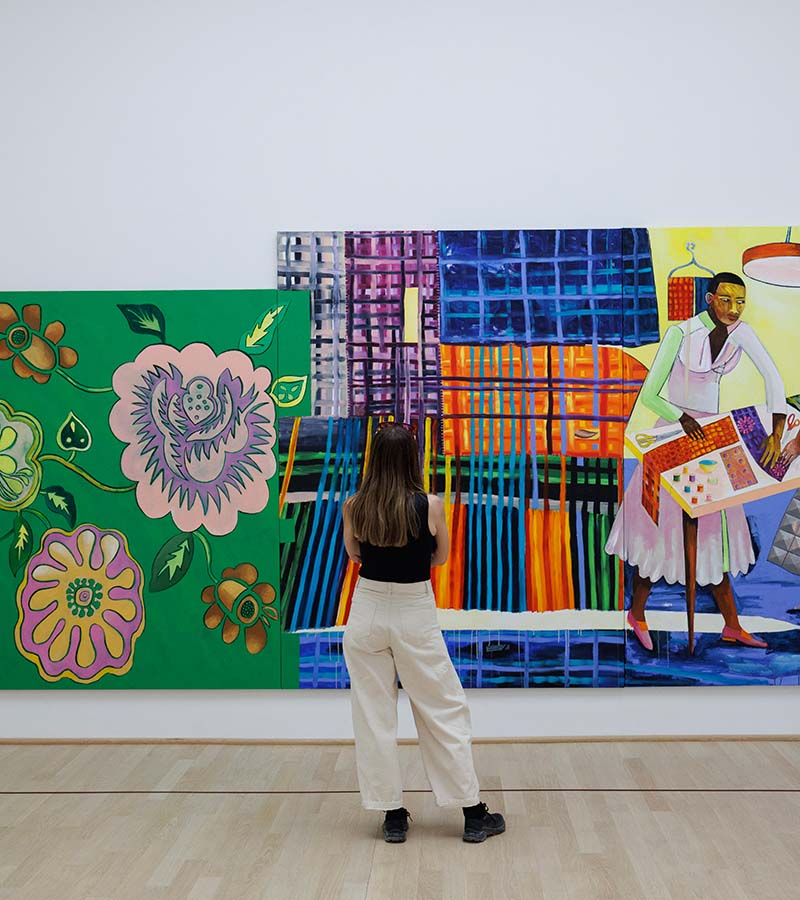
Pavilion of GREAT BRITAIN, Courtesy La Biennale di Venezia
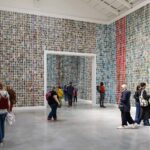
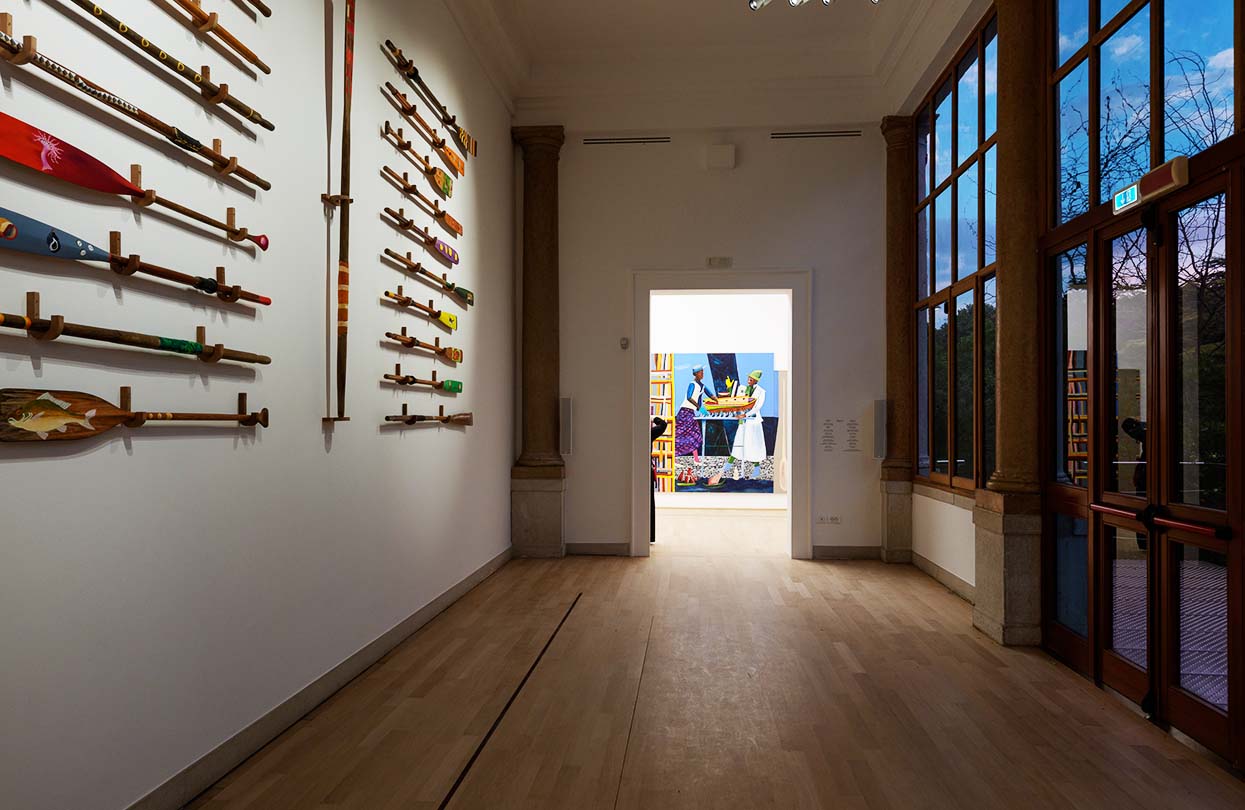
Walk first to the British Pavilion, the neoclassical villa on the rise at the centre of the Giardini, where Lubaina Himid has installed Predicting History: Testing Translation. Himid became, in 2017, the first Black woman to win the Turner Prize, and she paints the way a set-designer thinks: in flats, in staged depth, in colour pitched a half-tone brighter than the world actually offers. The new work is a series of large, multi-panelled paintings about belonging, the labour of making a home in a place that did not expect you, rendered in surreal, saturated settings that hover between stage and dream. Give it the room. Himid rewards the second look and punishes the glance. The panels are built to be read across, left to right and back again, the way you would read a frieze, and the meaning accumulates in the space between the panels rather than inside any one of them. Stand at the centre of the room and let your eye do the walking the composition asks for. Photograph it and move on, and you will have taken nothing with you. It is painting to stand inside.
Pavilion of GREAT BRITAIN, Photo by Andrea Avezzù, Courtesy La Biennale di Venezia
Then walk east, out of the Giardini and along the water to the Arsenale, and give your morning to the Saudi Pavilion, which is, to my eye, the work that most rewards the sensibility this magazine is written for.
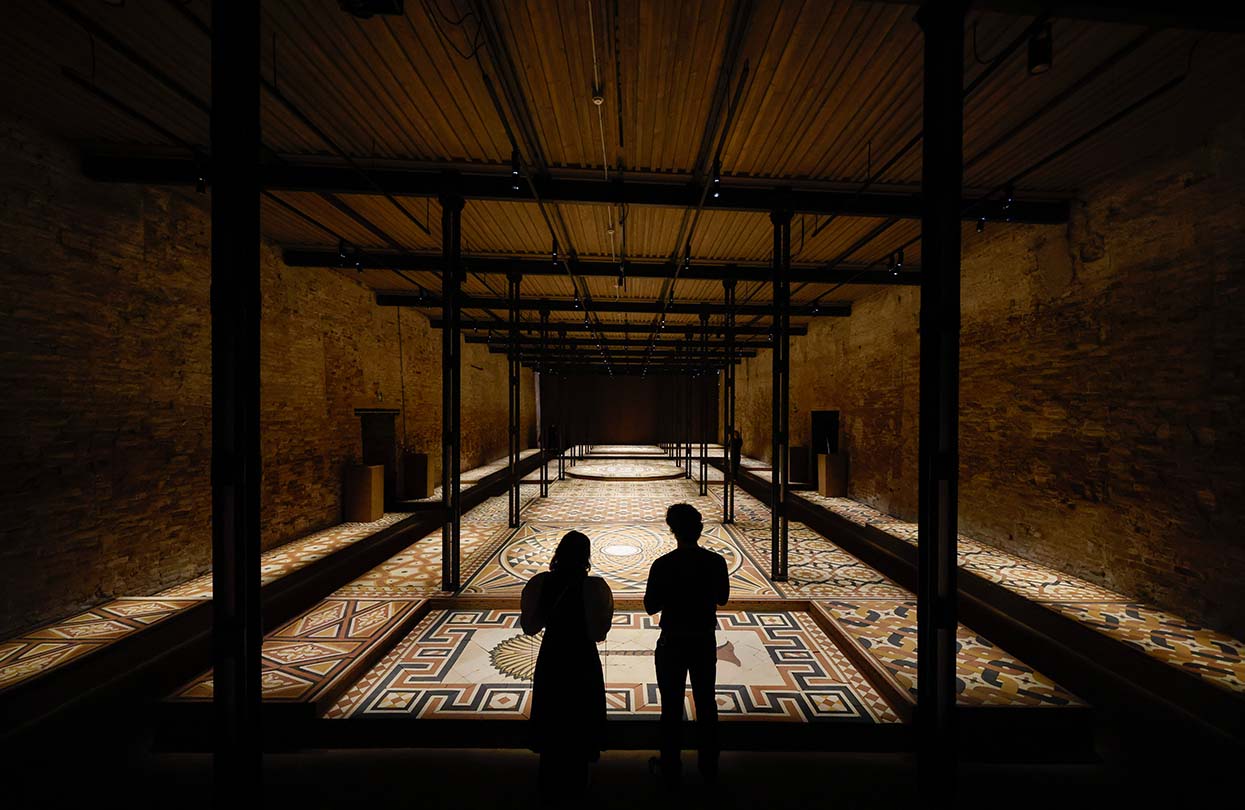
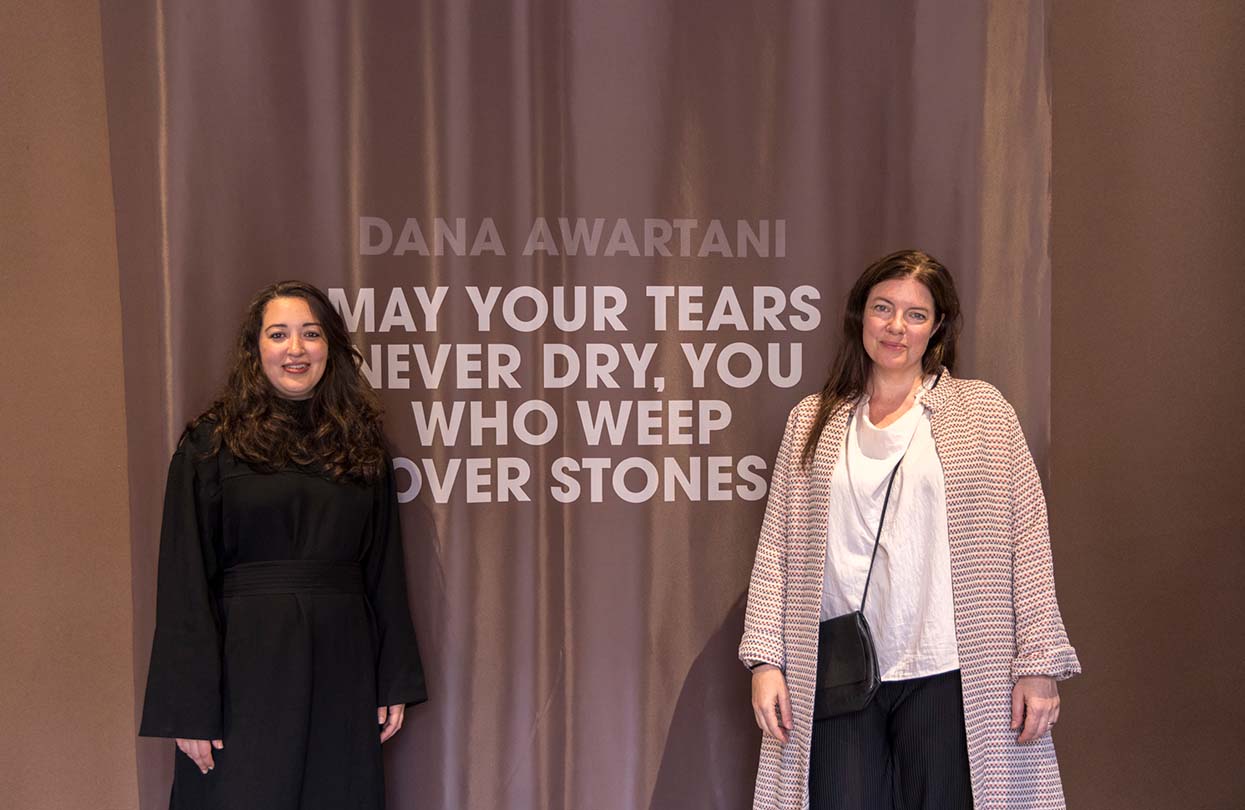
Dana Awartani has titled it May your tears never dry, you who weep over stones, and she has done something to the pavilion that you feel through the soles of your feet before you understand it with your eyes. She has laid the floor with more than twenty-nine thousand clay tiles, each one made by hand, thirty thousand hours of labour shared across thirty-two artisans working in Saudi Arabia. You walk onto an imagined archaeological site. The tiles carry geometric and floral patterns drawn from heritage buildings across Syria, Lebanon and Palestine, buildings damaged or destroyed, and Awartani has reconstructed their ornament tile by tile, the way a body heals a wound, cell by cell, without hurry. She trained in the traditional arts after Central Saint Martins, studied manuscript illumination in Turkey, earned the ijaza that licenses her to transmit what she knows. She treats craft as a form of memory and repair as a form of argument. Kneel, the pavilion invites it, and look closely at a single tile, and you are looking at a decision made by a hand, repeated twenty-nine thousand times, each repetition a refusal to let a pattern die with the building that held it. The emotional outcome is patience, though grief is in the room too. The floor tells you that some things can be remade if you are willing to take the time, and that the taking of time is itself the meaning.
Pavilion of SAUDI ARABIA, Courtesy La Biennale di Venezia
Those are two of the three works I would build a trip around. The third is not a pavilion at all, and it is the reason to stay in the city past the Biennale’s official footprint.
Pavilion of SAUDI ARABIA, photo by Marco Zorzanello, Courtesy La Biennale di Venezia
Cross the Grand Canal to the Fondazione Prada’s Venetian home or spend an afternoon inside Palazzo Grassi, and you enter the collector’s parallel Venice: the programmes the great foundations mount to run alongside the Biennale, in palazzos that have been surgically restored to hold contemporary work without erasing the eighteenth century they were born in. Palazzo Grassi is the sharper lesson in adaptive architecture. Tadao Ando was brought in to insert a modern museum into a Grand Canal palace, and rather than fight the building he built a room within the room: clean grey planes held a hand’s breadth away from the historic walls, so that old and new never touch and never argue. Stand in the central courtyard and look up, and you can read both buildings at once, the Venetian one that holds the street and the Japanese one that holds the art. That is the third thing to see. The canvases rotate; what stays is the intelligence of a space that solved a problem most cities never even attempt, which is how to let a four-hundred-year-old building keep working without turning it into its own tombstone.
And this is where the connoisseur’s Venice truly parts from the visitor’s. Scattered through the city, in palazzos most people walk past for a lifetime without entering, are the Collateral Events, the officially sanctioned exhibitions that the Biennale disperses across Venice like a hand of cards thrown wide. They are the reason to keep an advisor or a gallery on the line before you travel. The best of them are mounted in private palazzos opened for the season only, behind doors that give onto nothing but a bell and a name, and the access that matters, the after-hours walk-through, the morning viewing before the doors open to the public, the conversation with the person who actually hung the show, is arranged, not bought at a window. If your gallery has a client in a Collateral Event, ask. The Venetian art world runs on the assumption that the right people will know to knock, and it answers when they do.
Pavilion of Venezia, photo by Andrea Avezzù , Courtesy La Biennale di Venezia
Which brings me to where you should sleep, because in Venice the arrival is the architecture.
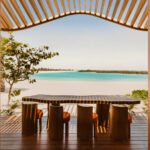
Take the palazzo stay, and take the one with a water gate. The Aman Venice occupies Palazzo Papadopoli, a sixteenth-century palace on the Grand Canal. The Tiepolo ceilings are real and the rooms are everything the address promises. The reason to book it is the water gate. Arrive by boat, as the palace was built to be arrived at, and you come in off the canal through the androne, the ground-floor hall that every Grand Canal palace kept open to the water, where goods and guests were once received directly from the lagoon. The boat noses in out of the daylight, the engine cuts, and you step out into a cool stone hall that has been receiving people from the water since before the idea of a hotel existed. Every Venetian palace was designed around this sequence: the approach by water, the dark threshold, the climb to the piano nobile where the light and the ceremony waited. Most hotels have sealed their water gates and route you in from a back calle like a delivery. The ones that keep the gate open are giving you the building the way it was meant to be entered, and the whole grammar of a Venetian palace, the movement from water to shadow to light, only makes sense if you come in the way the stone expects. Book the stay for the sequence, and let everything above it be the bonus it is.

Aman Venice Palazzo by night
Then give your evenings back to the city at conversational volume. When the Arsenale empties at six, walk out into Castello, the quarter behind the shipyards where Venice is still simply a place people live, and find a bacaro, one of the small standing bars that pour wine by the glass and lay out cicchetti on the counter. Order a negroni the honest way, at the bar, standing, and let the day’s looking settle. This is the part of a Biennale trip that no programme schedules and every good one leaves room for: the hour after the art, when the city stops being a checklist and goes back to being a town on the water in the best month of its year.
That is the whole argument, and I want to close it where I began, on the floor of a single room.
Go back to the Saudi Pavilion in the last hour. October, half past five, the light already going gold and level through the Arsenale’s high windows. The guards are quiet. The morning’s crowd is long gone to its dinners. Stand at the edge of Awartani’s tiled floor with the room almost to yourself, and look down the length of it: twenty-nine thousand handmade tiles carrying the ornament of buildings that no longer stand, laid by thirty-two pairs of hands over thirty thousand hours, glowing now in the last of the day. The patterns run away from you toward the far wall, geometric and unbroken, and in the emptying room you can hear your own footsteps on the stone, and then you can hear them stop. This is what Kouoh meant by a minor key. It is the register of attention, pitched low and held. The room asks you to slow down until you are moving at the speed the work was made at, and for one held minute, before the guard catches your eye and tips his head toward the door, you do.
Caspar Iyer writes on design, architecture and the built environment for World Travel Magazine. He measures a building by how it makes you move through it, and reviews hotels the way others read buildings. ◼
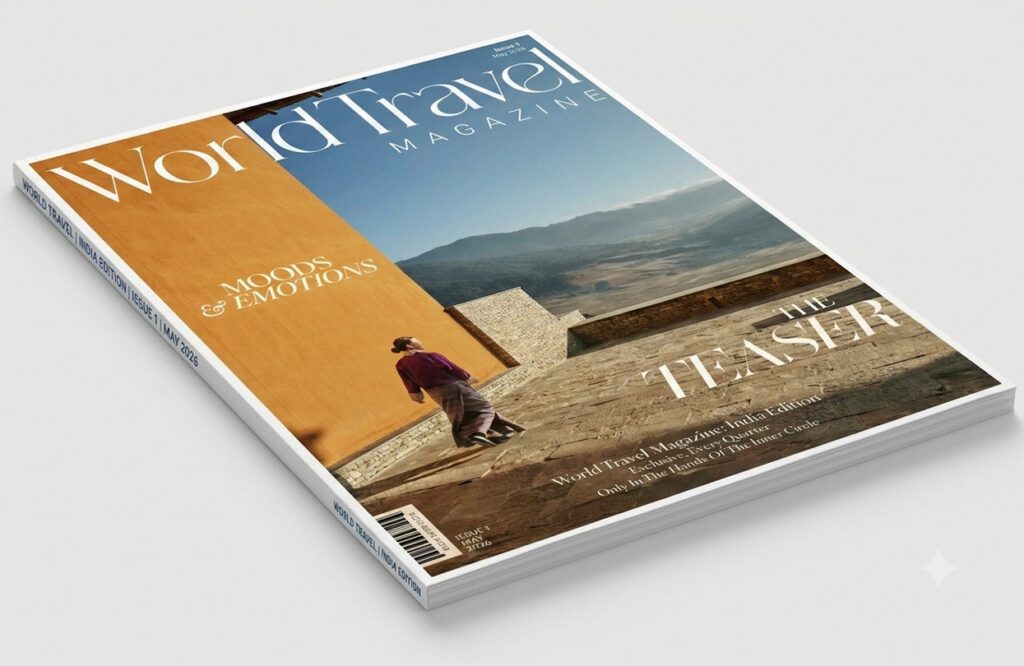
Subscribe to the latest edition now by clicking here.
© This article was first published in Aug-Sept-Oct 2026 edition of World Travel Magazine.