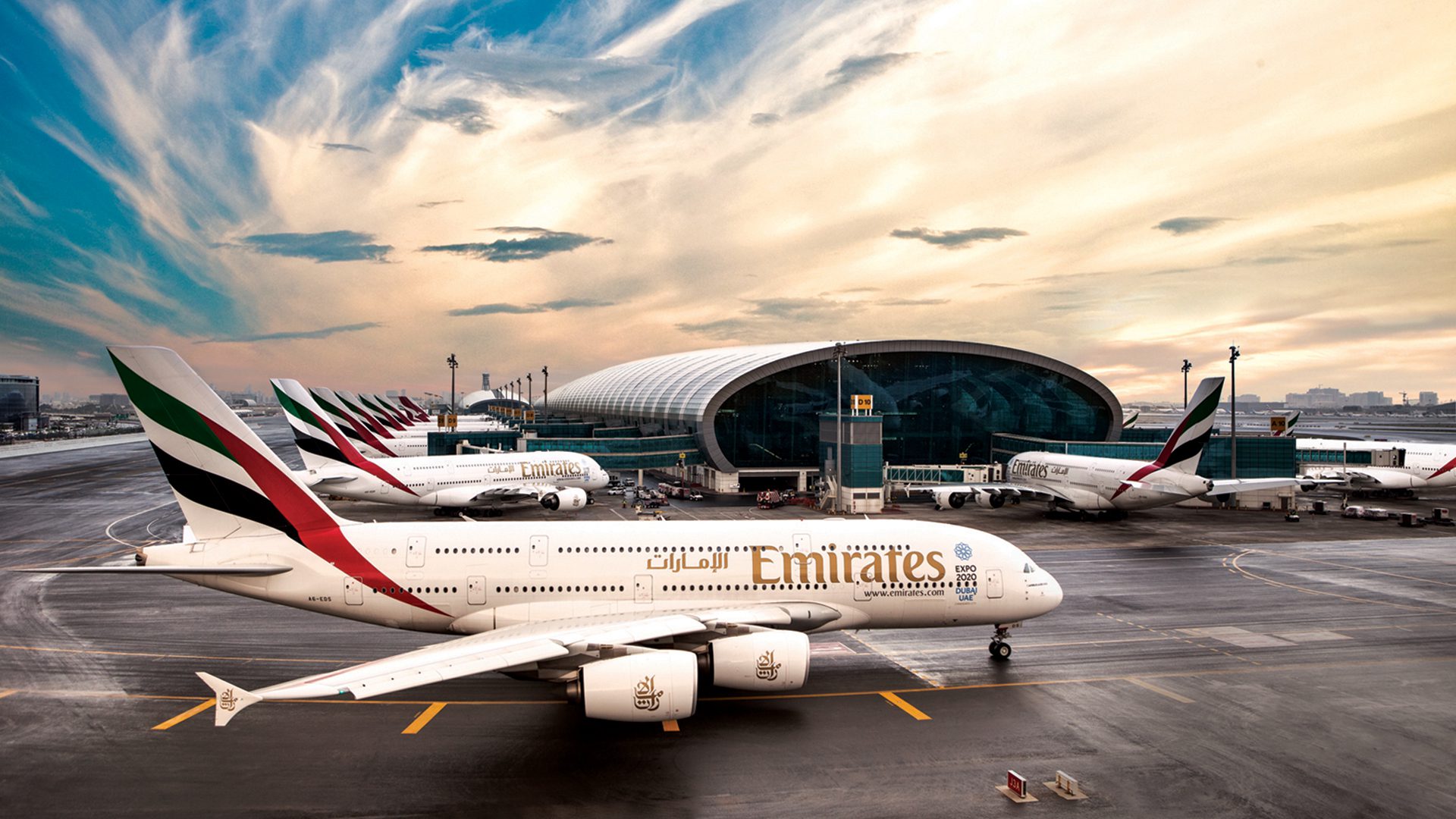
[vc_row][vc_column][vc_column_text]At the age of pandemic, safety becomes the ONLY priority for travel, especially for airlines. For many, obsessive-compulsive disinfection is the key. For one, the only way to tackle an invisible enemy is to know where they are. Emirates Airlines debuts a new program, performing rapid on-site COVID-19 tests on its passengers. This test, administered by the Dubai Health Authority (DHA), produces results in a span of 10 minutes.
DHA’s medical staff, wrapped in their protective suits, masks, and gloves, held the test at Dubai International Airport’s Terminal 3 Check-in. Test certificates were given to those who tested negative – a piece of paper just as vital as one’s passport and visa.
It’s grim news for airlines: the industry is projected to lose a vast amount of their business in 2020, according to IATA’s latest study. As of early April, the number of flights around the world shrunk down to 80%, compared to 2019, no thanks to a range of domestic and international travel restrictions. Lockdowns are going to leave a lasting scar on the travel sector for a good part of this year, at the very least. However, Emirates’ move signals the possibility for a quicker revival of the airline sector.
[/vc_column_text][/vc_column][/vc_row][vc_row][vc_column][vc_column_text]
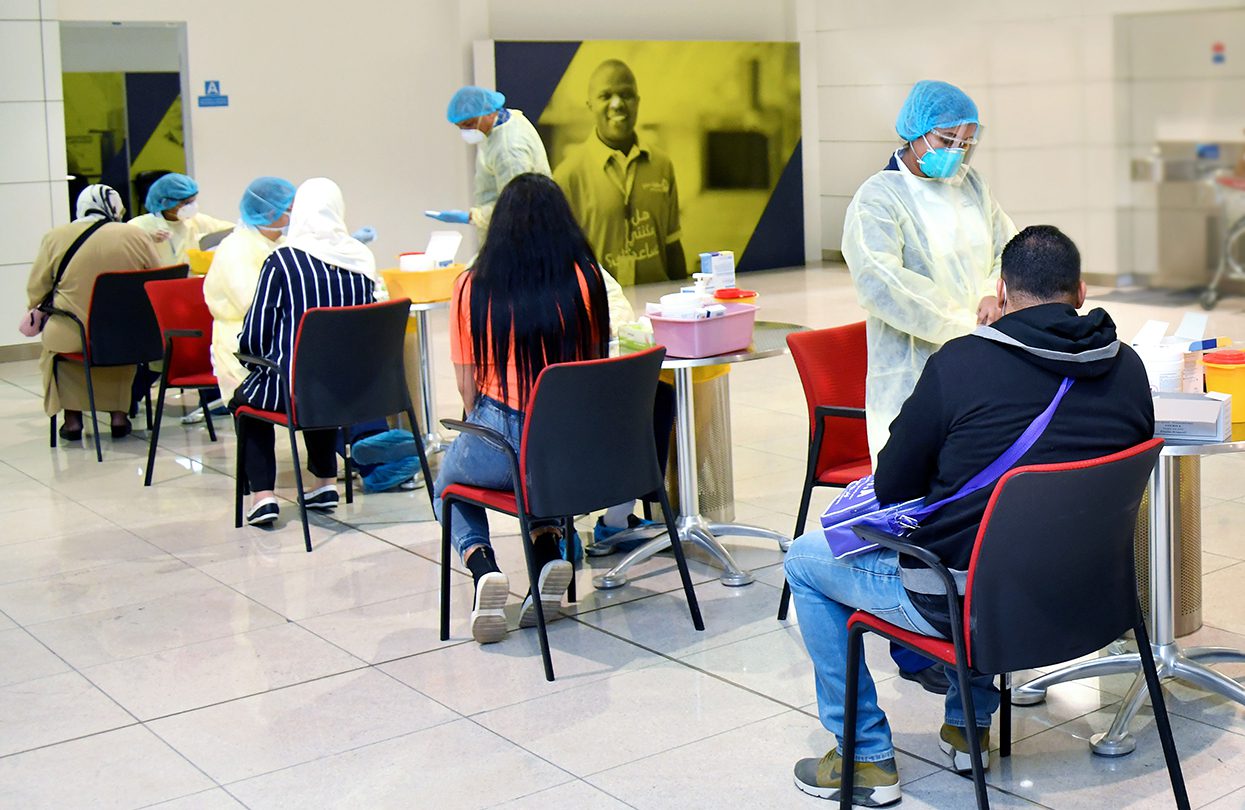
Safe distancing being maintained while tests are being done by Emirates, image by Emirates
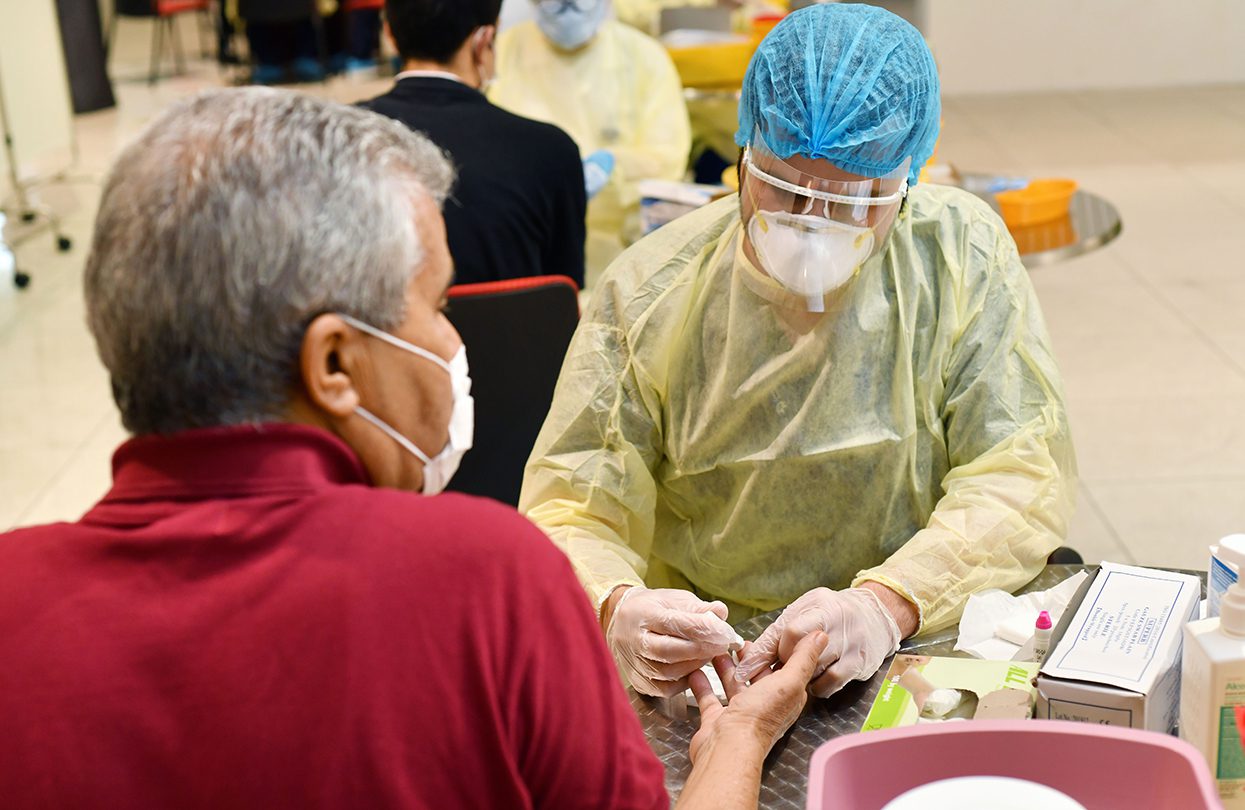
Rapid blood tests being done at airport by Emirates, image by Emirates
[/vc_column_text][/vc_column][/vc_row][vc_row][vc_column][vc_column_text]
What is the new process?
The new normal, even for the airlines, requires change. All actions must be conducive to what the world needs: social distancing. Emirates Airlines, other than its pre-flight COVID-19 test, adjusts its in-flight culture. Passengers, for example, are required to wear masks all the time – while checking in at the airport, onboarding the craft, and during the flight. Check-in desks are installed with protective barriers to achieving an ample amount of distance per person. Employees are provided with masks, gloves and hand sanitizers.
Flight services also adapt to this new normal. Front pockets of seats are bereft of reading materials. While food and drinks are still offered onboard, they will be presented in new packaging to reduce the risk of interaction during meal service. Cabin baggage is minimized. One is allowed to bring only their essentials: handbags, briefcases, laptops, or baby necessities. The rest of the carry-ons are to be checked in. For this reason, Emirates generously permits additional cabin baggage allowances. After each journey, the aircraft goes through a thorough cleaning and disinfection. All these steps will ensure that passengers travel with confidence and countries reopen borders to infection-free travellers.
[/vc_column_text][/vc_column][/vc_row][vc_row][vc_column][vc_column_text]
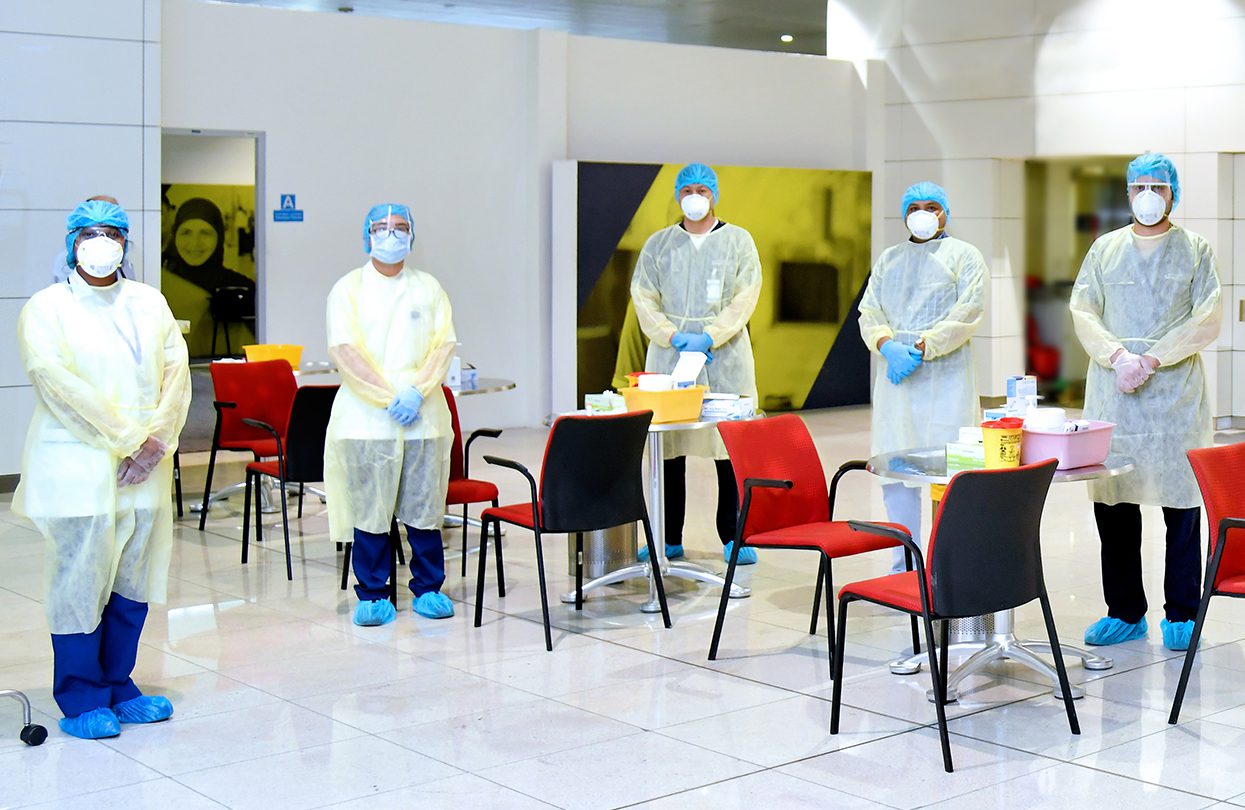
The rapid test team of Emirates, image by Emirates
[/vc_column_text][/vc_column][/vc_row][vc_row][vc_column][vc_column_text]
Emirates plans to scale up its testing program and use it on its other flights. While the pandemic has transformed the way how one travels, airline industries – with the help of their local health departments – are discovering ways to keep their business afloat and to the benefit of all, get passengers safely across the world. If successful, we expect most other airlines to replicate this quick test at all major airports and governments accept this medical test certificate one of the minimum documents needed to grant entry into borders. ◼[/vc_column_text][/vc_column][/vc_row][vc_row][vc_column][vc_column_text]Subscribe to the latest edition now by clicking here.
© This article was first published online in Apr 2020 – World Travel Magazine.[/vc_column_text][/vc_column][/vc_row]