|
Listen To Article
|
By early July, Sri Lanka is doing two things at once, and this is the piece of intelligence World Travel Magazine finds most useful in the region: on the west and south coasts, the Yala monsoon is soaking Galle, Bentota, and Mirissa. On the east — Trincomalee, Pasikuda, Arugam Bay — the sky is clean, the sea is glass, and the rains will not arrive until October. It is the same island. It is the same week. The traveller who knows this crosses to the dry side.
The mechanic is old. Two monsoons — Yala from the southwest, Maha from the northeast — divide the year between them, and between them, they divide the coasts. Sri Lanka’s ancient chroniclers understood this before it had a name; its farmers built their year around it; its irrigation engineers, twelve centuries ago, built entire civilisations on the calculation. To read the map like a local is to know which side of the island is in season, and to go there.
Trincomalee
The harbour at Trincomalee is one of the great natural anchorages of the world. Deep, sheltered, wide enough to hide a fleet. The Portuguese took it first, in 1622; the Dutch pushed them out; the British seized it from the Dutch in 1795 and held it as a Royal Navy base through both world wars. Nelson called it the finest harbour in the East. Standing on Swami Rock in the early morning, looking down at the water where the Koneswaram temple perches on the cliff — a Hindu shrine older than any of the Europeans, sacked by the Portuguese, rebuilt, still receiving pilgrims — you understand what the empires were fighting over. Geography, not gold.
July puts the sea to sleep. From Nilaveli beach, north of the town, the boats go out at six in the morning to look for whales. This is one of the few places on earth where blue whales come close to shore, drawn by the deep water of the Trincomalee canyon. “In July the sea is like a plate,” says Suresh Fernando, who has been running whale-watching boats out of Nilaveli for eleven years. “You see the blow before you see the whale. Then the back — long, long, long. Never in a hurry.” The dive sites off Pigeon Island — coral gardens, blacktip reef sharks, the surface at 29 degrees — are open only in this window.
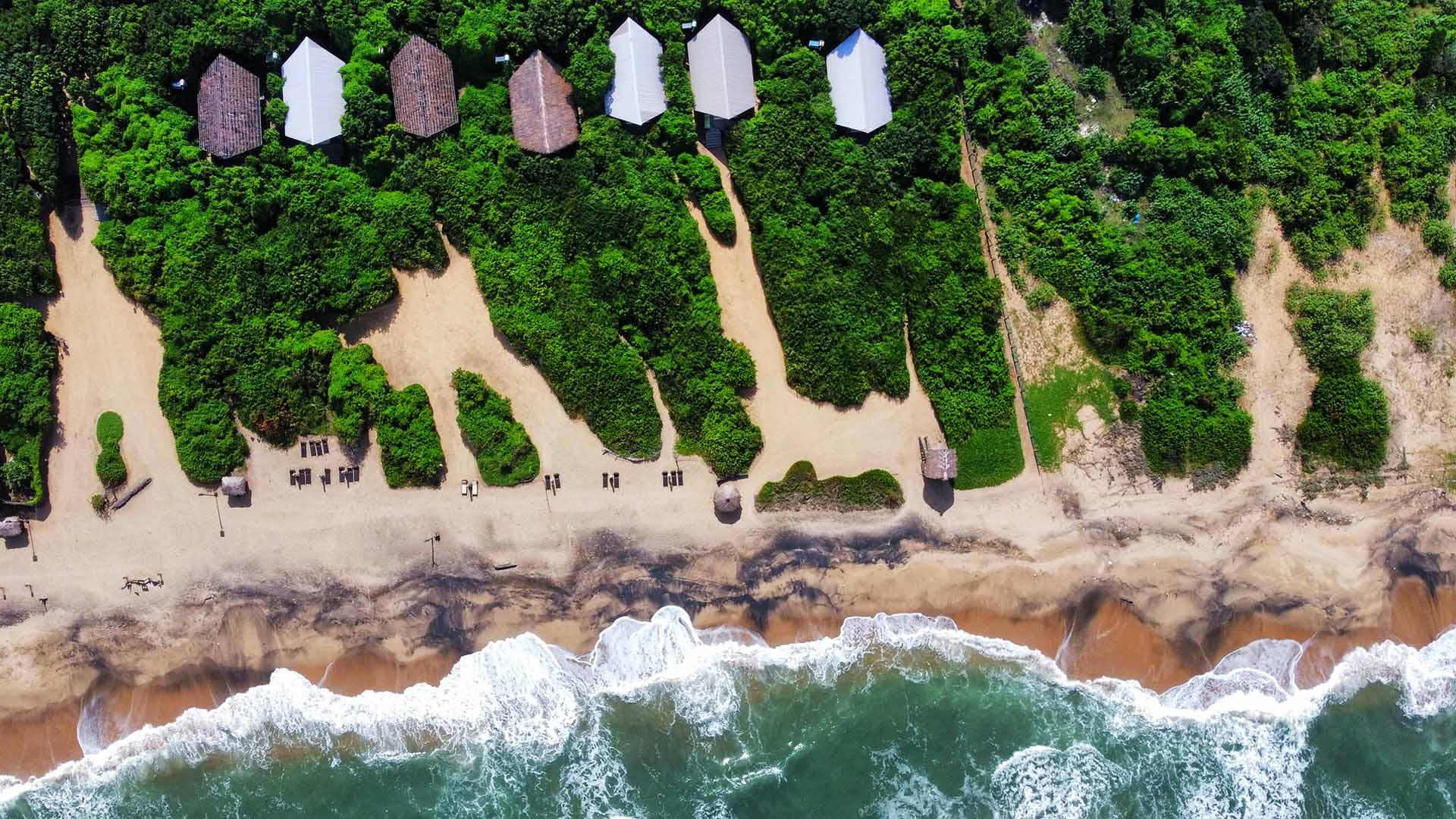
The luxury layer is still arriving. Uga Jungle Beach, tucked into a private cove up the coast, is the most quietly confident of the group — twenty-eight rooms, no signage from the road, a chef who cooks the reef fish the way the village cooks it and does not apologise for the plainness. Trinco Blu by Cinnamon holds the classic beach position at Uppuveli. Neither is trying to be an Aman. That restraint is currently the east coast’s most valuable asset.
Pasikuda and the calm bays
South of Trincomalee, past the lagoon country and the paddy fields, the coast opens into a series of shallow, warm, almost swimming-pool-still bays. Pasikuda is the best known — the water rarely reaches your shoulders for two hundred metres out — and the resort strip here (Uga Bay, Amaya Beach, Anantaya) is the closest thing the east coast has to a developed hospitality corridor. Even so, it is early. There are still stretches of beach where the only structures are the fishing shelters, and the boats are pulled up on the sand at the angle the boats have always been pulled up. A cook at a nearby resort, Nadeesha, told me she trained in Colombo but came home to the east because “the guests here still ask what the fish is called, not just whether it is fresh.” That is a coast still on the front edge of its story.
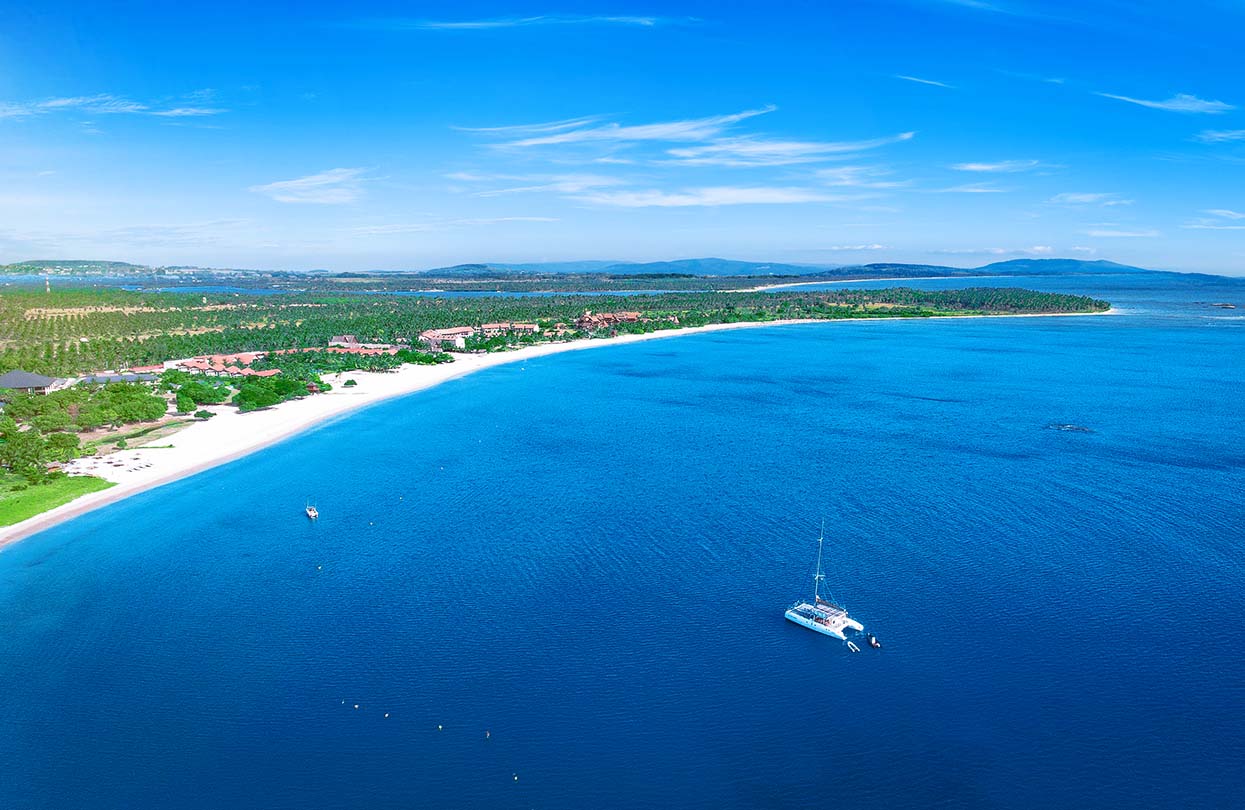
Pasikuda, image by shane94, Shutterstock
Arugam Bay
Further south, the register changes. Arugam Bay is a surf town — the right-hand point break at Main Point is one of Asia’s finest, and in July it is at its peak, drawing surfers from Bali, Byron, Ericeira — but it is also, quietly, in the middle of a shift. The old A-Bay of beach shacks and hostels is still there, but it now shares the road with a handful of small, considered stays that understand what the next kind of visitor wants: a proper coffee, a decent bottle of wine, a room that does not feel like a dormitory. The point break has not changed in a thousand years. Everything around it is being re-tuned.
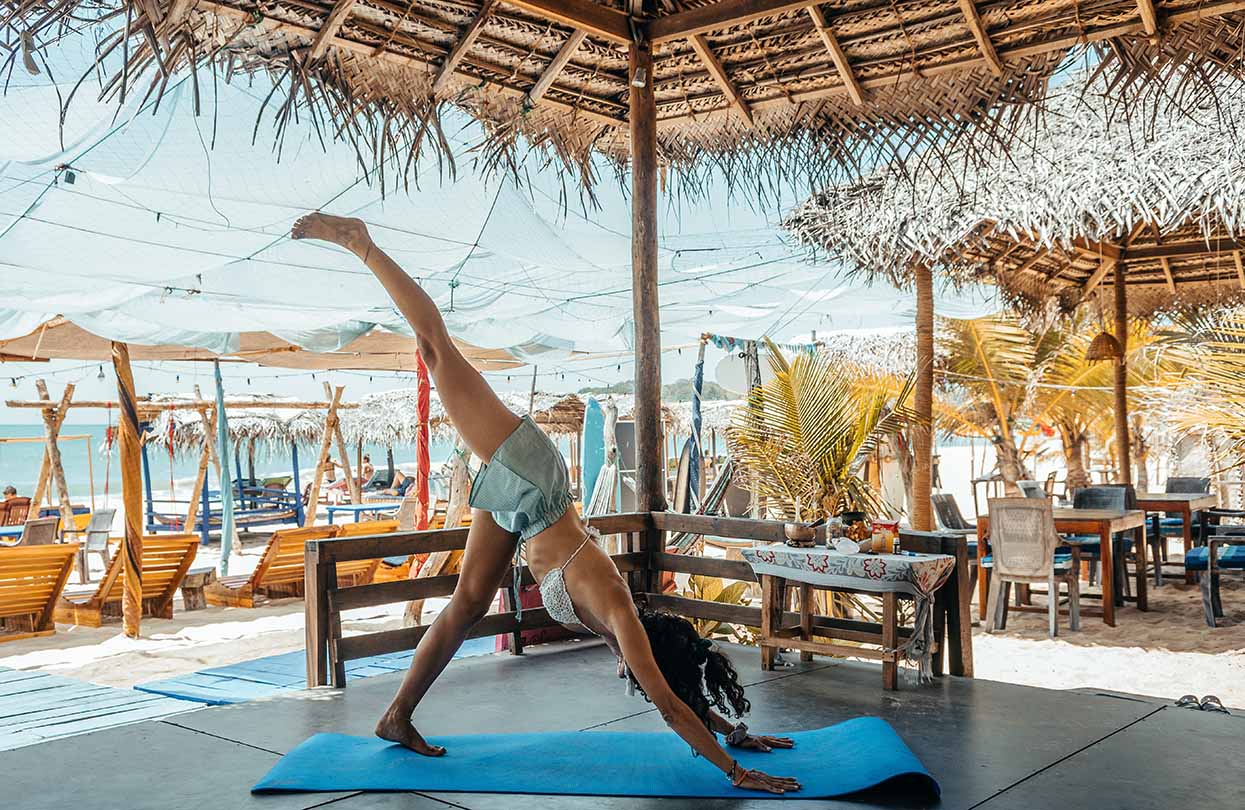
Beach vibes at Arugam Bay, Image by Jon Chica, Shutterstock
Inland: the Cultural Triangle
If the east coast gives you the sea, the Cultural Triangle — Anuradhapura, Polonnaruwa, Sigiriya — gives you the intelligence behind it. July is dry inland too, which makes this the practical pairing. In Polonnaruwa, the twelfth-century king Parakramabahu I said, famously, that not a single drop of rain should reach the sea without first serving mankind. He built the Parakrama Samudra, an artificial reservoir so large it looks, from the top of the rock at Sigiriya, like an inland sea. This is the deeper story of the two monsoons: the civilisation that grew on this island grew because someone, a very long time ago, mapped the rain.
On the dry side
Stand on the beach at Nilaveli at sunrise in the second week of July. The sea is flat to the horizon. A fishing boat is coming in, low in the water, the day’s catch already sold before it lands. Somewhere behind you, beyond the central hills, on the other side of the same island, the rain is falling on Galle. It is falling on the tea estates and the stilt fishermen and the rooftops of Bentota. It is falling on the coast that the guidebooks send everyone to. You are on the coast the guidebooks forget in July, and you are exactly where you should be. This is what it means to read the map. ◼
Subscribe to the latest edition now by clicking here.
© This article was first published online in July 2026 – World Travel Magazine.