
|
Listen To Article
|
The herds are already moving north. By the time this lands in your inbox, the front of the Migration will be testing the Mara River, and the advisors who do this seriously will have spent the last three weeks pulling cancellations, holding tents, and quietly closing the August window. June is when the year’s most-asked-for trip stops being theoretical. Twelve pieces of intelligence below, compiled for World Travel Magazine — three of them time-sensitive enough to act on this week.
KENYA — MASAI MARA
The Cliff Edge — Angama Mara August is gone. Angama’s September inventory, however, is sitting with a small handful of advisors who haven’t released it — and the September crossings, when the herds are doubling back south, are often more theatrical than August’s first surge. (Ask for a tent on the southern camp; the escarpment view at golden hour is what you came for.) Call this week.
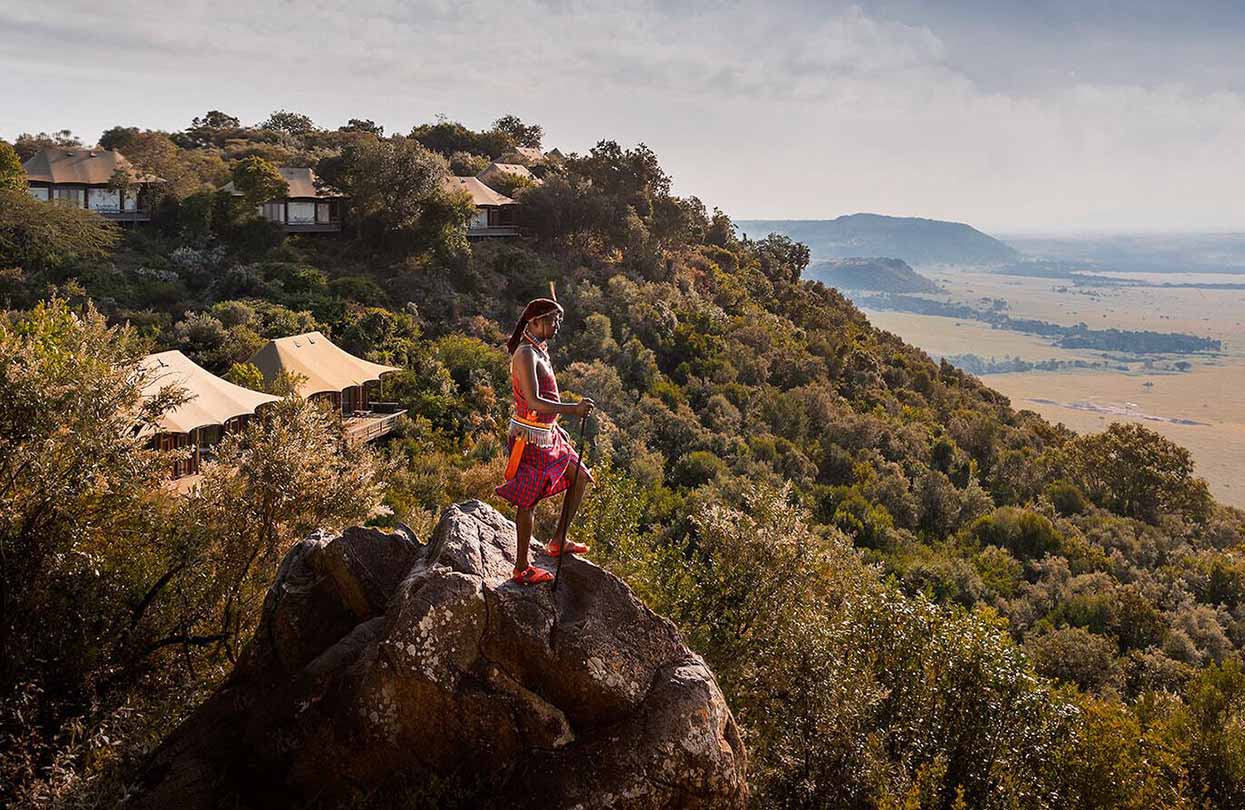
The Cliff Edge — Angama Mara
The Late Cancellation — Cottar’s 1920s. Three nights opened up late last week — the final week of July, the prime crossing window. Cottar’s is the most genuinely old-school tented camp in the Mara; a fifth-generation safari family behind a camp established in 1998 and it shows in everything from the brass fittings to the way the guides read the grass. Calvin himself is in camp through the season. Inventory like this surfaces twice a year.
The Soft Landing — Governors’ Camp. Governors’ has quietly built a first-Migration programme for families travelling with children who haven’t done safari before — a dedicated guide, slower morning starts, the patient choreography that turns a six-year-old into a future repeat client. Ask for the Wilderness Mara (formally Little Governors’ camps) tents on the river side; the elephants cross the channel at dawn and no child sleeps through that.

Governors’ Camp Elephants in Camp
The Quiet Currency — A Guide Worth Asking For. A Bengaluru safari specialist holds a Mara guide named Lemayian who speaks fluent Hindi (his mother worked for an Indian family in Nairobi through the nineties). He is booked through October but has a four-day window in the second week of September. Families request him by name; first-timers don’t know he exists. This is the kind of detail that justifies using an advisor.
TANZANIA — SERENGETI
The Wider Frame — Singita Grumeti. Singita’s 350,000-acre Grumeti reserve is the answer to the question every July: can we see the Migration without seeing fifteen other Land Cruisers at the same crossing? The herds pass through in waves from June; Faru Faru is the property to book if you want the river, Sasakwa if you want the manor-house theatre. Vehicle density inside the reserve is regulated. That is the whole point.
The Moving Camp — &Beyond Serengeti Under Canvas. &Beyond’s mobile tented camp picks up and moves four times a year to track the herds, sometimes close enough that guides can position game drives near the action, depending on where the herds are. It books through a small number of agents who understand it isn’t the same product as a fixed lodge. (Ask which camp location you’re being quoted; the Northern positioning for July through September is the one you want.)
The One to Watch — Mwiba’s Plains Camp. Legendary Expeditions’ Mwiba Plains is one to watch for the next cycle, with opening currently listed for December 2026. The original Mwiba is the kind of property where the wine list and the off-roading permissions are equally serious. The new camp will be on advisor radars by 2027. It isn’t yet. That window closes quickly.
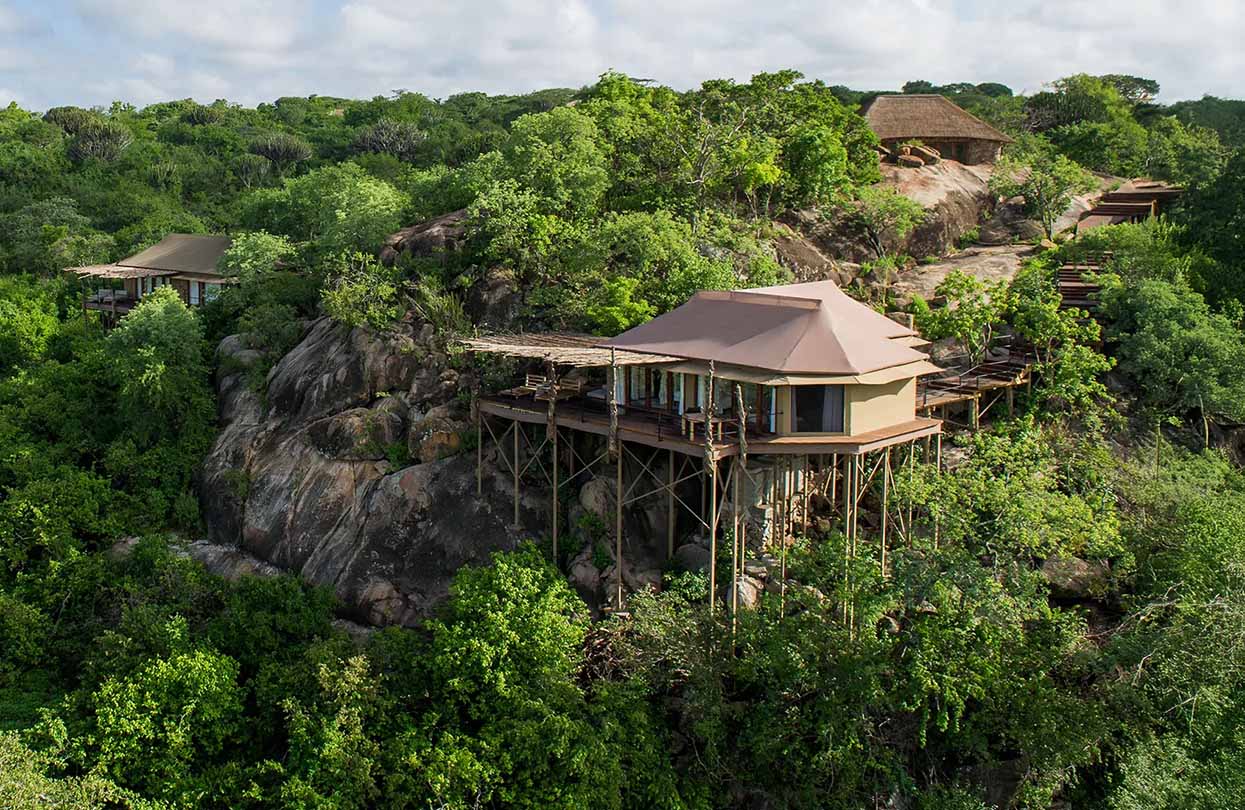
Mwiba’s Plains Camp Legendary Expeditions
PRACTICAL INTELLIGENCE
The Vegan Question. Singita’s culinary programme is the gold standard — the chefs file detailed dietary briefs weeks in advance and the in-camp pantries are stocked accordingly; full vegan (no dairy in the morning porridge, no ghee hiding in the dal, plant milks actually stocked rather than apologised for) is handled without the small humiliations that ruin a trip. Cottar’s is excellent on vegetarian, less practised on strict vegan. The mobile camps are the hardest — refrigeration and resupply are genuinely harder in a camp that moves every six weeks. Confirm in writing and ask for the head chef’s name.
The Five-Hour Question. The road from Nairobi to the Mara is eight hours on a good day and ten in the rain. The Wilson Airport hop is forty-five minutes. Anyone telling you the drive is “part of the experience” has not done it twice. Fly in; if a self-drive day matters, do it on the way out, when the herds will have ruined you for tarmac anyway.
The September Window. School holidays in Mumbai and Bangalore typically break in the second week of September — which aligns with what guides quietly consider the best Migration weeks. The herds are doubling back, the light is cleaner, and the camps are running below August peak. Book the first ten days of September and you will have the river crossings, the weather, and the camps at their most attentive.
WILDCARD
The Three-Night Detour — Rwanda. Bisate Lodge by Wilderness and Singita Kwitonda are the two properties worth a Volcanoes National Park extension. Bisate for the architecture (the conical thatched suites are quietly the most photographed rooms in Africa right now), Kwitonda for the gravitas of the Singita service standard. Three nights, two trekking permits, and a Kigali hotel such as The Retreat or Kigali Serena for the soft re-entry. Build it on the front end, not the back.
The Coast Pivot — Zanzibar or Mnemba. For families adding beach to safari, Mnemba Island Lodge by &Beyond, which is the entire 12 bandas island and accepts no walk-ins. Leave four nights minimum — the safari-to-beach pivot only works if you give yourselves time to slow down.
THE THIRTEENTH ITEM
The Morning Without the Camera. First-timers ask how many animals they will see. The number stops mattering by the third morning. What they get wrong is the camera — too small a body, not enough lens, photographs that end up as proof rather than memory. Rent a 200–500mm from a camera house before flying. But the thing that turns the trip into a defining memory has nothing to do with the lens. It is the morning, usually the third or fourth, when you put the camera down — and your guide, who has been waiting to see whether you trust him, finally tells you where to look. ◼
Subscribe to the latest edition now by clicking here.
© This article was first published online in June 2026 – World Travel Magazine.