

|
Listen To Article
|
After Rome, Istanbul stands as a beacon of history, culture, and architectural wonders. The city’s glorious Ottoman palaces, intricately designed and richly decorated, showcase a world of opulence that has spanned four centuries. These architectural marvels, a testament to the immense wealth and opulence of the Ottoman Empire, reflect the transformations of times and shifts of power, as sultans and their architects left their indelible marks, standing the test of time.
These palaces, serving not just as royal residences but also as religious, artistic, and political centres, imperial libraries, and council halls, overlook the mighty Bosphorus and offer glimpses into Istanbul’s illustrious past. This article delves into the hidden gems and treasures within these palaces, shrouded in secrecy and often overlooked by many visitors, adding an element of mystery and intrigue to your exploration.

View from the Topkapi Palace, image by Efired, Shutterstock
1. Topkapi Palace: The Seat of Power
Topkapi Palace, the ultimate seat of power for 26 sultans over 400 years, was built around 1460 on the site of a Byzantine acropolis. Its tranquil gardens, courtyards, and restored Turkish baths offer regal views across the Bosphorus. One of the most unique and luxurious hidden gems within Topkapi Palace is the so-called Golden Road, or Altın Yol in Turkish. This once-secret passageway was reserved exclusively for the sultans and their closest confidants. Once lined with luxurious gold tiles and intricate mosaics, the Golden Road was a symbol of the immense wealth and opulence of the Ottoman Empire.
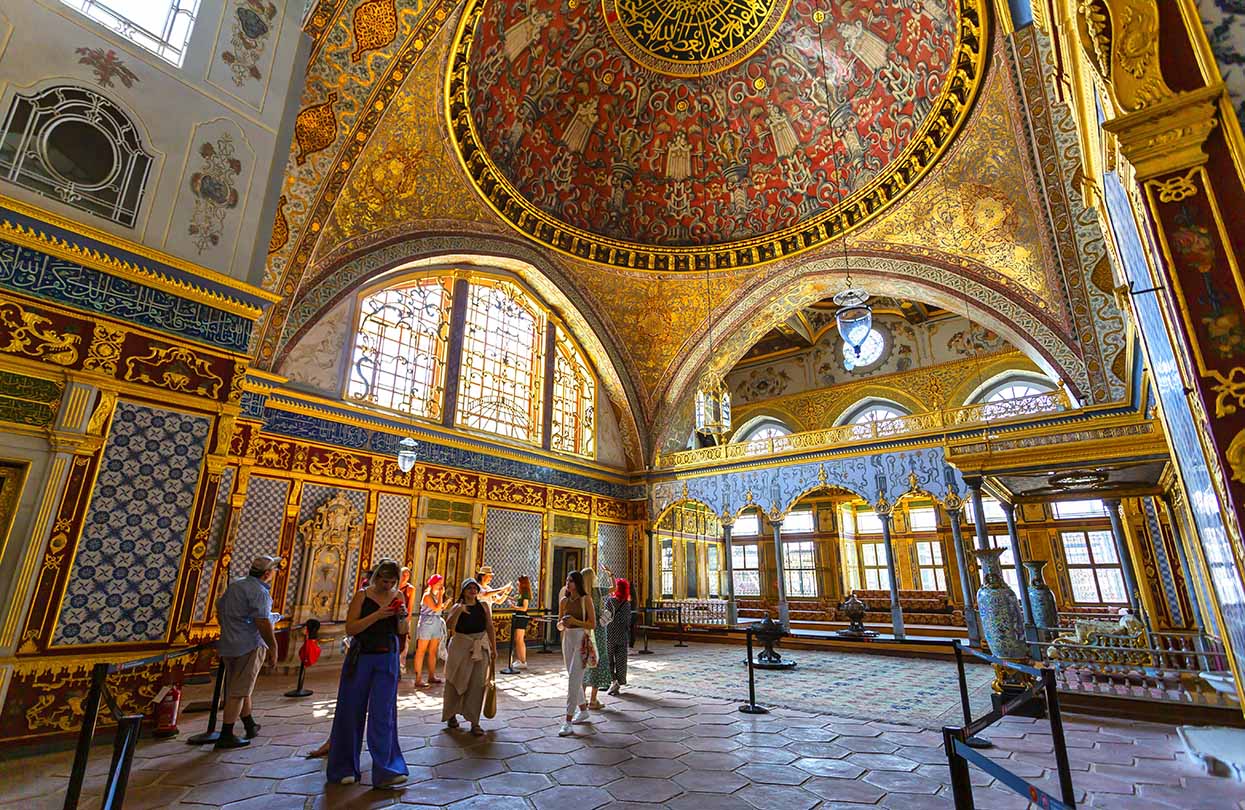
The famous Topkapi Palace, Image by lapas77, Shutterstock
The Golden Road, an exclusive passageway within Topkapi Palace, adds a fascinating layer to the palace’s allure. This road, reserved for the sultan and his closest confidants, allowed discreet movement from the private chambers to various parts of the palace. The lavish decoration and exclusivity of the Golden Road underscore the grandeur and meticulously maintained secrecy within Topkapi Palace.
Other highlights of Topkapi Palace include the Fountain of Ahmet III, the Harem, the Sacred Safekeeping Rooms featuring holy relics of the Prophet Muhammad, the Imperial Treasury with the famous Topkapi Dagger and the 86-carat Spoonmaker’s Diamond, and the Baghdad Pavilion.
2. Dolmabahce Palace: The Symbol of Wealth
Dolmabahce Palace, built from 1842 onwards, was the Ottoman Empire’s answer to Versailles. One of its most unique and exclusive hidden gems is the Crystal Staircase. This exquisite double horseshoe staircase, made from Baccarat crystal, brass, and mahogany, is not only a visual masterpiece but also a testament to the luxurious lifestyle of the Ottoman sultans.
Designed to impress visitors, the Crystal Staircase reflects the wealth and sophistication of the empire. The dazzling interplay of light and crystal as guests ascended or descended the stairs left them in awe of the opulence surrounding them.

Inside Dolmabahce Palace, image by Youcef laib, Shutterstock
This staircase is a gem that offers a glimpse into the lavish attention to detail and the luxurious ambience that defined Dolmabahce Palace. Visitors are often left in awe by its functional elegance and breathtaking beauty.
3. Beylerbeyi Palace: A Summer Retreat
Beylerbeyi Palace, once a summer retreat for the Ottoman royals and now an impressive museum, features a design based on traditional Ottoman plans with French neo-liberal style influences and an imposing marble exterior. Inside, visitors can admire beautifully crafted Hereke carpets and rugs, French clocks, numerous crystal chandeliers, and a fine collection of traditional Turkish and Chinese porcelain.
One of the most unique and luxurious hidden aspects of Beylerbeyi Palace is the underground tunnel that connects the palace to the Bosphorus sho re. This tunnel, which is not widely known or accessible to the public, was used by the sultan and his guests for discreet and private access to the palace.
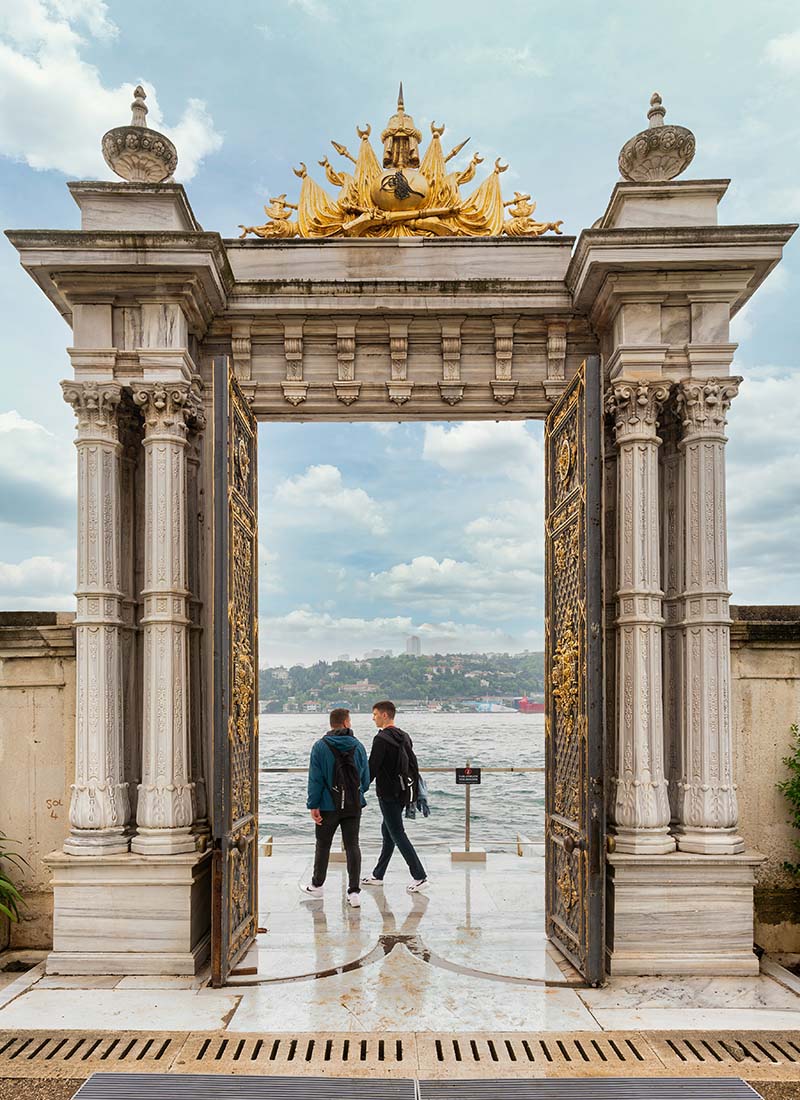
Marble gate leading to the Bosphorus Strait located at Beylerbeyi Palace, image by Halit Sadik, Shutterstock
It is a marvel of engineering from the Ottman era, allowing seamless and private transitions between the palace and the waterfront, ensuring that the sultan and his esteemed visitors could move without being seen by the general populace. The existence of this tunnel adds an extra layer of mystique to the already magnificent palace.
4. Çırağan Palace: A Royal Entertainment Venue
Built initially to entertain royals, Çırağan Palace was rebuilt in the 1990s after a devastating fire and is now known as Çırağan Palace Kempinski Istanbul. One of its most unique, exclusive, and luxurious hidden aspects is the Sultan’s Hammam, or Turkish ba th, located within the palace’s private quarters. This opulent hammam exemplifies the epitome of Ottoman luxury and craftsmanship.
View this post on Instagram
Adorned with exquisite marble, intricate mosaics, and stunning Iznik tiles arranged in elaborate patterns, the Sultan’s Hammam features a beautiful dome with small, strategically placed windows, allowing natural light to filter in and create a serene and ethereal atmosphere. Designed for teh exclusive use of the sultan and his closest family members, the hammam provided a private and indulgent retreat. Today, the Sultan’s Hammam serves as a venue for cocktail receptions, retaining its grandeur and elegance.
Istanbul’s royal Ottoman palaces offer a journey through time, showcasing the opulence, power, and intricate design that defined an empire. These hidden gems provide a deeper understanding of Istanbul’s architectural heritage and the lives of its rulers. ◼
Subscribe to the latest edition now by clicking here.
© This article was first published online in Aug 2024 – World Travel Magazine.