[vc_row][vc_column][vc_column_text]
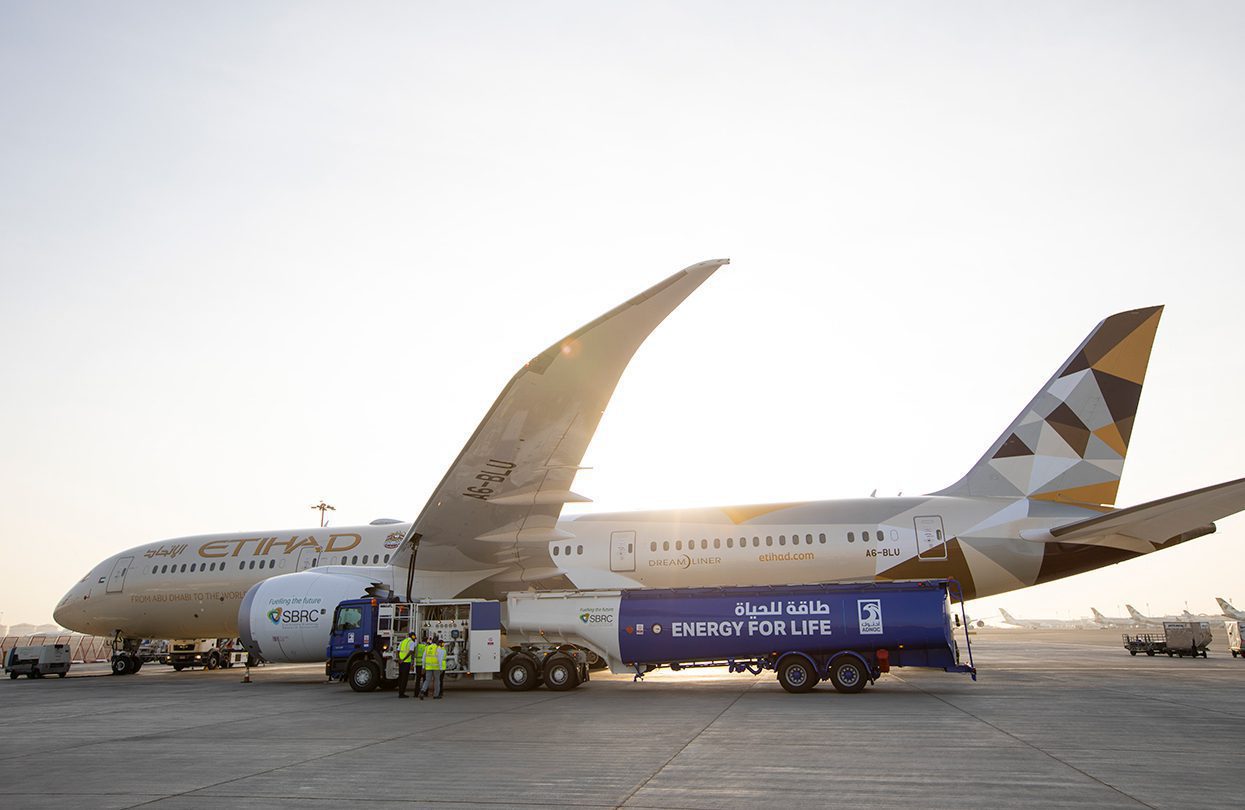
Etihad Airways has just made the world’s first commercial flight using locally produced sustainable fuel made out of saltwater plants, marking a major milestone in the development of a clean and alternative fuel to reduce carbon emissions on flights.
An Etihad Airways Boeing 787 made the flight from Abu Dhabi to Amsterdam.
The initiative was established by the Sustainable Bioenergy Research Consortium, a non-profit entity that’s part of the Khalifa University of Science and Technology in Abu Dhabi.
[/vc_column_text][/vc_column][/vc_row][vc_row][vc_column][vc_column_text]

The crew for the Etihad flight made using only biofuels
[/vc_column_text][/vc_column][/vc_row][vc_row][vc_column][vc_column_text]
Though over 160,000 passenger flights have flown on a blend of sustainable and traditional jet fuel since biofuels were certified for commercial use in 2011, the flight by Etihad was the first to use biofuels to complete their journey.
“Clean, alternative aviation fuels are an innovative and sustainable solution to significantly reducing harmful carbon emissions,” said the United Arab Emirate’s Minister of Climate Change and Environment, His Excellency Dr Thani bin Ahmed Al Zeyoudi.
The oils were derived from Salicornia plants grown in a two-hectare farm managed by the Seawater Energy and Agriculture System in Masdar City, the world’s first desert ecosystem designed to produce both fuel and food in saltwater.
Aside from growing the plants that make up the biofuel, the farm also raises fish and shrimp to provide nutrients for the plants, as well as contribute to the UAE’s food production.
[/vc_column_text][/vc_column][/vc_row][vc_row][vc_column][vc_column_text]
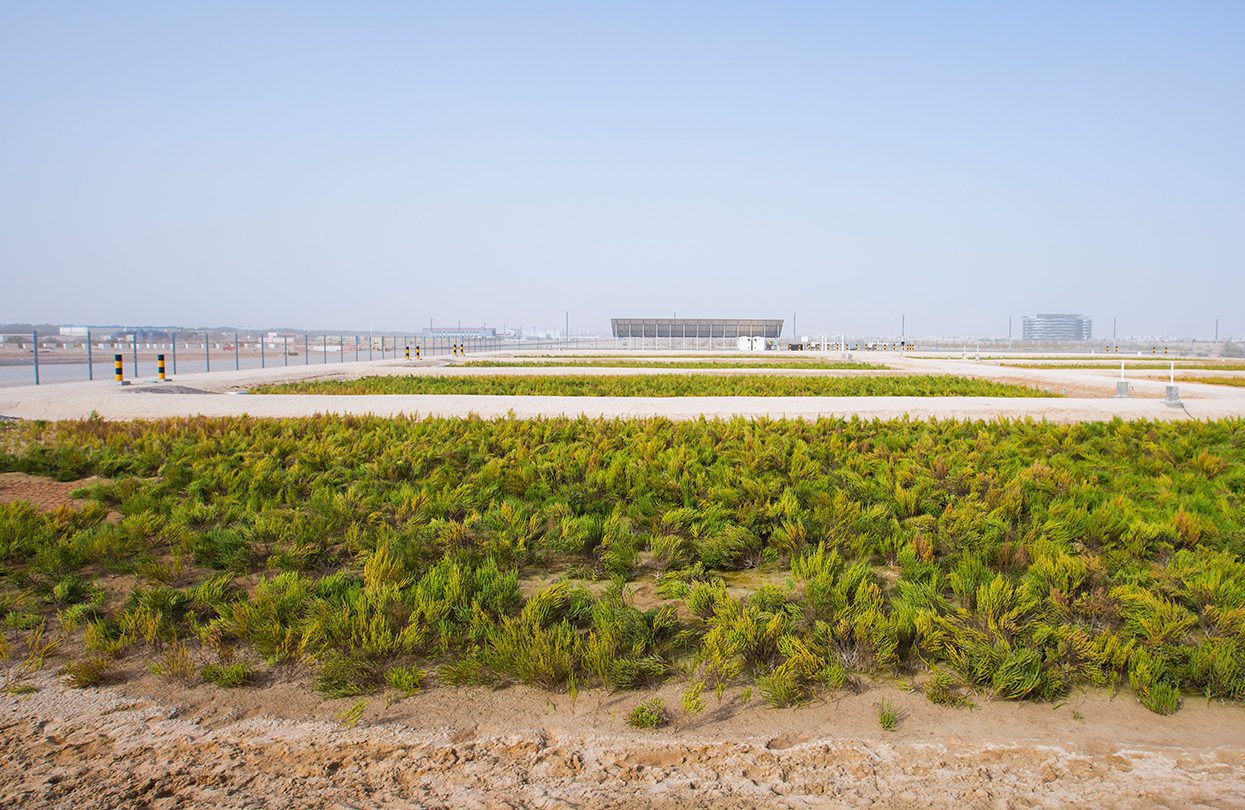
The Salicornia plants, grown in a facility in Masdar City
[/vc_column_text][/vc_column][/vc_row][vc_row][vc_column][vc_column_text]
The SEAS facility, which became operational in March 2016, is expected to scale up to 200 hectares over the next few years in a move towards full-scale commercial implementation, amid industry hopes that biofuels will become more widely used. ◼
[/vc_column_text][/vc_column][/vc_row][vc_row][vc_column][vc_column_text]Subscribe to the latest edition now by clicking here.
© This article was first published online in Jan 2019 – World Travel Magazine[/vc_column_text][/vc_column][/vc_row]