|
Listen To Article
|
Right now, half the planet is queuing for the same beach. You know the one. Aperol in a plastic cup, a towel fighting for territory, a sea the temperature of bathwater and a bill that isn’t. The northern summer is a herd, and the herd is loud.
So go the other way.
Go south, into an Australian winter, to an island most people file under “someday.” July in Tasmania is cold, bright, and almost entirely yours. The peaks wear snow. The trails are empty. And every restaurant, distillery and cellar door on the island is doing the thing it does best when the weather turns mean: feeding you like it means it.
This is the case for the opposite hemisphere and the opposite season. It is not a compromise. It is the whole point.
Start with the food, because Tasmania always does.
This is Australia’s larder, and winter is when the larder earns its keep. Cold water makes better oysters, and the ones at Bruny Island are the argument that ends the argument. You eat them a few metres from the water they came out of, salt-heavy and faintly sweet, and you understand why people fly a long way to stand in the cold and slurp. The Coal River Valley does its own version closer to Hobart. Order a dozen. Then order the second dozen you were going to pretend you didn’t want.
Then the whisky, which is where Tasmania stopped being polite about its ambitions.
Sullivans Cove won World’s Best Single Malt and did not apologise. Lark built the modern Tasmanian whisky story more or less by hand. Overeem quietly makes some of the most drinkable spirit in the country. These are cool-climate malts made on a cold island, and they taste correct in exactly the weather you’ll be standing in. A dram by a fire while the rain goes sideways is not a cliché here. It’s a Tuesday.
View this post on Instagram
The wine holds up its end.
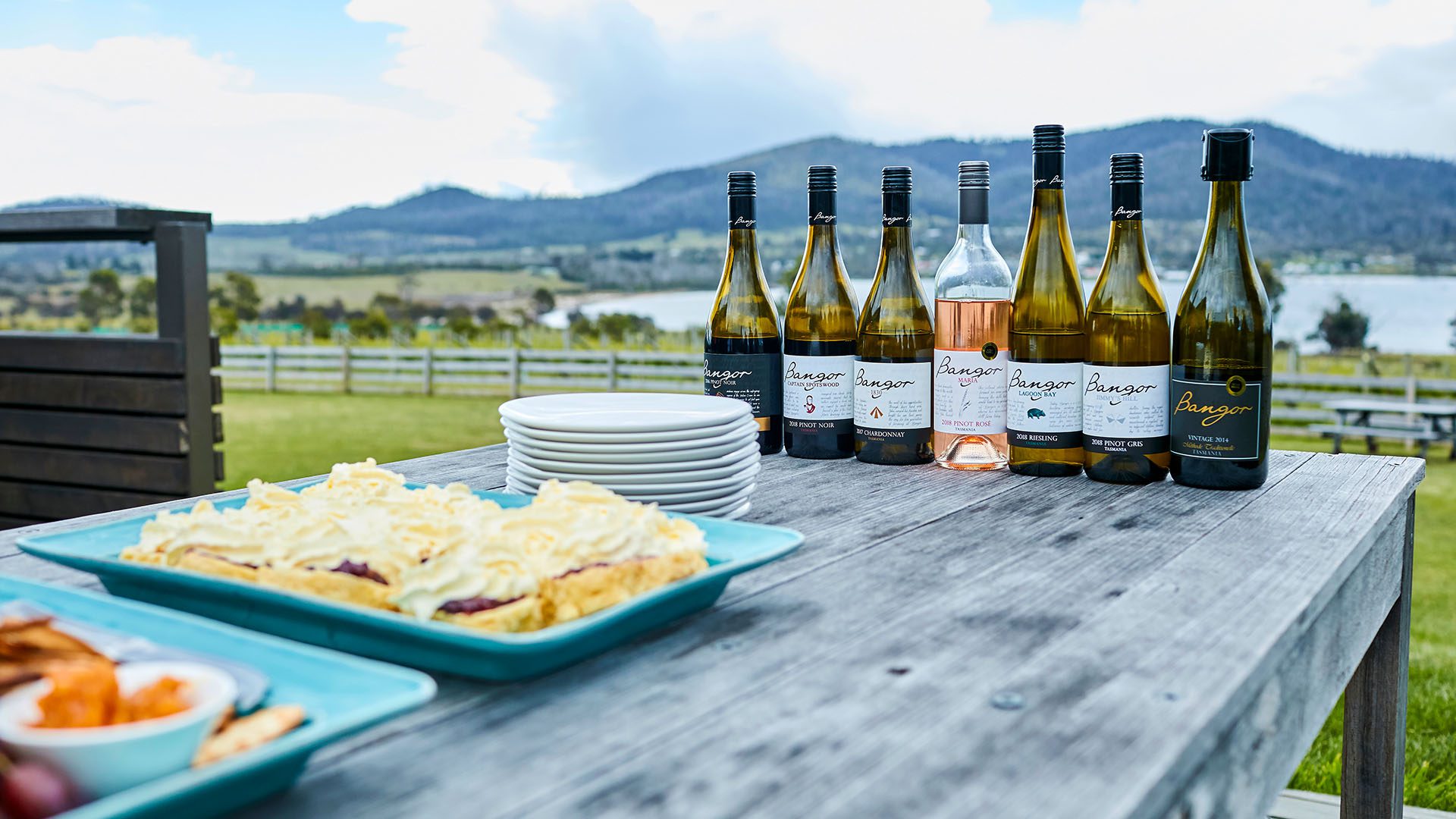
The Tamar Valley is pinot noir country and sparkling country, cool-climate and precise, the kind of bottles that make Champagne houses buy fruit here and stay quiet about it. Winter is when the reds come into their own, poured big and unhurried next to something braised. Add the cheese, the cool-water seafood, the abalone, the rock lobster, and you have a season built for long lunches that surrender to early dark.
You are not roughing it. You are being fed.
And then there is the reason Hobart stopped being a footnote.
MONA. The Museum of Old and New Art, David Walsh’s subversive, funny, occasionally alarming temple built into a cliff on the Derwent. It changed the city. It changed the country’s idea of what a city like this could be. A gambler’s fortune spent on art that argues with you, and you take a ferry to reach it, and you leave a little rearranged. There is no institution in Australia quite like it, and it exists here, on a river, in the cold.
View this post on Instagram
Its winter festival is why the smart ones come in July at all.
Dark Mofo turns the Tasmanian midwinter into theatre. Bonfires. Feasts. Red light poured over the whole waterfront. Art that leans into the dark instead of hiding from it. People plan their year around it. They come precisely because it is cold, because the long night is the material, because the fire only works when it’s freezing. Summer could never.
Now, where you sleep, because winter luxury lives or dies on the room.
Saffire Freycinet is the answer most people already know. It looks out over the Hazards and Wineglass Bay, and in winter that view goes from postcard to something with teeth: grey water, low cloud, the pink granite going darker in the rain. You watch it from behind glass with a fire going and a glass poured. That contrast is the luxury. Warmth you can see the cold through.
Pumphouse Point does the trick differently. A former hydro station standing out on Lake St Clair, reachable by a long causeway, the water black and still around you. In winter it feels like the last warm room at the edge of the world. There is a whisky cabinet. You will find it.
Push into the wild southwest if you want the drama neat. Empty trails, snow on the range, weather that means it. Then a lodge, a fire, a plate. Tasmania’s whole trick is this rhythm. Go out into the wild. Come back into the warm. Repeat until you’ve forgotten what a sun lounger is for.
Here is the honest part, and the World Travel Magazine view. The best travel instinct is almost always to zig when the world zags. Right now the world is zagging north, en masse, sweating, queuing, overpaying. The zig is south, into the cold, with a dram in your hand and no one on the trail.
I should keep this to myself. Telling everyone to go south is how the south stops being empty. But you read this magazine because you were going to zig anyway, and I’d rather you zig with good information.
So here is where I leave you.
A fire. Rain going hard against the glass. A dozen Bruny Island oysters on ice and a Sullivans Cove poured neat beside them. Outside, snow on the Hazards and not another soul on the beach. Somewhere across the water, a Dark Mofo bonfire is throwing red light at the longest night of the year.
The north can keep its sun lounger.
You’re already warm. ◼
Subscribe to the latest edition now by clicking here.
© This article was first published online in July 2026 – World Travel Magazine.