
For a century, a Spanish art trip has been an act of homage. You went to stand before Velázquez in the Prado, to crane your neck inside Gaudí’s stone forest, to walk Frank Gehry’s titanium ship in Bilbao and feel the twentieth century turn. Homage is a beautiful thing to owe. It is also, structurally, a conversation with the past: you arrive, you receive, you leave changed but silent. What has shifted in 2026 is the tense. Spain has stopped receiving and started proposing. The old pilgrimage sites are still here, but this year they share the map with a contemporary art and design scene that is no longer answering the global conversation. It is setting the terms.
MACBA Turns Thirty With “Like a Star Dance”
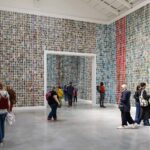
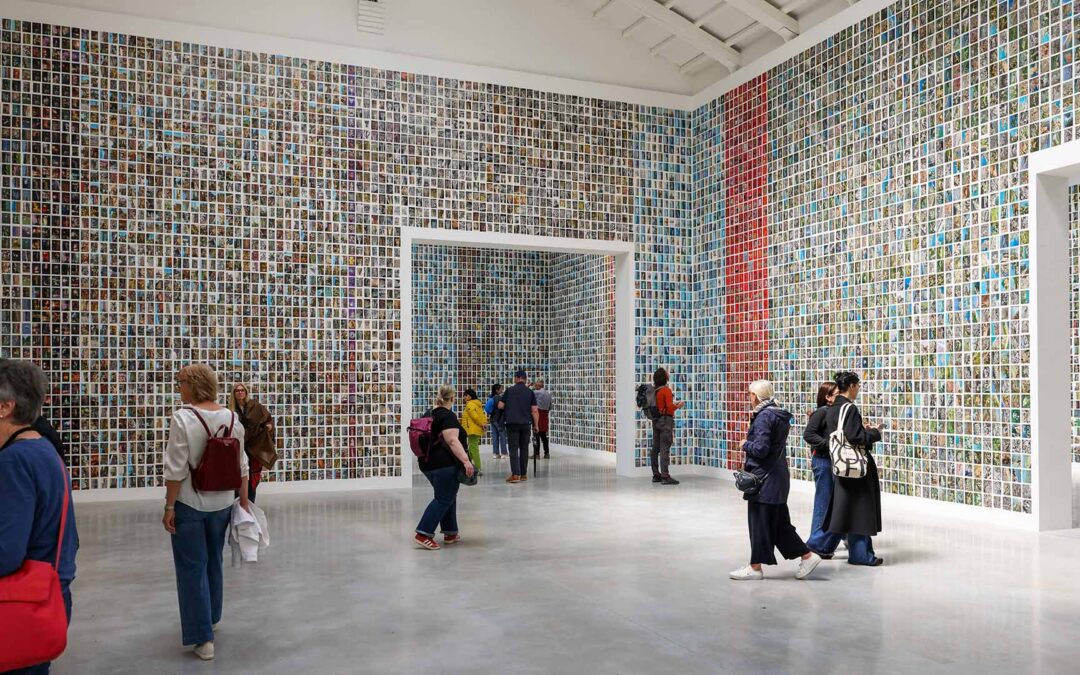
Begin in Barcelona, where the argument is loudest because the museums have all decided to talk about the same thing: space itself. MACBA turns thirty this year, and rather than mount the usual anniversary victory lap, Richard Meier’s white, light-flooded box has emptied its vaults into a show called Like a Star Dance: Thirty Years and Infinite Ways of Being. Two hundred works, roughly half shown for the first time, hung not by chronology or movement but by a logic borrowed from starling murmurations, the swarm that turns as one without a leader. Basquiat near Tàpies near Esther Ferrer. You do not walk this show so much as get carried by it, and the building helps: Meier’s ramps were always about deferral, about making you climb toward the art rather than confront it, and here the postponement finally has a subject worthy of it.
View this post on Instagram
Picasso and Perriand, Read as Builders
Cross the city to the Museu Picasso, where Picasso: The Architect (opening November) does the thing his museums rarely dare and reads him as a maker of space rather than a painter of faces. The show gathers works, archives, and a virtual project imagining a Picasso museum that never was, and it asks a real question: what did this man understand about volume, about how a plane folds into depth, that the Cubist canvases were only ever rehearsing? Then, in October, the Fundació Joan Miró opens the first Spanish retrospective of Charlotte Perriand, the woman who built the modern interior inside Le Corbusier’s atelier and was long filed under his name. That Barcelona is the city to correct the record is no accident. Perriand met Josep Lluís Sert in that same Paris workshop in 1928, and Sert built the Miró foundation itself. So the retrospective is being staged inside a building designed by her friend. The frame is the argument.
Gaudí’s Centenary and the World’s Tallest Church
Gaudí reads differently this year too. 2026 marks the centenary of his death. The Tower of Jesus Christ reached its full height in February, and on 10 June, the exact centenary of his death, it was inaugurated by Pope Leo XIV, making the Sagrada Família, at 172.5 metres, the tallest church in the world. Gaudí kept it just below the hill of Montjuïc on purpose, because he thought a human building should not out-reach the work of God. Stand under that completed crossing now and the pilgrimage stops being nostalgic. It becomes current, a 144-year project finishing in your lifetime.
FORMA and the Business of Collectible Design
Madrid answers with objects. In March the city launched FORMA, the first international collectible-design fair held in Spain, staged inside Matadero, a former slaughterhouse whose brick halls give the work a raw, load-bearing seriousness no convention centre could. Thirty-nine galleries and studios, folded into the wider Madrid Design Festival, and the point of it is economic as much as aesthetic: Spain is building the marketplace, the collectors, the professional floor that turns a design culture into a design economy.
View this post on Instagram
Hammershøi at the Thyssen, the Loudest Silence
The Golden Triangle plays the long game alongside it. At the Thyssen, the first Spanish retrospective of Vilhelm Hammershøi, The Eye That Listens, a hundred paintings of grey Copenhagen rooms in which almost nothing happens and the light does all the talking. It is the quietest possible rebuke to the idea that Spanish taste runs only hot.
The Designers Spain Now Exports
The names now carrying Spain abroad are not loud in the obvious way. Patricia Urquiola works like an engineer who fell for texture, dissolving the line between craft and industry until you cannot tell whether a piece was woven or extruded. Jaime Hayon smuggles humour into ceramic and glass with the confidence of someone who knows wit is the hardest thing to design and the first thing to date, and mostly refuses to let it. Álvaro Catalán de Ocón weaves plastic waste into lamps that argue about where a material comes from. What they share, and what the generation behind them has inherited, is a refusal to choose between craft and colour and boldness. That marriage, long treated as regional charm, is now the thing the rest of the world is copying.
Bilbao and the Northern Anchor
Bilbao holds the northern anchor. Gehry’s Guggenheim still does what it did in 1997, still turns a wet industrial river-town into a reason to fly, and the Basque design culture around it has grown its own quiet confidence. But the centre of gravity has moved inland and south. The pilgrimage sites now bracket the argument rather than being it.
So come this summer, and come for the living. The old masters will keep; they are not going anywhere. Spend an afternoon in Like a Star Dance and find the gallery where the murmuration logic breaks down and the curators let a single Miró hang alone against white. Stand there and watch how the space stops moving, how the building exhales, how a museum thirty years old teaches you that the future of design is measured in the quality of a silence. That gallery, to World Travel Magazine’s eye, is why you go to Spain in 2026. The pen has changed hands. ◼
Subscribe to the latest edition now by clicking here.
© This article was first published online in Aug 2026 – World Travel Magazine.