|
Listen To Article
|
I had not been afraid of the days. The days were straightforward — museums in the morning, a long lunch with a book in some plaza where the waiter let me linger past coffee, the slow walk back through streets that smelled of jasmine and warm stone. The days, I had told everyone before I left, would be easy. It was the evenings I had been quietly anxious about. The dinners. The hours between when Barcelona starts to come alive and when, in any other city, you might head home. In Barcelona those are the best hours, and they are designed — engineered, almost — for groups. For passed bottles and shared plates and the kind of laughter that builds across a table of seven.
I had been three nights in. I had eaten alone, gracefully enough — I’m not new to this, and I don’t believe a table for one is a failure of anything. But that evening, walking through El Born with no destination, I felt it: the particular ache of being on the wrong side of the glass. Not lonely, exactly. Just outside. The city was happening, and I was watching it happen.
That was when I heard the roar.
It came from a small bar on a side street I’d already passed twice, set into the ground floor of a building so unremarkable I’d registered nothing about it. A held breath, then a release — fifty voices going up at once, the unmistakable noise of a near-miss. I stopped. I am not, I should say, someone who reads World Travel Magazine for football coverage. I know what offside means in the way I know what a cravat is: vaguely, and from context. But the door was open. The bar was breathing. I walked in.
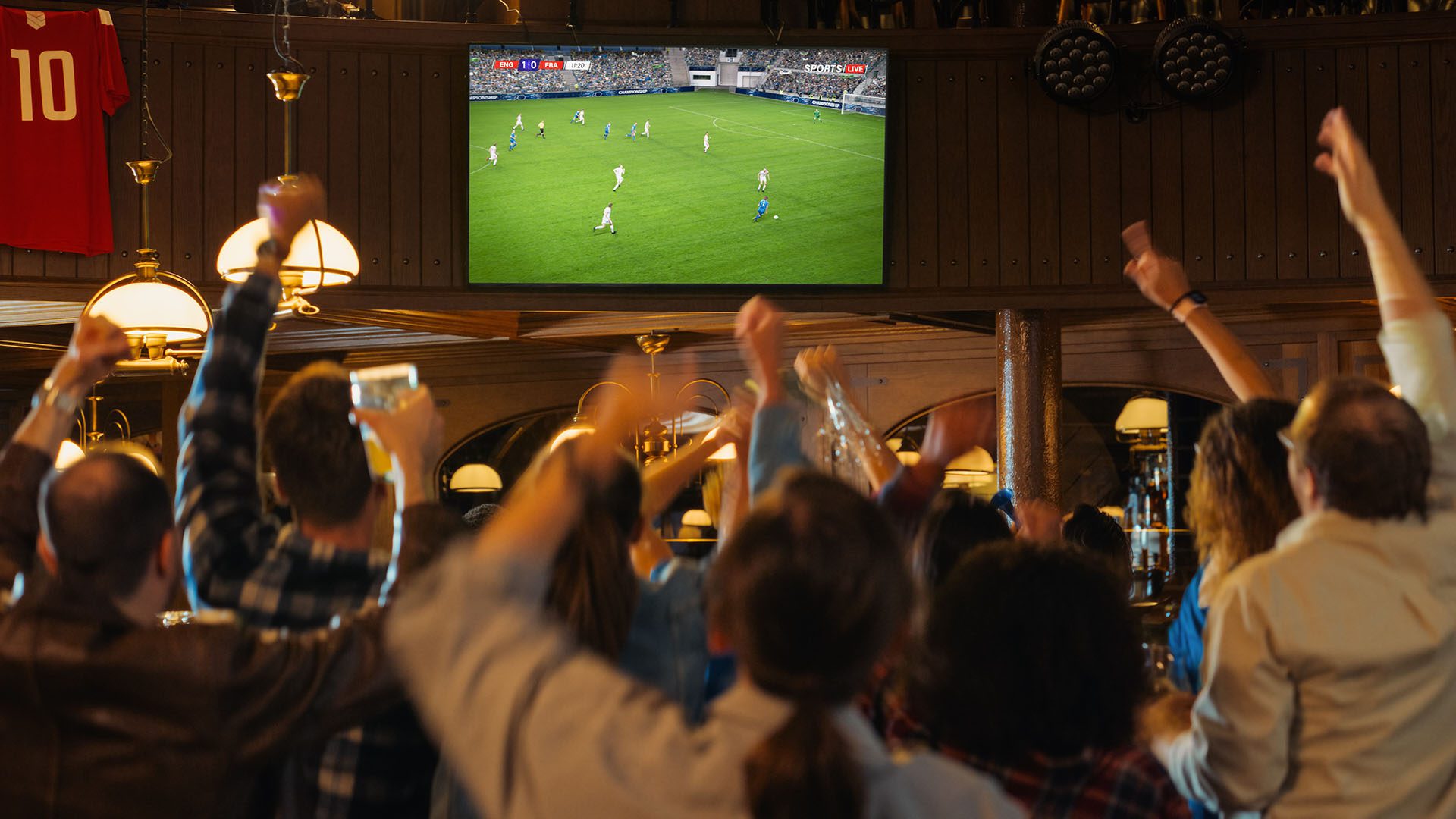
The last stool was at the corner, half-hidden by a column. I took it. Nobody looked up. On the television above the bar, Brazil were playing — Brazil were always playing, it seemed, this summer — and the small room was packed three-deep behind me, men and women and a couple of teenagers and an older woman in a yellow shirt who had clearly been there since the warm-up. The bartender, without my asking, set down a small glass of vermouth and an olive on a toothpick. He did not require me to explain myself. I had walked through the right door, and inside the right door, you are simply a person watching the match.
For ninety minutes, I was inside something. That is the only way I know how to say it.
When Brazil hit the post in the thirty-fourth minute, the bar made a noise I have never made in my life — a strangled, communal aaah that came from somewhere beneath language. The man next to me — bald, sixties, a small dog asleep at his feet — turned as if we’d known each other for decades. “Imposible,” he said, shaking his head. “Imposible.” I shook my head back. I had no opinion on the shot. I had a very strong opinion on the fact that he had spoken to me. When the Brazilian forward finally scored — the bar erupting, glasses lifted, the woman in yellow shouting something joyful at the ceiling — the bald man clinked my glass without looking at me, the way you clink the glass of someone who is, for the duration of this exact moment, family.
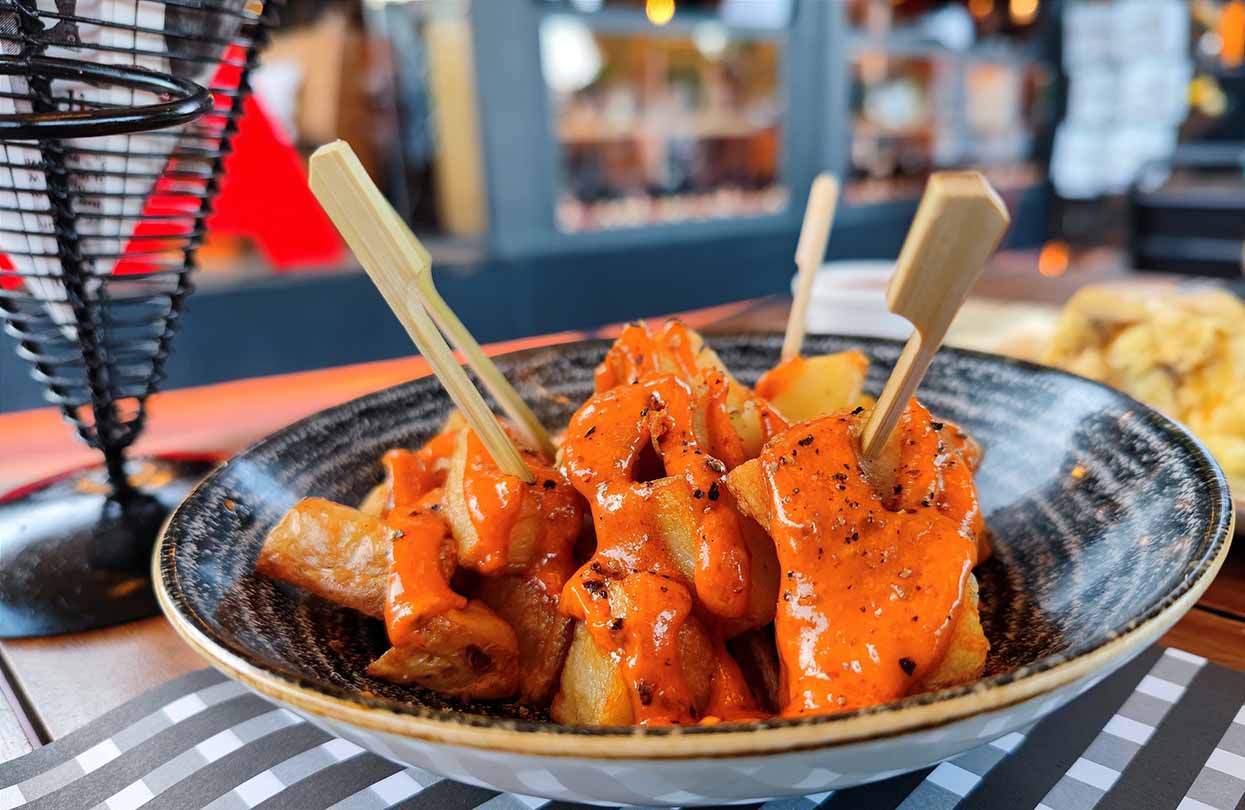
Delicious patatas bravas with spicy orange traditional sauce, image by JGLmarket, Shutterstock
There is a thing that happens in a room of strangers watching football together. Everyone is feeling exactly the same thing at exactly the same time. You do not have to translate. The collective gasp does not check your passport. The collective groan does not ask if you have a dinner reservation. For ninety minutes, your foreignness is the least interesting thing about you, because the only interesting thing is what is happening on the screen.
Somewhere around the seventy-second minute, the bartender refilled my glass without my asking. Somewhere around the eighty-fourth, the teenagers behind me began chanting something I didn’t understand, and I found I was smiling the way you smile at a song you don’t know the words to. A small plate of patatas bravas arrived between me and the bald man — neither of us had ordered it, both of us ate from it. When the final whistle blew, there was that lovely soft collapse a crowd makes when ninety minutes of attention release at once. The bald man patted my shoulder. The woman in yellow caught my eye and made a small approving face, as if to say, you were here, you saw it, good. Behind me, somebody mentioned the next match. Tomorrow, somebody else replied. Tomorrow.
I walked back to my hotel through streets that were still warm. The Gothic Quarter was full of voices, of windows open onto small kitchens, of someone, somewhere, recapping the match in animated Catalan. I had spent three nights being a woman moving carefully through someone else’s city. I had, for the last ninety minutes, accidentally been a woman in a room. My evenings in Barcelona had been, until that night, a city I was visiting. They were, suddenly, a city I was in.
I am writing this from a café the next morning, and I am, embarrassingly, already looking at the fixtures list. Portugal play tonight. France play tomorrow. Somewhere in this city, on some side street I have not yet walked down, a small bar is filling up. The door is open. The roar, when it comes, will be the same roar. I just have to walk through the right door — and tonight I plan to walk through another one. ◼
Subscribe to the latest edition now by clicking here.
© This article was first published online in June 2026 – World Travel Magazine.