
|
Listen To Article
|
The market hour I trust most is 5am. By 6, the air has been moved, the displays composed, the prices adjusted upward by the small margin that announces a tourist. At 5, the market has not yet decided what to show. The vendor is restocking. The light is grey. The first customer is another vendor, or a cook who knows the back of the stall better than the front. This is when a market tells you the truth about itself. I spent four cities looking for that hour. The assignment, from World Travel Magazine, was simple in shape and difficult in practice: four markets, four mornings, the hour before the day begins to perform.
Istanbul. In the Spice Bazaar before the doors open to the public, the corridors smell of cumin in its raw, oily, uncomposed form — the way it smells in a Khari Baoli warehouse at the same hour, before the dust of the day has mixed in. Bayram Çetin, who has worked the same stall for thirty-one years, was restocking sumac into wooden bins when I picked up a pinch of his cumin between thumb and forefinger, rubbed it once, brought it to my nose. He looked up. He didn’t say anything for a beat. Then he said, in careful English, “You know how to buy.”
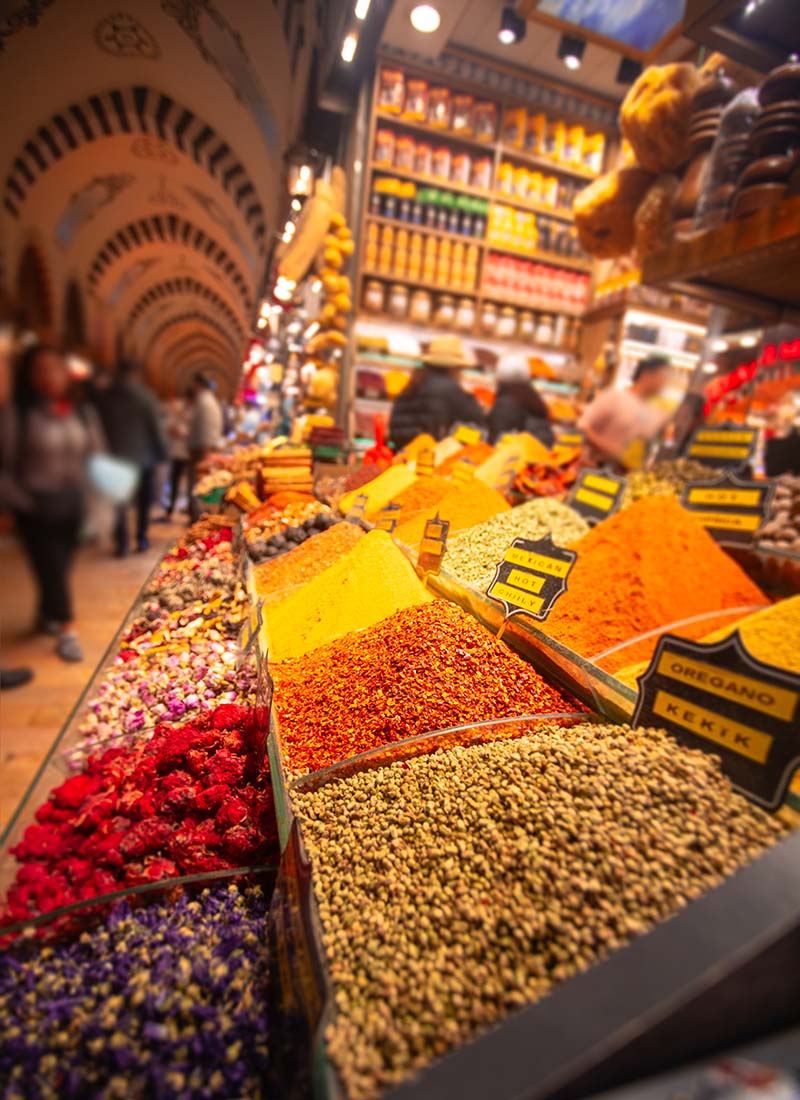
Spice sellers in the Grand Bazaar, Image by smutan, Shutterstock
What followed was a fifteen-minute conversation conducted in roughly three languages and many gestures, about black cumin versus green, the Turkish habit of pairing sumac with onion before grilling, why the bazaar’s good vendors won’t sell saffron loose any more. The interesting part, though, was the first instant. The pinch-and-smell is its own dialect. Bayram recognised it the way you recognise a regional accent — not its content but its grammar. We were trading in the same currency. Different denominations. Same idea of value.
Tokyo. The wholesale auction at Toyosu is closed to most outsiders, but the outer market — the streets around it, the six-seat sushi counters that begin pouring tea at 5:30 — is where the philosophy of the place shows itself. I sat at the counter of a place whose name doesn’t matter and watched Hiroshi Yamada, the second-generation owner, run his thumb along the spine of a saba mackerel for a full forty seconds before deciding it was acceptable for the morning. He had already rejected three.
The word he kept using was shun — peak season — but applied to a single fish on a single morning. Freshness in Tokyo is not a quality you check for. It is a system you live inside. The fish moves from the bay to Toyosu to the counter in a span of hours, and every person in that chain is responsible for the integrity of the next. Yamada-san was the last filter. By 6am he was slicing chutoro with the attention usually reserved, in other cultures, for things that don’t move. The closest analogue I could find for it was a Mangalorean cook choosing pomfret at Bunder. The reverence is the same. The vocabulary is different. The instinct is identical.
Marrakech. By the time the snake charmers arrive at Jemaa el-Fna it is no longer the place the city actually uses. At 5am the bread vendors are unloading khobz from flat wooden trays, the orange-juice stalls are squeezing the first crate, and the light has that pink, dusty, pre-industrial quality that Marrakech does better than any city I have walked through. The square is being assembled by the people who live here, for the people who live here. The performance comes later.

Jamaa el Fna market square, Marrakesh, Image by zodyakuz, Shutterstock
Fatima Zahra, who runs juice stall number 32 with her brother, poured me a glass before I had asked for one and before I had reached for any money. “Drink first,” she said, in French. The transaction came afterwards — a few minutes later, when I asked for a second glass and she let me pay for both. The first glass was hospitality. The second was commerce. The order mattered. I had read about this elsewhere — the Moroccan idea that the guest is owed something before the host is owed anything — but reading it and being handed a glass of cloudy orange juice at 5:17 in the morning by a woman who has been awake since 4 are not the same kind of knowing.
Barcelona. La Boqueria at 6am is a working market with a tourism problem it has not yet solved, but at this hour the tourists are absent and the vendors are arranging produce with a degree of visual attention I have seen in only one other context, which is a Japanese florist. Manel Vidal, who has run a fruit stall on the same corner for forty-two years, was building a pyramid of cherimoyas with the absorption of someone composing a still life. When I told him I don’t eat meat or fish he laughed — not at me, with me — and said, “Then you came to the right counter, and the wrong country.”
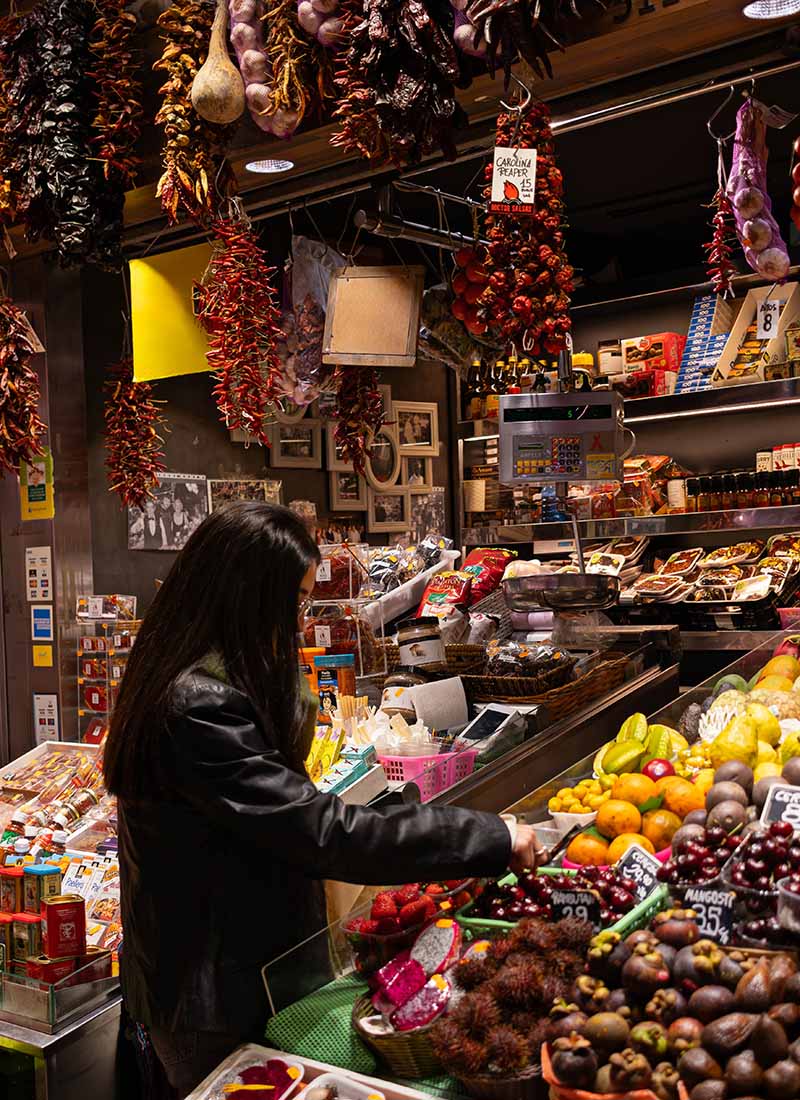
La Boqueria Market in Barcelona, image by Juan camilo Castro, Shutterstock
The fruit and vegetable stalls at Boqueria are, quietly, among the most extraordinary produce displays in Europe. The tomatoes alone require their own taxonomy: corazón, raf, kumato, montserrat, each with its season, its use, its argument for itself. Manel walked me through six varieties in under three minutes. Standing there with a paper cone of strawberries he had insisted I try, I understood that the vendor at a serious market is always also a teacher. Whether you choose to be a student is up to you.
Four cities. Four mornings. The same instinct. Every market in the world speaks the same language at 5am — the language of people who care about what they sell, before the day arrives to convert that care into theatre. You walk in. You pick up a cumin seed. You rub it between thumb and forefinger. The vendor looks up. Something passes between you that doesn’t require a common tongue. You have been fluent in that language your entire life. You just hadn’t, until that morning, heard it spoken in Turkish. ◼
Subscribe to the latest edition now by clicking here.
© This article was first published online in June 2026 – World Travel Magazine.