
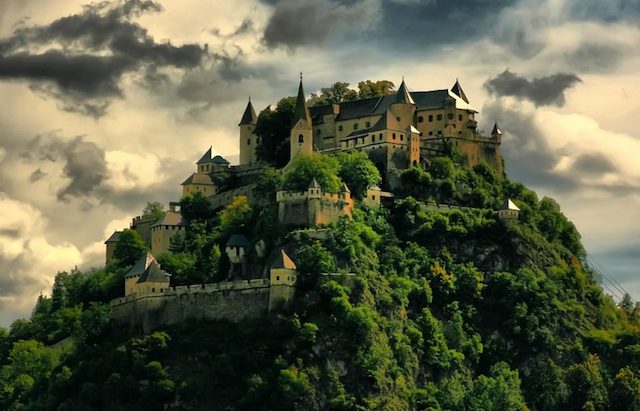
The castle sits on a spectacular pillar of rock in the majestic mountains of Carinthia, with stunning views in all directions.
[vc_row][vc_column width=”1/4″][vc_separator color=”black” border_width=”10″][vc_custom_heading text=”Austria”][vc_separator color=”black” border_width=”2″][vc_widget_sidebar sidebar_id=”sidebar-page”][/vc_column][vc_column width=”3/4″][vc_column_text]

The castle sits on a spectacular pillar of rock in the majestic mountains of Carinthia, with stunning views in all directions. The castle assumed its modern appearance in a major restoration of 1570 to 1585, after it had been damaged during the wars between Austria and the Turks. However, the spot has been fortified for a long time. The area is full of Celtic and Roman ruins, and there may have been an ancient fortress here. The first certain mention of the castle dates to 860, when Emperor Louis the German gave it to the Archbishop of Saltzburg.
The castle holds the obligatory museum with Khevenhüller family memorabilia (including kind of a travel diary that King James I of England has signed), some portraits, armour and other things or local interest. Otherwise, there is a café and a bit of scenery around the fortress, but the building itself is the key to enjoying the site. There are claims that Hochosterwitz inspired Walt Disney to the castle shown in “Snow White”, but there are several castles in Europe with similar claims.
Apart from the mentioned former abbey and cathedral of Gurk, there are a few other attractions nearby. Friesach with its medieval core, Klagenfurt and several of Carinthia′s pretty lakes are within reach. Note the village of St Donat, not so much for any attractions, but rather for the funny name. The villages of Rottenegg and Fucking in Upper Austria are funnier, though.
The Magdalensberg Mountain nearby was the site of a Celto-Roman town later became the centre of the Slavonic Kingdom of Carantania. It is still perceived as the spiritual centre of the province, despite of anti-Slavonic sentiments of the predominantly Germanic population.
Subscribe to the latest edition now by clicking here.
If you would like to comment on this story or anything else you have seen on World Travel Magazine, head over to our Facebook page or message us on Twitter.
And if you liked this story, subscribe to our bi-monthly World Travel Magazine, a handpicked selection of editorial features and stories from Global Destinations, Inspire Me, Insider, Style File, Wellness & Travel, City Travel, Suite Life, At Leisure, Short Breaks and much more.
[/vc_column_text][/vc_column][/vc_row]


