|
Listen To Article
|
Steam lifting into snowfall, stone chambers holding quiet like a vow, and saunas punctuated by a breath of ice—this is winter, edited. Across Germany, Switzerland, and Austria, the season’s most refined warmth lives in ritual: Baden-Baden’s Roman-Irish sequence, Zumthor’s temple of stone at Vals, and Bad Gastein’s alpine pools at 1,100 metres. Here’s where to bathe beautifully, book private suites, and navigate textile-free etiquette with ease—and leave rewired, not just relaxed.
Germany — Baden-Baden’s Roman-Irish Ritual (Friedrichsbad)
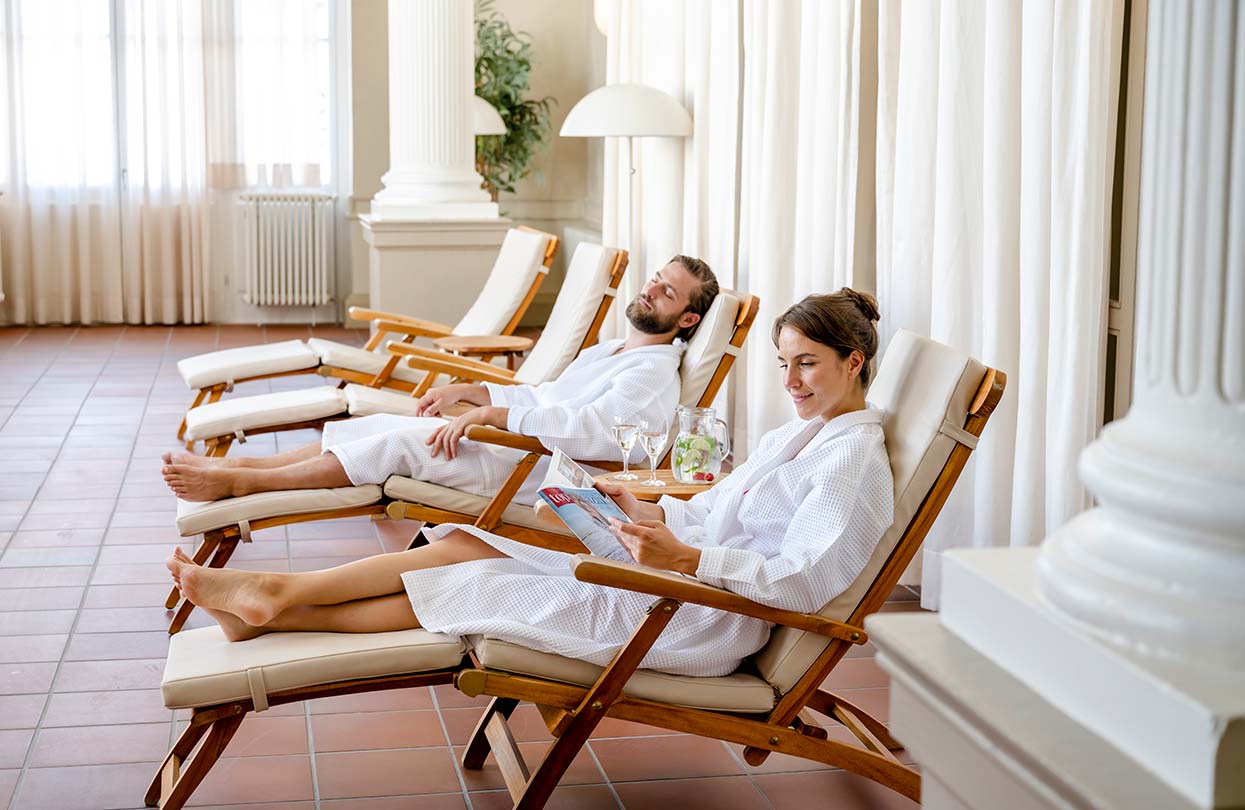
In Baden-Baden, bathing is not an interlude but a language, and Friedrichsbad is its most eloquent speaker. For more than 145 years, this neoclassical sanctuary has practiced a Roman-Irish sequence that unfolds in seventeen measured acts—warm air, hotter air, a fine-grain soap-brush polish, steam, graded thermal pools, a brief cool reset, and finally a cocoon of silence. The choreography matters. Heat and humidity rise with deliberation; muscles lengthen, pulse steadies, the mind is edited down to essentials. It is less a spa day than a beautifully engineered descent into ease.
Etiquette is part of the architecture. The ritual is traditionally textile-free, a European clarity that preserves both hygiene and the precise exchange of heat. For those who prefer discretion, private suites and add-on “Private Baths” soften the threshold without diluting the effect. Attendants manage tempo and transitions with the poise of maître d’s; you surrender your watch and, with it, your insistence on clock time.
What distinguishes Friedrichsbad is not novelty but structure honed by a century and a half of repetition. The pools step through temperature so the nervous system recalibrates without shock; the classic brush massage leaves the skin bright, the breath deeper. The quiet room at the end is not an afterthought—it is the seal on the ritual, where warmth settles and the body notes what has changed.
View this post on Instagram
Place contributes its own gravitas. Baden-Baden’s spa quarter is a UNESCO-listed lesson in elegance, and in winter it feels especially composed: façades pale against crisp air, the Kurhaus lanterns lifting at dusk. Time your entrance so you emerge to twilight and the Christmas market just beyond—timber chalets, bredele spice, a glass of something mulled to anchor the calm. Or pair the experience with a short visit to the Roman bath ruins, a reminder that this conversation with water began long before us and will continue, perfectly paced, after we leave.
Read More: Tracing Germany’s Roads & Riches: Black Forest Route Road Trip
The advice, quietly: book the brush treatment, linger longer than habit in the mid-temperature pool, take one brisk plunge, and keep the phone asleep. Friedrichsbad rewards those who arrive with curiosity and depart without hurry.
Switzerland — 7132 Therme Vals (Peter Zumthor)
Some buildings ask to be seen; Therme Vals asks to be felt. Peter Zumthor composed it from some 60,000 slabs of local Vals quartzite, each stone cool to the touch, each joint exact, so that bathing becomes an encounter with geology rather than décor. The complex is half quarry, half cave—roof laid like a grass-covered meadow across the hillside, volumes embedded rather than perched—so the first sensation is hush. Footsteps soften, voices fold inward, and the mountain seems to reclaim its own temperature.
The water comes from the St. Peter spring, highly mineralised and hovering around 30°C, threading through a constellation of chambers that read like chapters: dark pools where light is rationed, pale rooms where stone glows, the gentle theatre of fire, blossom, and sound baths. Move slowly—five minutes longer than instinct in each space—and the architecture begins to time your breathing. In the sound room, vibrations skim the skin like a bow across a string; in the fire pool, heat takes on a colour; in the blossom bath, scent arrives as a memory rather than a note. You don’t seek contrast here so much as gradation—the way temperatures lean into one another until the body forgets edges.
The hour to keep is blue hour, when exterior glass becomes mirror and the stone deepens to slate; or, if you’re fortunate, snowfall, when flakes stipple the sky-light and every surface reads quieter. Towels steam delicately; time loosens its grip. This is luxury without announcement: the generosity is spatial, the excess is restraint.
Zumthor’s idea—a house built around bathing as a primal act—is legible everywhere. Corridors kink to protect silence; benches appear exactly where a pause belongs; the roofline brushes the hillside so the building never breaks the valley’s sentence. Protected as a heritage masterpiece, it is also astonishingly usable: lockers that behave, attendants who vanish and reappear on cue, a choreography that keeps rooms at the right hum of occupancy without ever feeling stage-managed.
Pair the calm with motion. Arrive or depart on the Glacier Express in Excellence Class—panoramic windows turning the Alps into slow cinema—or fold Vals into an overnight in St. Moritz, where lake light and old-world service offer a different register of quiet. Either way, keep the day unstacked. Therme Vals rewards one intention at a time: to warm, to float, to listen. When you leave, stone seems to travel with you—the mountain’s pulse, measured in water.

Austria — Bad Gastein at Altitude (Felsentherme)
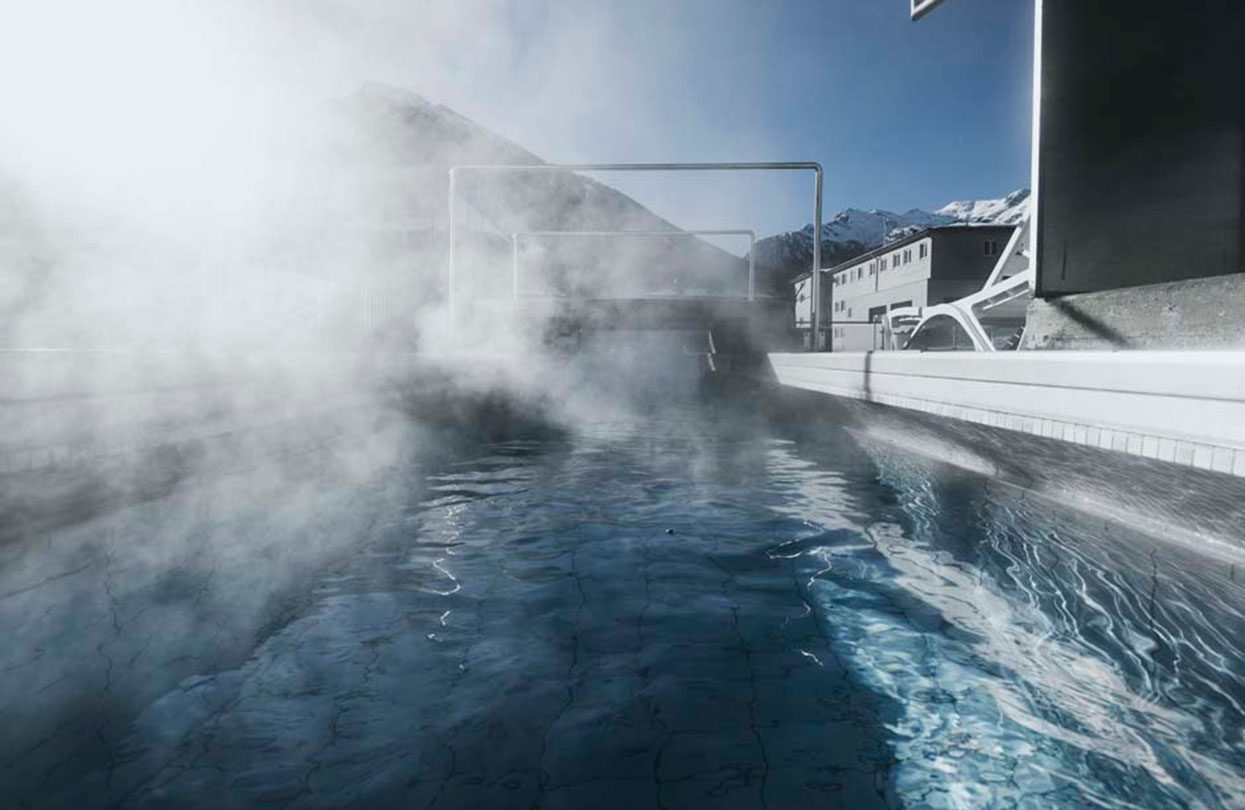
At 1,100 metres, water behaves differently. In Bad Gastein, it rises warm from the rock and meets winter air with a sigh, turning the Felsentherme terraces into a theatre of steam and snow. Austria’s first public thermal spa sits beneath the serrated skyline of the Hohe Tauern, its pools edged by raw stone so the setting reads alpine rather than urban—more grotto than complex, more mountain than man-made.
The rhythm here is altitude-aware. Step from the interior halls into the panorama pool and the valley opens like a page—pistes traced in chalk, roofs sugared white, clouds moving with purpose. The water, mineral-rich and steady, holds the body effortlessly; shoulders drop, exhalations lengthen. Inside, a series of rock-hewn sauna zones brings character without gimmick: dry heat that smells faintly of timber, gentler rooms with soft vapor and a view slit to the mountains, cool-down paths that return circulation to the calves before another round. Between circuits, relaxation terraces make room for quiet—loungers angled to snowfields, blankets warm enough to keep the pause from breaking.
Etiquette divides the experience elegantly. Families drift toward the thermal and activity pools where the atmosphere is informal and clothed; seekers of deeper heat migrate to the sauna complex, a textile-free world of Aufguss rituals and measured silence. Both can coexist in a single day if paced well: unhurried laps outside as snow dusts the surface, then a climb to the sauna level for cycles that move heat through bone and breath.
Winter improves the formula. On bluebird days, ski morning → thermal afternoon → early dinner is the local cadence—legs worked on piste, knots released in water, appetite answered by something simple and restorative in town. When weather turns, Felsentherme becomes a storm-day sanctuary: storm watching from a hot edge, fog laying its hand across the peaks while the pool holds temperature.
View this post on Instagram
The valley offers variations on the theme. Nearby Bad Hofgastein’s Alpentherme scales larger—multiple zones, family-friendly attractions—useful when you want breadth or quieter corners for children. In good conditions, look for snow-sauna experiences in the region: a short, bracing passage from heat to powder that etches contrast into memory and skin.
Read More: 9 Must-Do Christmas Markets in Salzburg: An Insider’s Guide to Austria
The counsel is to keep the day lightly edited. Book the panorama pool window, allow extra time between sauna rounds, and let the mountain dictate tempo. In Bad Gastein, wellness is not a break from winter; it is winter, perfected.
48-Hour Micro-Itineraries (Editor’s Cut)
Baden-Baden — Wellness + Market
Arrive late morning and surrender to Friedrichsbad’s 17-stage ritual; emerge glazed with calm for a light lunch and a deliberate nap. As twilight lifts, follow the lanterns to the Kurhaus Christmas Market—bredele warm in the hand, mulled wine in the other—then drift back through the spa quarter’s pale façades. Day two begins on the Lichtentaler Allee, a slow promenade of bridges and sculpture, before a museum pause and café interlude. If travelling with family, trade reverie for play at Caracalla’s pools.
Vals — Architecture + Silence
Hold the afternoon clear for a blue-hour session at 7132 Therme: stone-chamber circuit, breath paced to quartzite, dinner that keeps conversation low. Step back into the outdoor pool to star-watch as steam lifts like silk. Next morning, let a long breakfast anchor you, then take a winter walk along the valley’s quiet margins before a late-morning second soak—shorter, slower, perfectly measured.
Bad Gastein — Ski + Soak
Ski until the legs speak, break for something simple, then cross the threshold to Felsentherme: panorama pool with mountain lines, rock saunas, a chair angled to snow. Sleep early. On day two, trade speed for stillness—snowshoe to a viewpoint, return for an unhurried thermal circuit and a targeted massage—and close with a village dinner where windows frame peaks and the evening reads like a postcard.
What Insiders Book
Friedrichsbad, Private Baths after the ritual. Seventeen stages soften the body; the add-on seals it. A discreet suite, warm stone, and a final soak without clock or crowd—silence as the last treatment.
7132 Therme, late-evening snowfall slot + couple’s room. Reserve blue hour edging into night. If the forecast hints at flakes, hold your time; quartzite deepens, steam turns luminous, and the couple’s treatment room becomes its own small chapel.
Felsentherme, panorama pool at sunset → sauna sequence → quiet lounge. Slip outside as the valley blushes, climb to dry heat and Aufguss, then read the snow from a lounger until breath and mountain share a tempo.
Rituals 101
Think of the thermal circuit as a measured conversation with heat: begin in a warm pool to loosen breath, step into a hotter basin where muscles unspool, then move through steam and into a dry sauna so warmth reaches bone. Close the round with contrast—an Eisgrotte, snow shower, or cold plunge—before ten quiet minutes horizontal. Repeat the sequence three times; the third is where the nervous system truly lets go. Between rounds, treat cold not as punishment but punctuation: a brief, bracing comma that sharpens the next sentence of heat.
For privacy and pace, VIP suites fold the whole grammar inside four walls—your own steam, your own sauna, your own soundtrack—so you can stretch transitions or hold silence longer. Those with specific aims should look to physician-led programs: mineral profiles and bathing times tuned to circulation, skin health, or post-sport recovery, often paired with targeted hydro- or inhalation therapies. Pre-book the medical consult; the right plan makes ritual feel like prescription, precision disguised as ease.

Micro-FAQ
Is Friedrichsbad nude? Mostly, yes. Textile-bathing windows are typically Wednesdays and Saturdays—always check the current calendar before you go. Privacy etiquette is strict; towels are used for seating.
What’s special about 7132 Therme Vals? Peter Zumthor’s award-winning stone architecture—some 60,000 slabs of Vals quartzite—frames mineral water from the St. Peter spring (~30 °C). It’s a hushed, sensory, design-led ritual.
How high is Felsentherme Bad Gastein? Roughly 1,100 m above sea level, with Hohe Tauern views. Expect indoor–outdoor pools, rock saunas, and steam rising into snowfall.
Can families visit textile-free spas? Yes—use the clothed pool zones and designated family hours. Sauna complexes are often textile-free; local rules vary, so confirm signage and staff guidance.
Do I need to bring anything? A robe, non-slip slides, and two towels (one for sauna seating). Most spas rent or sell sets if you prefer to travel light.
Are photos allowed? Generally no. Privacy is part of the ritual. Keep phones locked away; many facilities enforce camera-free zones.
When should I book? For winter weekends and holidays, secure entries and treatments 1–2 weeks ahead (longer for private suites). Late-afternoon/blue-hour slots are coveted.
Snow-sauna or cold therapy—how to approach it? Treat it as punctuation: brief plunge/snow/Eisgrotte between heat rounds, followed by ten minutes of horizontal rest. Three cycles is the sweet spot.◼
Subscribe to the latest edition now by clicking here.
© This article was first published online in Nov 2025 – World Travel Magazine.