
|
Listen To Article
|
Where Taste Is Migrating Next. The 2026 rankings have settled. Hong Kong’s The Chairman holds Asia’s number one, the northern summer is at full boil, and the only question worth asking now is the one the lists never answer: where next. Taste does not sit still. It migrates, a season or two ahead of the reservations book, and the pleasure is in getting there while the table is still yours to claim. Here are six places it is moving toward, and the signal in each that says arrive early.
Chengdu
This spring a five-table room called Co- enters Asia’s 50 Best at number 69, the first restaurant from Chengdu ever to make the list. Read past the number. Chinese fine dining has spent a decade concentrated in Shanghai and Hong Kong; Co- is the sound of it decentralising. The kitchen builds a tasting menu from French technique and the Sichuan-Chongqing larder, much of it grown on the restaurant’s own eco-farm, and the tables book two to three weeks out. Sichuan is the next Chinese frontier, and it is not travelling alone: the regional capitals are where the country’s culinary ambition is relocating. Chengdu is the proof of concept. The window where you can still get one of those five tables on a fortnight’s notice closes the moment the number climbs.
View this post on Instagram
Busan
On the same extended list, at number 99, sits Fiotto, the first restaurant from Busan to be ranked at all. It is run by a married pair of chef-farmers, Kim Ji-hye and Lee Dong-ho, whose pasta tasting menu leans on native Korean rice, Jeju black pork, and vegetables from the family plot. The story is not the pasta. It is the postcode. Korean gastronomy has meant Seoul for as long as the world has paid attention, and Busan’s arrival says the map is widening south, toward the port cities. Fiotto is small enough that a ranking of this kind fills it fast, which is precisely why the smart move is a table this year rather than next.
View this post on Instagram
The Far North
Koks, the Faroese restaurant that chef Poul Andrias Ziska took on a three-year residency to a 53-person village in Greenland, proved something the industry is only now absorbing: the edge of the map can hold two Michelin stars. Koks is between homes at the moment, but the door it opened stays open. The Faroe Islands now field a genuine scene, Ræst and Roks among it, and Greenland has tasted what destination dining does for a place of 56,000 people with no roads between towns. Arctic terroir, seal and muskox and foraged wildflower, is the new luxury frontier. The far north is where remoteness stops being a penalty and becomes the entire point.
Oaxaca
Down a dirt track in San Juan Bautista la Raya, in the courtyard of his childhood home, Jorge León cooks a five-course menu built from whatever he found that morning in Abastos market and whatever the family milpa yielded. The restaurant is Alfonsina. There is no sign and no website. León trained under Enrique Olvera, then went home, and that direction of travel, from the capital’s temples back to the source, is the Mexican story of the moment. Mexico City has held the world’s attention for years; the frontier now runs through Oaxaca and the Yucatán, where milpa-to-table is less a concept than a birthright. Alfonsina seats a handful. Word of mouth is already doing its work, which means the quiet is temporary.
The Subcontinent
NAAR, Prateek Sadhu’s sixteen-seat room in Kasauli, debuts at number 30 on Asia’s 50 Best, and Kasauli enters the top fifty for the first time in the list’s history. That a Himalayan hill town now sits alongside Tokyo and Bangkok tells you regional Indian cooking has found its confidence. The same current runs abroad. In New York, Vijay Kumar’s Semma holds a Michelin star and a James Beard award for its Tamil Nadu cooking, while Vikas Khanna’s Bungalow has made regional India the most argued-over reservation in the East Village. Masque still flies the flag in Mumbai. The pattern is clear: ambitious Indian food, rooted in a specific region rather than a generic idea of the country, is being taken seriously on several continents at once. Book Kasauli before the number does the talking.
View this post on Instagram
Wine Country
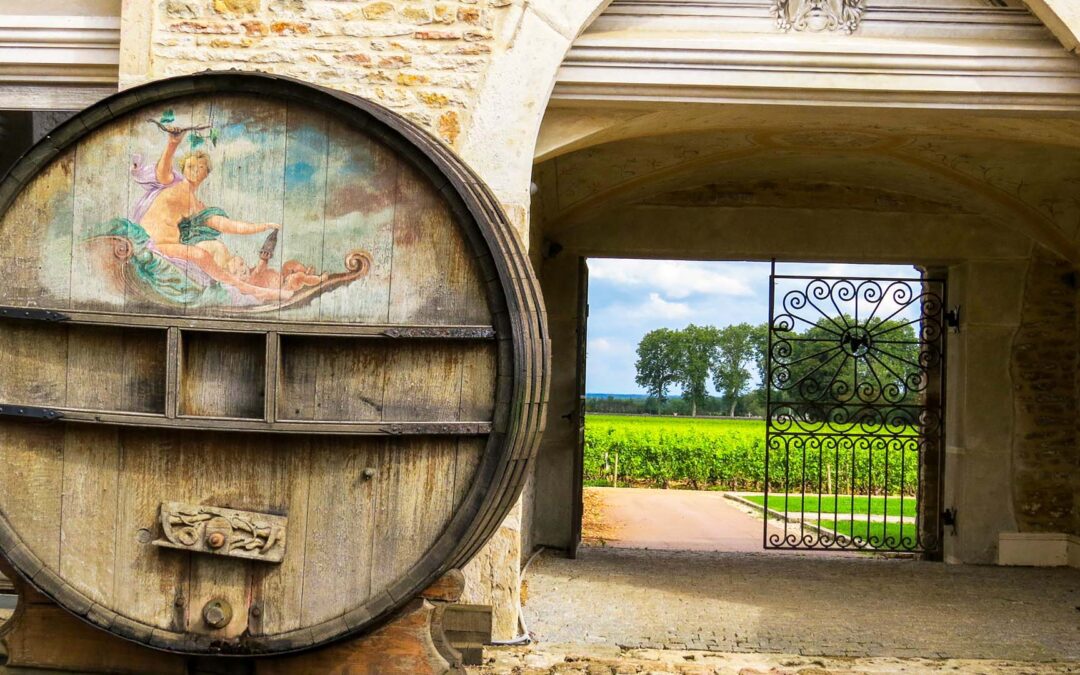
The tasting room is becoming a restaurant. In Napa, Press holds a Michelin star and a cellar past 3,000 labels, and the Four Seasons’ Auro cooks at a level that once required a flight to a city. The shift is structural. The great wine regions, Napa and Rioja and Mendoza and Barossa, spent decades treating food as an accompaniment to the pour. Now the kitchen is the reason to come and the bottle is the context. Producers are building dining rooms worth a detour and hiring chefs with rankings behind them. Wine country is quietly turning into restaurant country. The window here is the vintage: go while the rooms are new and the tables are gettable, before the region learns to price its own dinner like its grand cru.
And the seventh, still forming? Watch Georgia. Not the state, the country. The oldest wine culture on earth, 8,000 years of qvevri buried in Kakheti clay, is beginning to grow the restaurants to match it. Tbilisi has the sommeliers, the produce and the story; it is one serious opening away from the conversation the other six are already having. Nobody is fighting for those tables yet. That is exactly the moment World Travel Magazine reads for. Taste is always migrating. The trick is arriving early enough that the reservation is still yours to make. ◼
Subscribe to the latest edition now by clicking here.
© This article was first published online in July 2026 – World Travel Magazine.