|
Listen To Article
|
My wife’s grandmother — Ba, to everyone, including people who have known her four minutes — announced her position on our family safari before we had left the airport in Delhi.
“Africa,” she said, adjusting the pallu of a sari she had selected specifically to disapprove in, “to look at animals. I have seen elephants. There is one on the Discovery channel every night at nine. In high definition.”
There were seven of us. Ba, my in-laws, my wife and me, and the two teenagers — my niece and nephew, aged fifteen and thirteen, whose first and only question about the Okavango Delta had been whether it had Wi-Fi. (It does, at the camp. Ba would later describe this as “the single sensible thing in the whole country,” which tells you how the first two days went.)
The trouble began, as trouble does, with a small plane. The transfer from Maun into the delta is on an aircraft that seats about as many people as Ba’s dining table, and she boarded it the way one boards a decision one has already regretted. She gripped the seat in front of her. She gripped my nephew. When we hit a pocket of air over the floodplains, she said something in Marwari that I will not translate, and the pilot — a cheerful Motswana named Kagiso — turned around and said, “Not to worry, ma. The elephants have a bumpier ride than this,” which did not help but did make my father-in-law laugh so hard he snorted.
We were staying at Mombo. If you know Mombo, you know it needs no adjective from me; if you don’t, understand only that it sits in a private concession where the game viewing in July — deep in the dry winter, when the paradox of the delta arrives and floodwaters from Angolan rains months ago spread across the sand exactly as everything else goes brown — is arguably the finest on the continent. The animals concentrate. The light is clean. The camp itself is raised on decks above a floodplain where, on our first evening, a hippo announced dinner from somewhere alarmingly close.
Ba was not impressed. Ba wished it noted that she was not impressed.
She was, however, watching the kitchen with the narrow attention of a woman who has never once in eighty-one years trusted a stranger to feed her properly, and who was now approximately nine thousand kilometres from a reliable source of anything green. My mother-in-law had sent ahead a list. Pure vegetarian, no onion no garlic, and — this was the part I’d assumed would break the whole operation — Ba’s morning tea, which must be boiled, not steeped, with ginger, in a particular ratio known only to God and to Ba.
On the first morning a young man named Tumelo brought it to her tent on a tray. She took one sip, went very still, and looked at him the way she looks at grandchildren who have exceeded expectations.
“Who taught you,” she demanded.
“Your daughter-in-law sent a note, ma. I practised.”
“You practised.” She set the cup down. “Beta, sit. Tell me about your grandmother.”
That was the beginning of the end of her resistance, though she would have denied it under oath. By day two she had strong opinions about which chef made the better dhokla — there was dhokla, in the Okavango, and it was good — and had begun referring to the camp manager by his first name and giving him advice about his knees.
But the animals, she maintained, remained beside the point. A leopard draped in a sausage tree on the second evening earned a glance. “Very thin,” she said. “Doesn’t its mother feed it?” A thousand impala meant nothing. She had come to be unmoved, and she was going to get her money’s worth.
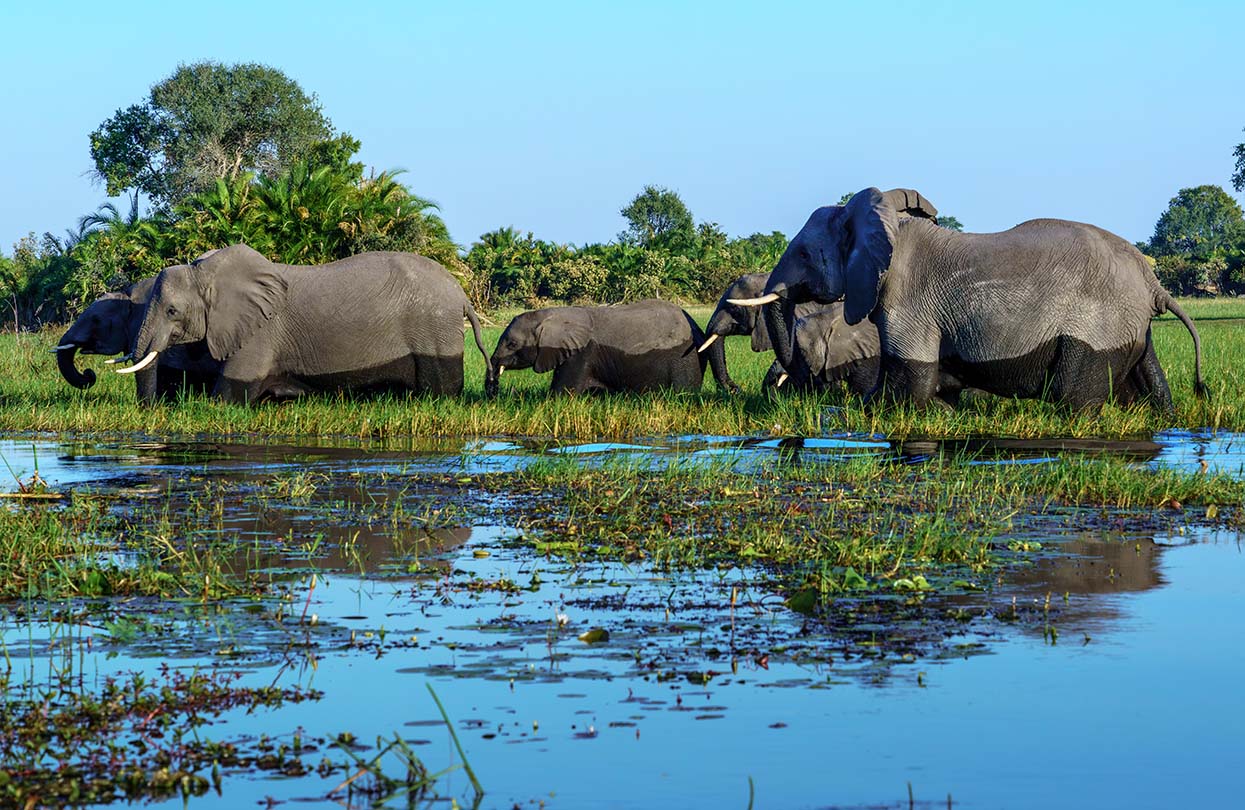
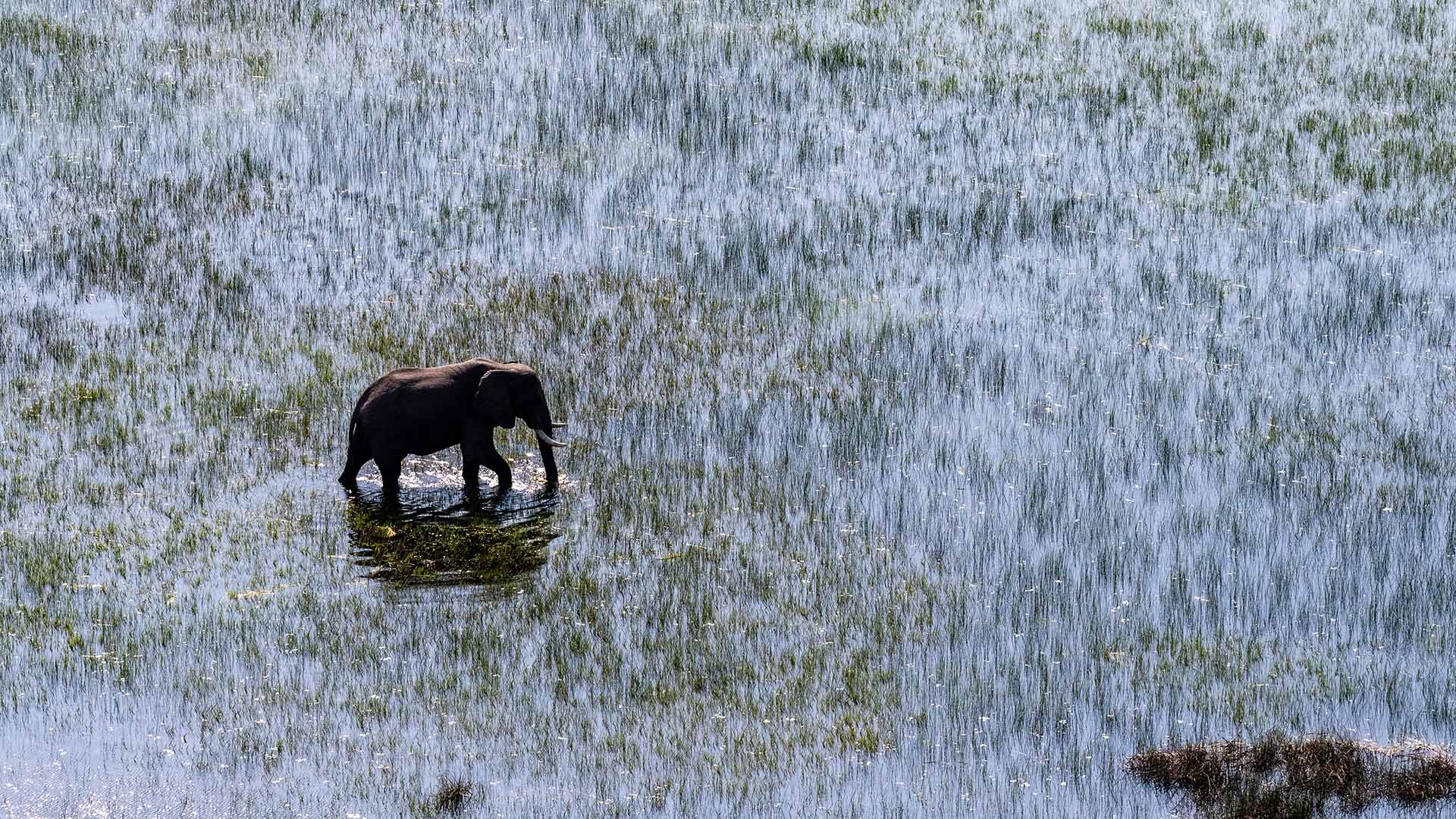
Elephants crossing the Okavango Delta in Botswana, Image by Kathleen Thomas-McCue, Shutterstock
Then came the third morning.
We had gone out early, the light still grey and cold enough that Ba had wrapped herself in a camp blanket over her cardigan over her sari, a geological formation of disapproval. Our guide, Kabo, cut the engine near a treeline for no reason I could see, and said only, “Wait.”
They came out of the mopane slowly. A breeding herd — I lost count, twenty, more — moving toward the water in that unhurried tidal way elephants have, the big cows and the gangly adolescents and, tucked against a foreleg like a comma, a calf perhaps a week old. They crossed directly in front of us, close enough that we could hear the low rumble that travels through their feet more than the air. And the matriarch, the old one at the rear, stopped.
She turned her head. She looked at us. Not through us, the way animals in a documentary look past the lens. At us. At the small silent line of one particular family who had flown a very long way to sit in this vehicle at this hour.
I looked at Ba.
She had both hands pressed flat against her chest. Her mouth was slightly open. And her eyes — this woman who had defeated stronger opponents than a safari — her eyes were full and spilling, quietly, down a face that had refused for three days to give the delta the satisfaction.
Nobody spoke. The herd moved on. The matriarch went last.
“She has a baby,” Ba said finally, in a voice I had never heard her use. “She stopped so we could see the baby.”
No itinerary can promise you that morning. This is, I think, the truest thing World Travel Magazine can tell you: the moments that undo us are never the ones we booked. They arrive unscheduled, and they seem to seek out precisely the people who swore they didn’t need them.
That evening, on the deck, I watched Ba hold court for the entire kitchen staff, cup of ginger tea in hand.
“When the mother elephant came,” she was saying, with total authority, “I knew at once she would stop for us. You could see it in her face. I told everyone — didn’t I tell you? — that this one would be worth the trouble.”
Tumelo caught my eye. I said nothing. I let her have it. She had, after all, always known. ◼
Subscribe to the latest edition now by clicking here.
© This article was first published online in July 2026 – World Travel Magazine.