
|
Listen To Article
|
Packing, for the traveller who has moved past brand recognition into material intelligence, is an exercise in editing. What follows are seven objects chosen the way a good suitcase should be filled — for the quality of their making, the integrity of their materials, and the way they feel against skin before they ever appear on an itinerary.
The Passport Holder
The smell reaches you first — warm, faintly sweet, with none of the chemical sharpness of chrome-tanned leather. This passport holder is made from vegetable-tanned camel leather by Mochi community artisans in Jodhpur, whose families have worked hides across generations. The grain is tighter than cowhide, slightly waxy under the thumb, and the colour — a deep honey that will darken unevenly with handling — comes from natural dyes and days of hand-burnishing. There is no lining. The leather folds against itself, and the edges are hand-finished, which means they feel soft rather than sharp. At roughly ₹3,500, this is the least expensive object here and the one most likely to outlast everything else you carry. It will look better in five years than it does today.
The Notebook
Hold a page between your fingers. The weight of Midori’s MD paper — cream-white, 80gsm, made at a single mill in Japan — registers as something between fabric and leaf. Fountain pen ink doesn’t feather; it sits on the surface for a held breath before being drawn into the fibre with a precision that feels deliberate, as though the paper is deciding how much to absorb. The binding is thread-sewn, the cover a simple card stock that invites you to scuff and bend it. At around ₹3,000 for the A5 travel format, the Midori is a quiet rebuke to the overdesigned leather-bound journal. It asks nothing of you except to write. Pack it because airports are long, and your phone is never the right place for the thought you will want to keep.
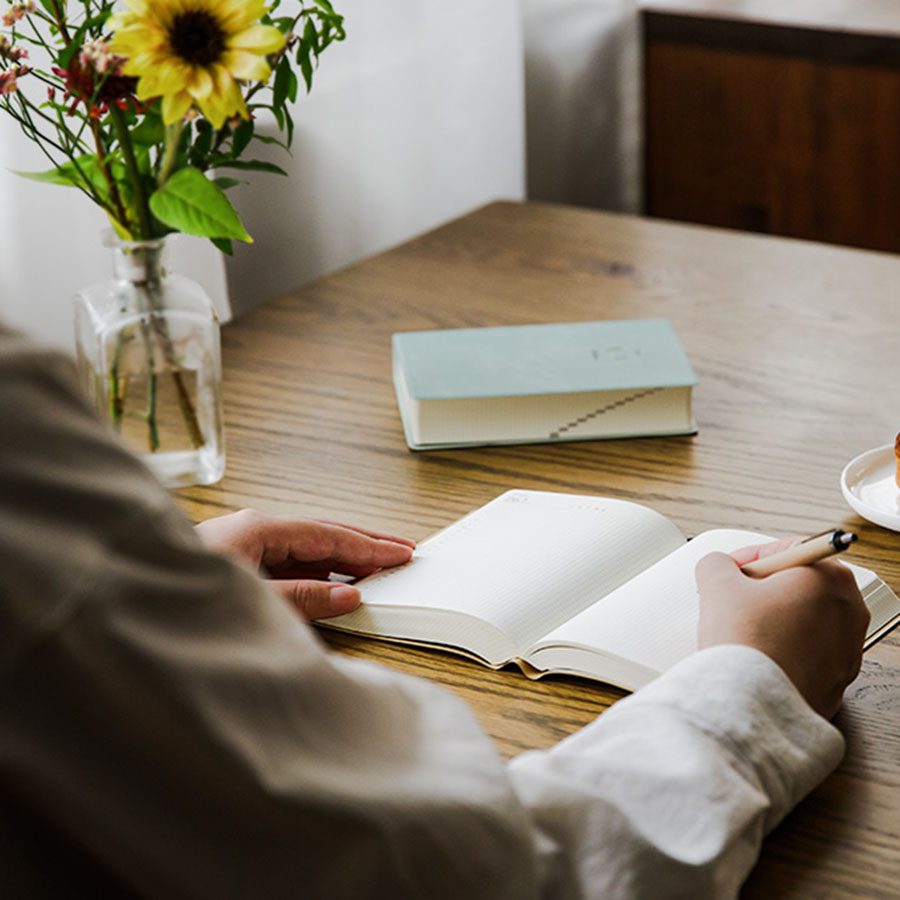
Midori’s MD Notebook
The Scarf
The hand of Anavila Misra’s linen is unmistakable — a dry, cool crispness that softens dramatically after a single wash and continues softening for years. Her scarves are handwoven on pit looms by artisans working with handloom cooperatives, producing a slightly irregular weave visible only when you hold the fabric to light. This irregularity is the point. A machine-woven linen lies flat and uniform; a handwoven one drapes with a weight that shifts as you move, breathes differently against the neck. Choose the undyed ecru or a pale indigo. Wear it on the flight as a wrap, at dinner across the shoulders. At around ₹8,500, it does the work of three garments without the bulk of any of them. Each season, the linen grows more supple, more specifically yours.
The Luggage Tag
There is a sound that good Italian leather makes when you press your thumb into it — a faint creak, the fibres adjusting beneath the surface. Bertoni 1949, a Milanese atelier that has worked leather since the middle of the last century, produces a luggage tag in full-grain calf that reminds you why “Italian leather” once carried weight before fast fashion borrowed the phrase. The buckle is solid brass, designed to tarnish over years. The monogram, if you request one, is hand-stamped — a distinction you can feel with a fingertip, the slight impression where the letters were pressed rather than burned. At approximately ₹18,000, it is a small argument about permanence. Clip it to whatever you carry. It will outlast the bag, and the one after that.
The Speaker
Press play, and what strikes you first is the shape of the sound. The Devialet Mania does not project music at you. It distributes it in a sphere, filling a hotel room or a terrace with a warmth that most portable speakers cannot approach. The low end is controlled and rich; vocals sit forward with a clarity that rewards the voice over the beat. The body is dense — satisfyingly heavy in the hand, its mesh surface smooth and taut as drumskin. At roughly ₹70,000, it is the most expensive object here, and its value is best understood late in the evening, on a balcony overlooking water, when the right song meets the right air. Sound, among all travel companions, remains the most overlooked.

The Devialet Mania speaker
The Fragrance
Uncap the bottle and wait. Naso Profumi, Astha Suri’s Mumbai-based perfume studio, builds fragrances the way a textile is woven — in layers, with natural essences that develop slowly against warm skin. For summer travel, her citrus-forward compositions work with the body’s heat, opening with a sharp burst of bergamot that settles, within an hour, into a base of vetiver and sandalwood that hums rather than announces. This is fragrance designed for proximity — the person beside you at dinner, the scent left on a linen collar. At around ₹5,500, it represents a tradition of Indian perfumery — attar-making, distillation, patience — that predates most European fragrance houses by centuries. Apply it at the wrist and behind the ear. Let the climate do the rest.
View this post on Instagram
The Sandals
The sole is where you feel it — thick, hand-stitched vegetable-tanned leather with a firmness that will soften to the exact contour of your foot over weeks of daily wear. In Marikina, the Philippines‘ historic shoemaking city, cobblers still work leather the way their predecessors did — cutting by hand, stitching with waxed thread, building soles in layers. The result is a sandal with the kind of structural integrity that factory-moulded footwear cannot replicate. The upper is minimal, the design restrained, and the leather carries the marks of the hand that shaped it. A well-made pair runs ₹12,000–15,000 through specialist retailers. Wear them daily through a Goan monsoon or a Mediterranean July. By September, they will have become unrepeatable — the shape of your summer, preserved in leather.
What these seven objects share is simple: they are all things that become more beautiful with use — the suitcase that tells your story. ◼
Subscribe to the latest edition now by clicking here.
© This article was first published online in May 2026 – World Travel Magazine.