
|
Listen To Article
|
The Slow Table of the Yucatán. It begins with a hole in the ground. Not a metaphor — an actual pit, a metre deep, cut into earth so red it stains the spade, so red the whole peninsula seems to have been fired in a kiln. The men line it with stones and let a wood fire burn down to a bed of embers that breathe orange under grey ash. Then the leaves: banana fronds, wide as a forearm, softened over the flame until they turn pliant and glossy. And into that leaf-lined cradle goes the pig — a suckling animal rubbed the night before with a paste the colour of dried blood, achiote and sour orange and garlic and cumin worked into the meat until it glistens like lacquer. They fold the leaves over it, lay down a sheet of earth, and bury the whole thing. Then they walk away. This is pib, the underground oven, and the method is three thousand years old. The dish that comes out of it, hours later, is cochinita pibil, and it is the soul of the Yucatán on a plate.
You will not understand this place until you have eaten with your hands, and you will not eat well until you have understood how slowly it was made.
The land itself was built on a different kind of slowness, and a different kind of gold. Drive out from Mérida and you pass them — the henequen haciendas, the great estates of the nineteenth-century sisal boom, when the fibre stripped from spiked agave leaves rigged the ships and baled the harvests of half the world. The plant they called green gold made fortunes obscene enough to build Italianate mansions in the jungle, and then, when synthetic rope arrived, left them to the vines. Some of those ruins have been brought back, and the best of them are among the most quietly moving hotels in Mexico.
At Chablé Yucatán, near the village of Chocholá, the restoration is so exact it feels almost devotional. The old machine house, where diesel engines once screamed through the rasping of fibre, now holds a spa built around a living cenote — a sinkhole of still, glassy water the Maya held sacred, dropped into the limestone like a secret. The casitas are modern and cool and deliberately spare, so that the eye keeps returning to the one thing that cannot be improved upon: the eight-metre stone arches the original masons cut by hand. The kitchen here matters as much as the architecture. It cooks from the milpa — the ancient Maya polyculture of corn, beans and squash grown together — and it treats a heritage recado with the reverence a French kitchen gives a mother sauce.
View this post on Instagram
An hour south, Hacienda Temozón sits under the same red dust, its façade the deep ochre of old blood and turmeric, its corridors long enough to lose an afternoon in. Where Chablé is design-led and cerebral, Temozón is warmer, more worn-in, a house that remembers being lived in. And in Coqui Coqui — the perfumery-hotels of Nicolas Malleville, tiny and jewel-like — restoration becomes something closer to poetry: a station house, a former convent, rooms scented with the maker’s own botanical distillations of orange blossom and tobacco. Price and value part ways here in the most instructive fashion. You are paying for the decision, made by someone with taste and patience, to keep the hand of the original artisan visible in the finished thing.
View this post on Instagram
That distinction runs straight through Yucatecan cooking, which is unlike anything else in Mexico — a cuisine layered by Maya, Spanish, and, improbably, Lebanese hands who arrived by ship and left kibbeh in the market stalls. Its grammar is the recados, the spice pastes: the brick-red achiote that stains the pib pork, the extraordinary recado negro, chillies charred until black and bitter and ground into a paste like volcanic ash. Sopa de lima is its clearest note — turkey broth sharpened with a local bitter lime and rubble of fried tortilla, sour and clean and restoring. Papadzules came before the conquest: eggs rolled in tortillas, drowned in a green sauce of pumpkin seed, slicked with a thread of tomato. None of it announces itself. It smells of smoke and citrus and scorched earth, and it asks to be eaten with fingers.
The craft culture works the same way — deep, unhurried, made to be handled. The hammocks of the peninsula are woven so finely they fold into a fist and open into a bed that cradles the whole spine; a good one takes weeks. The huipil, the white cotton shift embroidered at the yoke with flowers in impossible colour, carries the maker’s village in its stitch, the way a Chanderi or a Kanjeevaram carries its own loom’s signature to anyone taught to read handloom. And everywhere, the older architecture: the honey-coloured palace at Uxmal with its lattices of carved stone, quieter and to my mind lovelier than Chichén Itzá; the small, fierce beauty of Ek Balam, where you can still climb, breathless, to a stucco jaguar’s mouth few travellers ever reach.
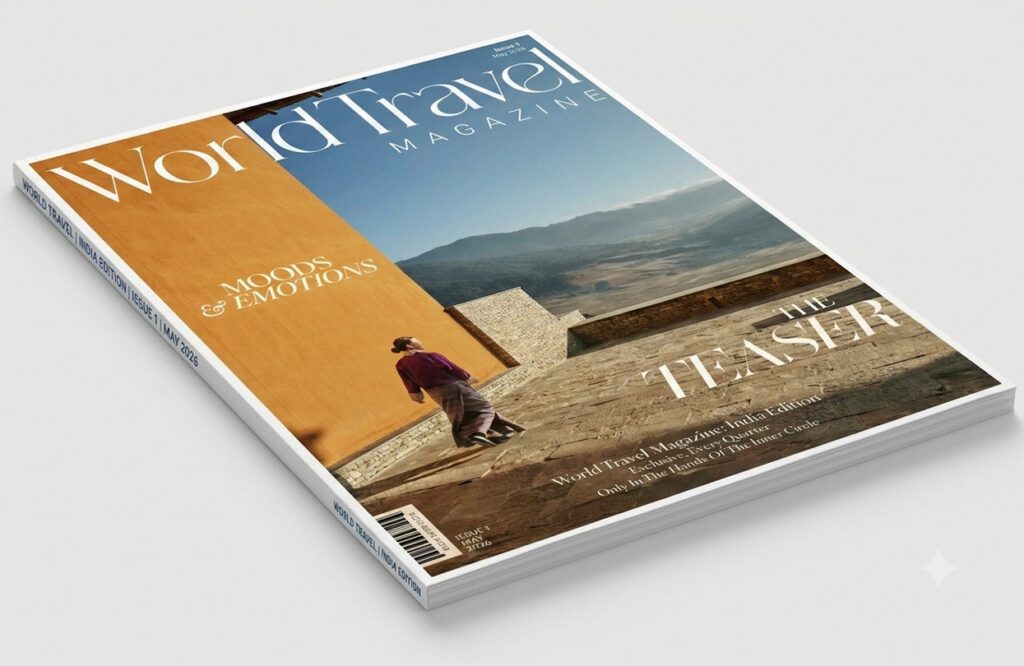
This is what World Travel Magazine means by a table worth crossing the world for. The Yucatán is not a place you look at. It is a place you eat with your hands and your whole body, a craft culture rooted so deep in the ground that to taste it is to taste three thousand years of a place at once.
Which brings us back to the pit. Hours have passed. The men return, and lift the earth away in slabs, and the smoke rises — that first grey exhalation carrying achiote and wood and the sweetness of leaves cooked to the edge of caramel. They fold back the banana fronds, blackened now and steaming, and there it is: the meat gone the colour of the earth it came from, falling from itself at a touch, holding in its stained fibres the whole long history of the place. You reach in with your fingers. You do not wait for a plate. ◼
Subscribe to the latest edition now by clicking here.
© This article was first published online in Aug 2026 – World Travel Magazine.