
|
Listen To Article
|
Almost didn’t go.
That should be said clearly, before anything else, because everything that followed — the monks at dawn, the river that moved slower than breath, the night of eating alone and feeling the specific relief of being no one’s mother, no one’s wife, no one’s daughter-in-law for the length of a single meal — all of it almost didn’t happen.
The trip was cancelled three times. The first was easy: the children had exams. A real reason, or real enough. The second was harder to name. A husband who didn’t say don’t go. Who said nothing. Who left the silence where his opinion should have been, and Indian wives learn to read that silence — as a question they’re meant to answer for him. The third was a mother-in-law, over Sunday lunch, her fork pausing midway to her mouth: Alone? But why?
Three words. No honest answer was possible — not over dal and rice. The honest answer never is.
Luang Prabang, Laos. Chosen because a friend had mentioned it once, offhandedly, the way people mention places that matter to them — quietly, protectively. Close enough to feel reachable. Far enough to feel gone. And this was the real reason: no one in the circle had been there. A week in a place with no witnesses.
The flight was unremarkable. The fear was not. Somewhere over the Bay of Bengal, a terror that arrives specifically when a woman who has oriented her entire life around being needed hurtles toward a place where no one needs her at all. The impulse to text. To say something that would prompt a come home, so the return could be someone else’s fault. The phone stayed in the bag. The fear tasted metallic, like the moment before a blood test.
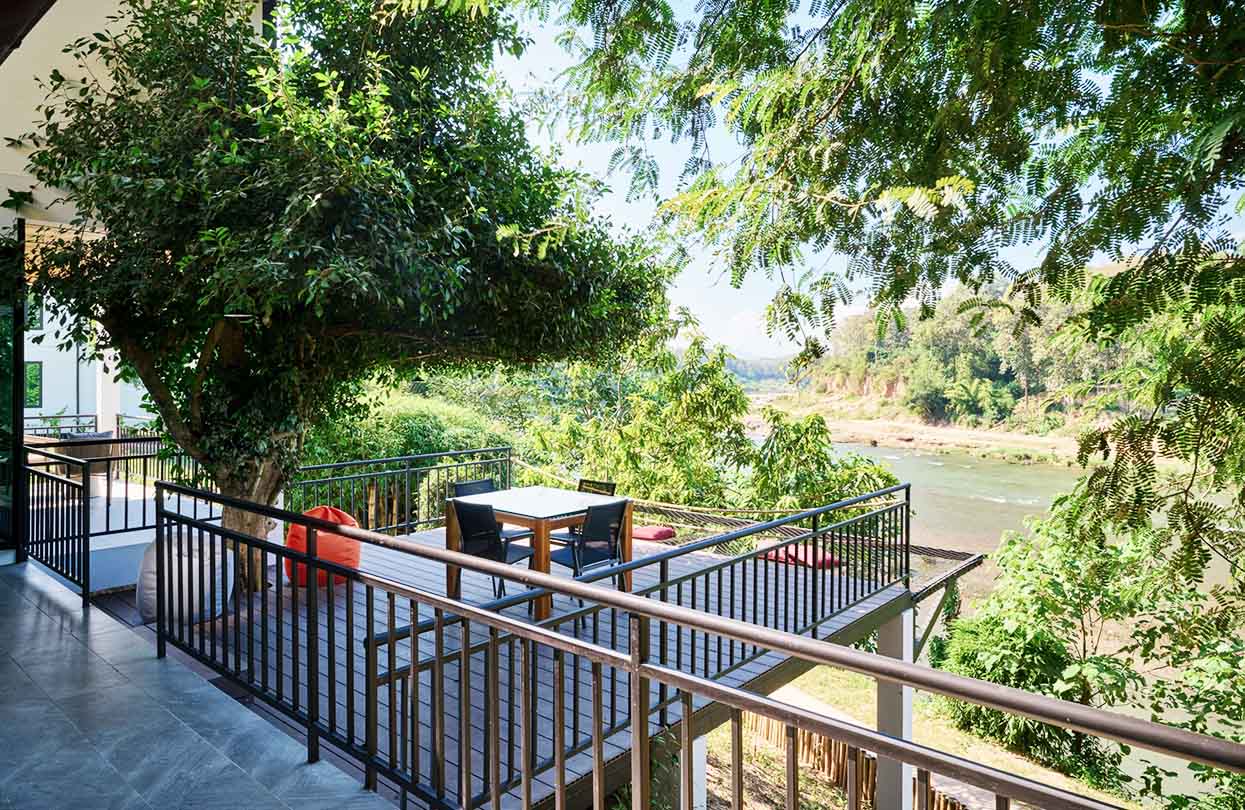
The Namkhan, along the river, view from their sunset villa terrace
The Namkhan sits along the river, half-hidden by trees, the kind of place that doesn’t announce itself. Teak and stone and a quietness that feels earned rather than designed. The room had a view of the Nam Khan river, and standing in it, the silence was so complete that breathing became audible — the actual sound of it, unhurried. A small recognition: that sound had been inaudible for years beneath the noise of being called, needed, expected.
The alms-giving ceremony happens at half past five in the morning. Almost didn’t wake. But something pulled — curiosity, or its cousin, hunger. The main street in the grey-blue dark. A handful of others, mostly locals kneeling with rice baskets. And then the monks came.
They came in a line. Saffron robes, bare feet, eyes lowered. They didn’t look up. They didn’t need anyone to be anything. They moved in a silence so practised it felt architectural — as though the silence itself was the structure and the monks merely passed through it. Standing on that Mekong-side street with empty hands and a chest full of something unnamed, the first absence of demand in years became physical. No child pulling a dupatta. No silence requiring interpretation. No calendar, no school WhatsApp group. Just monks walking past, the river behind them, and a woman stripped of every role, standing in the strange ordinary brightness of being only herself.
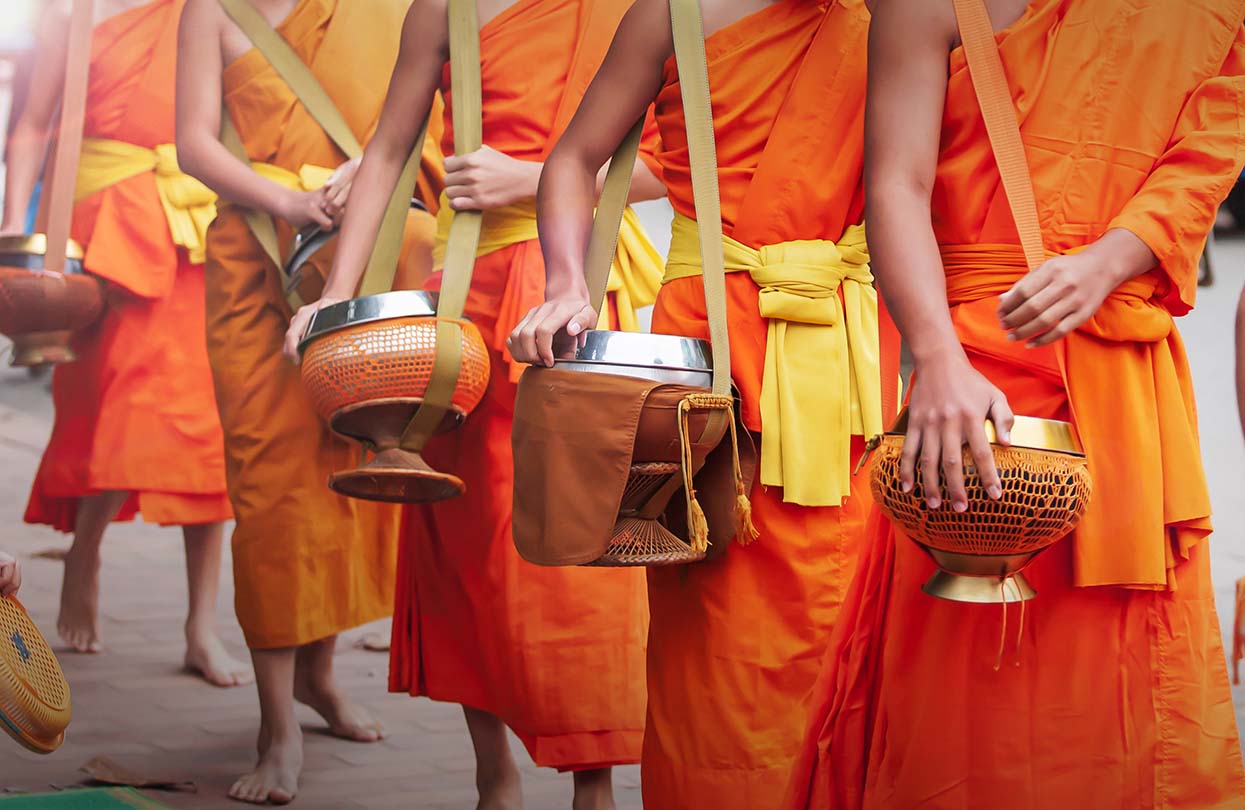
Monks carrying their alms bowls for going on almsround in early morning, image by Tanes Ngamsom, Shutterstock
Tears came. Not dramatically. A leak behind the eyes, the kind that happens when a pressure held so long it became invisible finally finds a crack.
That evening, the night market on Sisavangvong Road. A plastic table. A bowl of khao piak sen — Lao noodle soup, cloudy and warm with lemongrass. Eaten slowly. No one asking to share. No one asking what was taking so long. A thought arrived, with broth still warm on the lips: this is not loneliness. This is something else entirely. The word, when it came, was sovereignty. Written on a napkin. Kept.
Solo travel — the phrase from the booking confirmation. But it was wrong. Solo implies alone. What was happening was closer to reclamation. Not of freedom, which sounds like a manifesto, but of the ordinary right to sit with one’s own thoughts long enough to recognise them.
The next afternoon, a longtail boat on the Mekong. The boatman didn’t speak. The river was brown and wide and unhurried and it asked nothing. Lying back against the wood, watching limestone hills pass, feeling time move at the speed of breath. Something inside that had been clenched for years — since the roles accumulated, since ambition was quietly reclassified as hobby, since the calendar became someone else’s architecture — that thing unclenched. Not healed. Not resolved. Just acknowledged.
No post. No photograph. Some moments refuse documentation because the point of them is that they belong to no one’s feed, no one’s story, no one’s expectation.
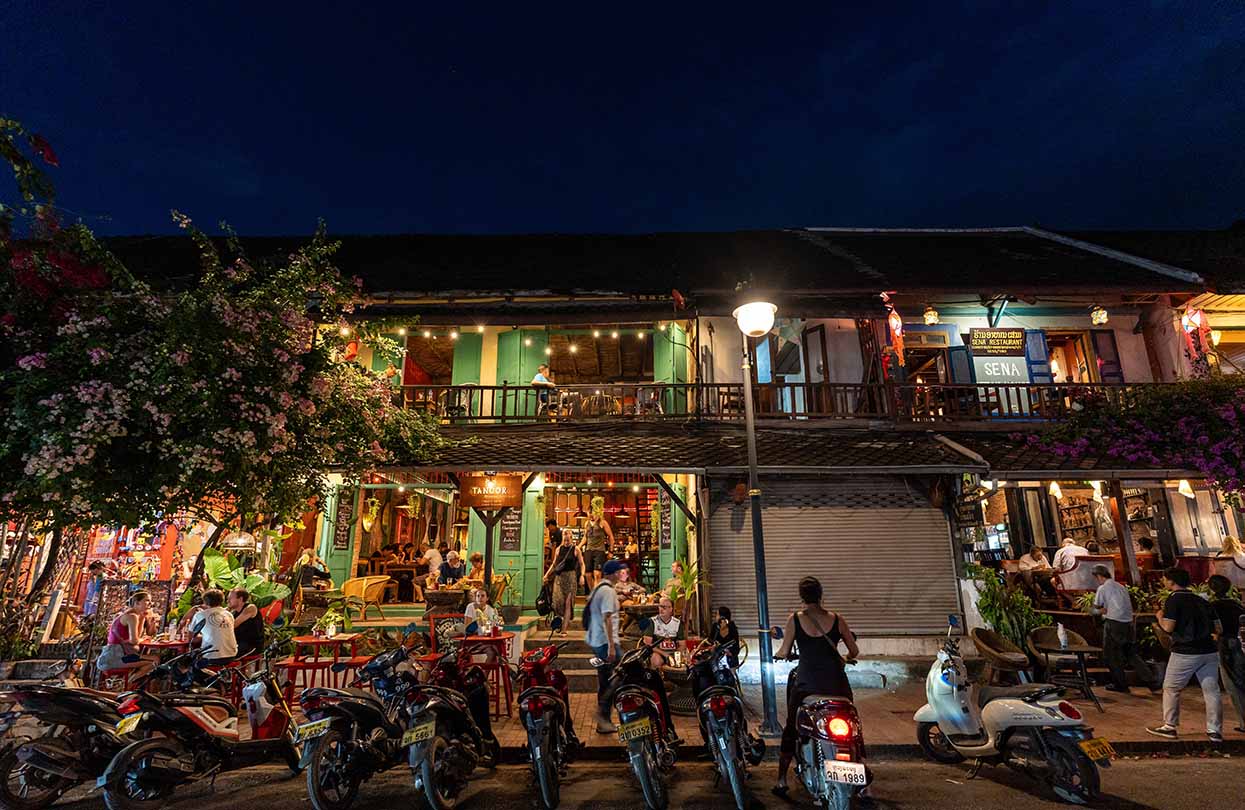
Restaurants along Sisavangvong Street in Luang Prabang, Image by aaron choi, Shutterstock
A week later, the front door opening. A daughter running forward, hair a mess, face so open and needing that the chest ached with the specific pain of loving someone who requires everything. A husband behind her, tea in hand, looking the way he looks when he knows something has shifted but won’t ask what. A mother-in-law in the lounge who didn’t mention the trip. That silence, this time, a kindness.
Unpacking. The napkin — sovereignty — placed in a bedside drawer, beneath the novel that’s been waiting to be finished for two years.
There will be another trip. That knowledge sits the way breathing sits now — quietly, certainly, in the new silence that came home too. ◼
Subscribe to the latest edition now by clicking here.
© This article was first published online in May 2026 – World Travel Magazine.