
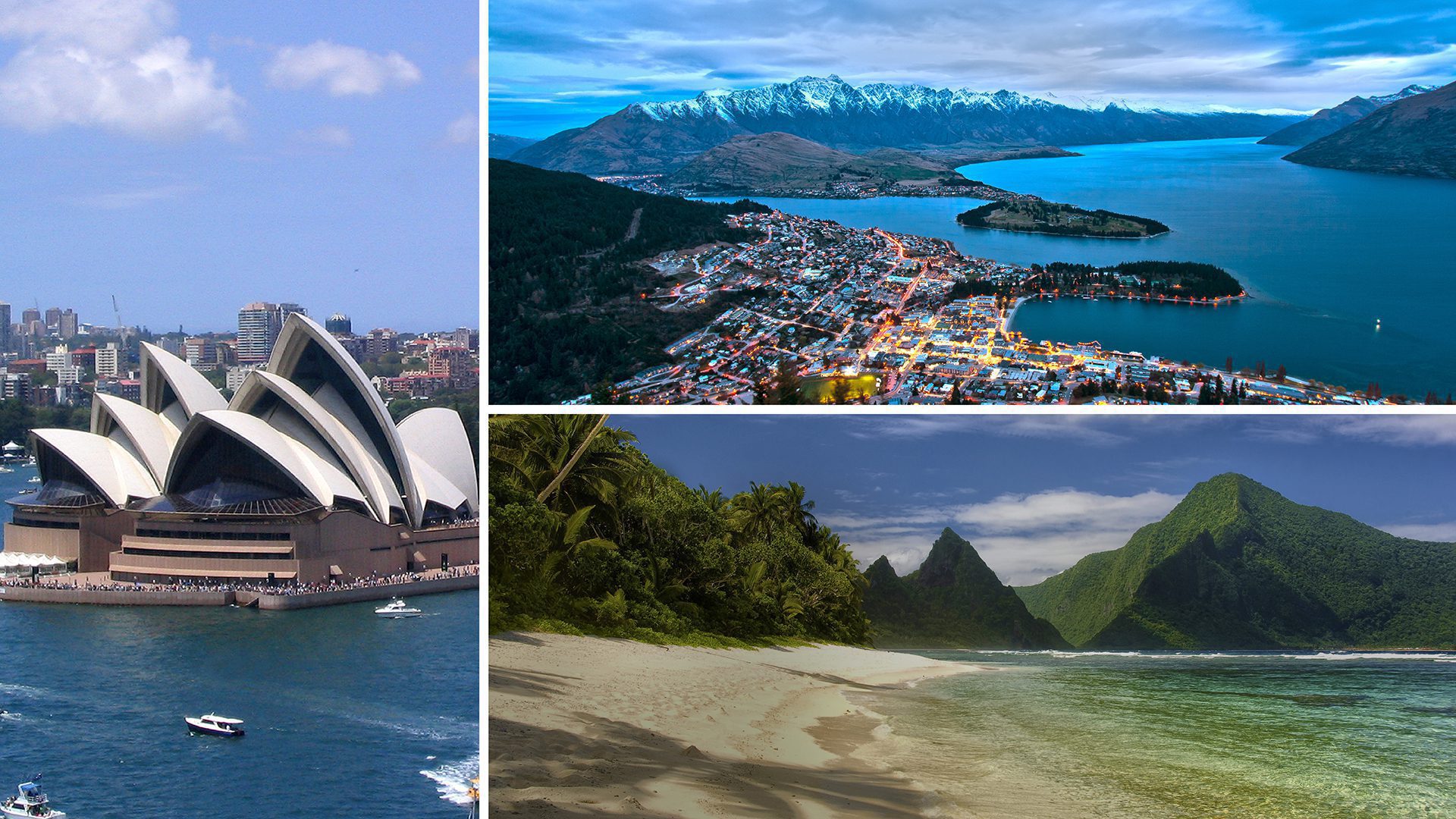
[vc_row][vc_column][vc_column_text]The idea of creating a travel bubble rises down under and the world eyes this initiative with optimism. With Australia and New Zealand witnessing a decline in their COVID19 statistics, leaders are in talks to enter into an exclusive arrangement that will slowly open their border and help revive the already-tanked tourism sector.
Once this is implemented, perhaps by end June to early July, both Australia and New Zealand can finally give their citizens a sense of normalcy, and the rest of the world, a model to emulate. The enactment of the trans-Tasman bubble would entail increased flights between the two countries, an end to the 14-day quarantine for residents of Australia & New Zealand and hopefully direct flights between Tasmania and New Zealand.
There is hope that this trans-Tasman bubble would be extended to the Pacific nations of Fiji, Vanuatu, The Cook Islands and Samoa that have so far remained pandemic free.
International travel is still a faraway dream, but a hub between the two neighbouring countries is possible. New Zealand has flattened the coronavirus curve since their abrupt lockdown in March. Australia, on the other hand, is doing its best to keep the virus under control.
Its contact-tracing smartphone app COVIDSafe currently has 5 million downloads and is set to grow as state borders gradually open. The logic goes that in case an app user tests positive for the virus, authorities can identify all possible app users that have been within the Bluetooth radius of the infected person’s app over a period of time. This would assist in contact tracing and containing any future clusters. New Zealand is poised to introduce a similar app or adopt Australia’s current program.
Reopening the Aussie-NZ borders would mean a boost in both economies severely damaged by the pandemic, specifically the tourism sector – an idea warmly welcomed by New Zealanders who will soon draw the curtains to their ski season. Although a date has not been set, local businesses are keeping their fingers crossed for a June end reopening. Australians account for 40% of NZ’s ski tourism.
Snow-field operators are expecting a loss in the season, but the government is looking forward to long-term solutions rather than abrupt adjustments. With the possibility of the 14-day quarantine out of the way, officials in both countries are seriously deliberating the new protocols, including establishing domestic routes, and an intense look at their health systems.
It has been reported that Australia has been losing $4 billion each lockdown week. The relaxing of the trans-Tasmania border will allow the resumption of trading for more than 15,000 Australian businesses with connections to New Zealand. Prime Minister Jacinda Ardern has cautioned against opening up the border entirely, considering that New South Wales in Australia have far more cases than the other states.
As of date, Australia has recorded around 6,800 infections and 95 deaths, and New Zealand with 1,137 cases and 20 fatalities. Fiji has witnessed 18 confirmed cases till date with no fatalities. Vanuatu, The Cook Islands and Samoa continue to remain pandemic free. ◼[/vc_column_text][/vc_column][/vc_row][vc_row][vc_column][vc_column_text]Subscribe to the latest edition now by clicking here.
© This article was first published online in May 2020 – World Travel Magazine.[/vc_column_text][/vc_column][/vc_row]