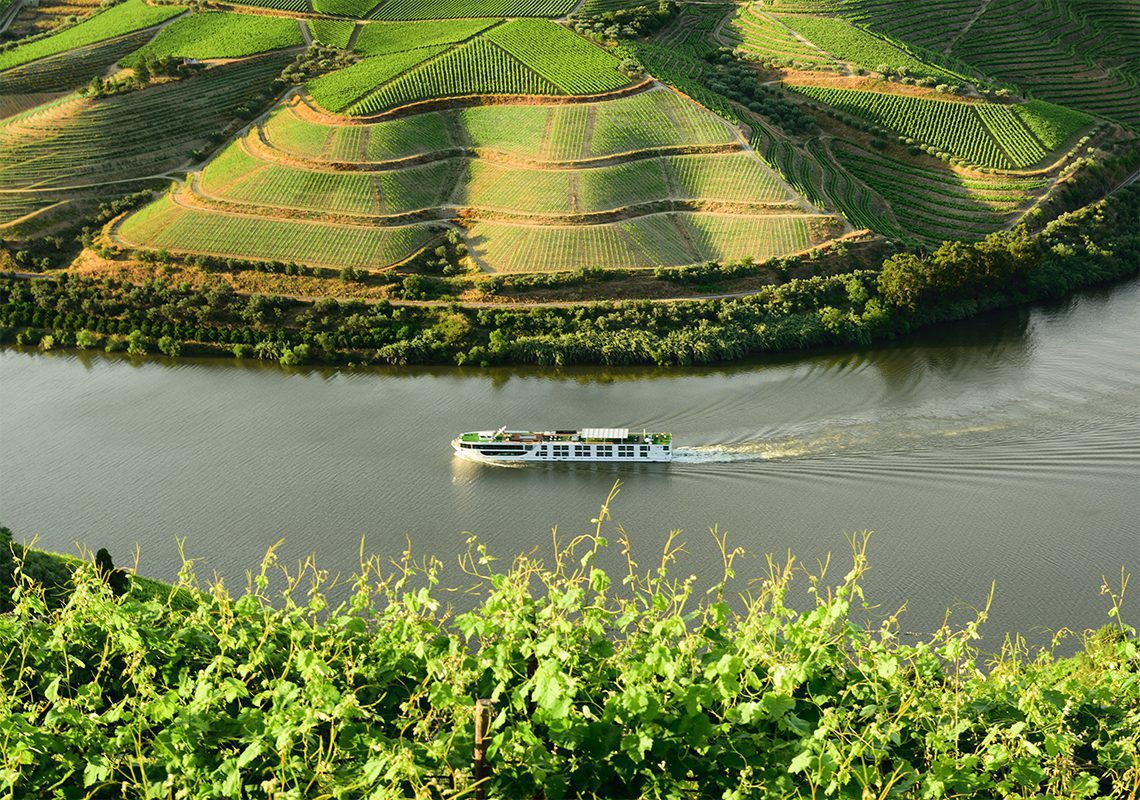
A journey up the dramatic Douro River is an opportunity to delve into the rich history and traditions of the Portuguese heartland, discovers Nick Walton.
[vc_row][vc_column width=”1/4″][vc_separator color=”black” border_width=”10″][vc_custom_heading text=”Portugal”][vc_separator color=”black” border_width=”2″][vc_widget_sidebar sidebar_id=”sidebar-page”][/vc_column][vc_column width=”3/4″][vc_column_text]
A journey up the dramatic Douro River is an opportunity to delve into the rich history and traditions of the Portuguese heartland, discovers Nick Walton.


It’s easy to be enchanted in Porto. Perched on the cusp of the petulant Atlantic, at the mouth of the Douro River, Portugal’s ancient wine trading hub has always been a city that knows how to linger in the hearts of visitors.
As late afternoon sun baths the 17th century Mosteiro da Serra de Pilar in honey-hued light, and dazzles off the intricate ironwork of the Dom Luís I Bridge, the shadows of Porto’s ancient riverfront merchant houses lengthen below, their pastel facades aglow. The al fresco seafood restaurants that line both sides of the Douro – Porto proper to the North and Vila Nova de Gaia to the South – are packed with locals and travellers enjoying the late summer warmth, while on the timeless waters of the river, pleasure boats and ferries crisscross in our wake.
It’s a postcard perfect beginning to my 500-kilometre 11-day journey up and down the Douro River valley, the heart and soul of northern Portugal and a historic trading route for the region’s world-renowned port wine industry. It was down the winding Douro that wine from its terraced vineyards would be shipped to Gaia on traditional rabelo sailing boats, thus evading the heavier taxes across the river.
Many of the original wine merchants still have expansive operations on the south bank, narrow cobblestone lanes running down the steep slopes between the wineries’ towering, centuries-old walls. On the river front several rabelos, complete with prop casks, still ply the Douro, carrying camera-toting tourists rather than tawny or Tinta Roriz.
Port helped put Porto on the map, and the Douro made it happen. The Romans planted the first vines in the valley’s shale-encrusted hills over 2,000 years ago, and by the 15th century English and Scottish merchants had begun shipping the robust, full bodied wines of the Upper Douro down its waters to the Atlantic and on to Britain. So it’s fitting that the river is playing a vital role in the region’s next boom, as tourists from around the world arrive to cruise its gentle waters, sip the valley’s unique wines, and delve into the rich traditions of the Portuguese heartland.
Subscribe to the latest edition now by clicking here.
If you would like to comment on this story or anything else you have seen on World Travel Magazine, head over to our Facebook page or message us on Twitter.
And if you liked this story, subscribe to our bi-monthly World Travel Magazine, a handpicked selection of editorial features and stories from Global Destinations, Inspire Me, Insider, Style File, Wellness & Travel, City Travel, Suite Life, At Leisure, Short Breaks and much more.
[/vc_column_text][/vc_column][/vc_row]