
|
Listen To Article
|
A hotel opens in a valley almost no one could place on a map. Eighteen months later it is “the best in the world.” Not the best you’ve stayed in. The best there is. The phrase arrives with the finality of a physical law, and most people never pause to ask the only question that matters: best according to whom, measured how, and underwritten by which budget?
I’ve spent fifteen years inside the machinery that produces that sentence. I can tell you the answer is rarely what the certificate on the wall implies.
Begin with the comforting assumption most people carry — that a ranking reflects a verdict. That somewhere a body of experts assessed the field and named a winner the way a court delivers judgment. Some lists genuinely work this way, with real rigour and voters who have earned their seat. Many do not. Between those two extremes sits an ecosystem the guest never sees.
There are voting academies whose members are drawn from the very industry being judged — hoteliers, advisors, and writers who fly on the properties they later rank. There is the quiet gravity of advertising: a publication’s commercial relationships and its editorial verdicts are meant to occupy separate buildings, and sometimes they honestly do. There is public relations, the professional craft of turning an opening into an event and an event into a consensus. There is the influence economy, where a suite is comped, a caption is posted, and a reputation is minted before lunch. And there is momentum, the most powerful force of all — a property that wins once becomes the property everyone expects to win, and expectation has a way of manufacturing its own results.
None of this is corruption. It is an industry doing what industries do: building narratives around the things it needs to sell. The problem is not dishonesty. The problem is that a commercial outcome is presented in the language of objective truth, and the reader is handed no way to separate the rigorous list from the purchased one. On the page they look identical. Both arrive wrapped in gold.
This matters more to some people than others, and it matters most to the person who travels to sharpen their own judgment rather than to borrow someone else’s. The one who orders the tasting menu to understand the chef, not to photograph it, is precisely the person a ranking serves worst. A list can tell you what a room of voters agreed on. It cannot tell you whether a place is right for the particular intelligence you bring to it. Popularity among an academy and rightness for you are two different measurements, and the gold sticker collapses them into one.

Hotel loyalty program, image by Marius Karp, Shutterstock
Consider, too, the person for whom access itself is the point — who values a table, a villa, a door precisely because not everyone can open it. Aim that instinct at the top-ranked property and something quietly inverts. The number-one hotel is, by definition, the most marketed hotel in its category. Chasing it often means chasing the budget that produced the ranking rather than the thing the ranking claims to measure. The genuinely closed door and the heavily advertised one are not the same door, though the list will file them side by side. And for those whose first requirement is that no one register they were there at all, the loudest name in the category is structurally the wrong answer. Rankings reward visibility. Some of the finest experiences are engineered to have none.
So read past the ranking to the signals that actually predict a great stay.
A property with a real point of view — one that knows exactly who it is for, and, more tellingly, who it is not for — will almost always outperform a place engineered to please a panel. Consistency across years is worth more than a single triumphant season; a hotel that was excellent in 2019 and remains excellent today has told you something no award can. The people matter more than the marble: the general manager who has stayed a decade, the maître d’ who remembers your mother’s dietary line without a note, the housekeeper trusted to solve a problem before you’ve finished describing it. Watch, above all, what a place refuses to do. The hotel that turns down the booking that doesn’t fit, that won’t install the water slide, that declines the wedding that would fill every suite and empty its soul — that refusal is a point of view you can bank on.
Then there is the oldest signal of all, the one no algorithm has improved: the word of a person whose taste you have tested against your own and found reliable. One advisor who knows how you actually travel is worth more than any academy, because the academy is answering a question you never asked. The advisor is answering yours.
Here I should be clear about what World Travel Magazine is for. Our work has never been to hand you a winner. “The best hotel in the world” is a manufactured idea, and manufacturing it is not our business. Ours is the harder, more durable project: to build the taste that lets you decide for yourself — to give you the reference points, the right questions, and the honesty that turn a reader into a judge. A list keeps you waiting for the next list. Taste sets you free of all of them.
Because prestige is borrowed and taste is earned. Borrowed prestige expires the moment a newer property takes the crown; earned taste compounds for the rest of your life. Develop taste that sure, and you will stop asking who topped the ranking this year — you will already know what is right for you, and every gold sticker in the world will go quiet. ◼
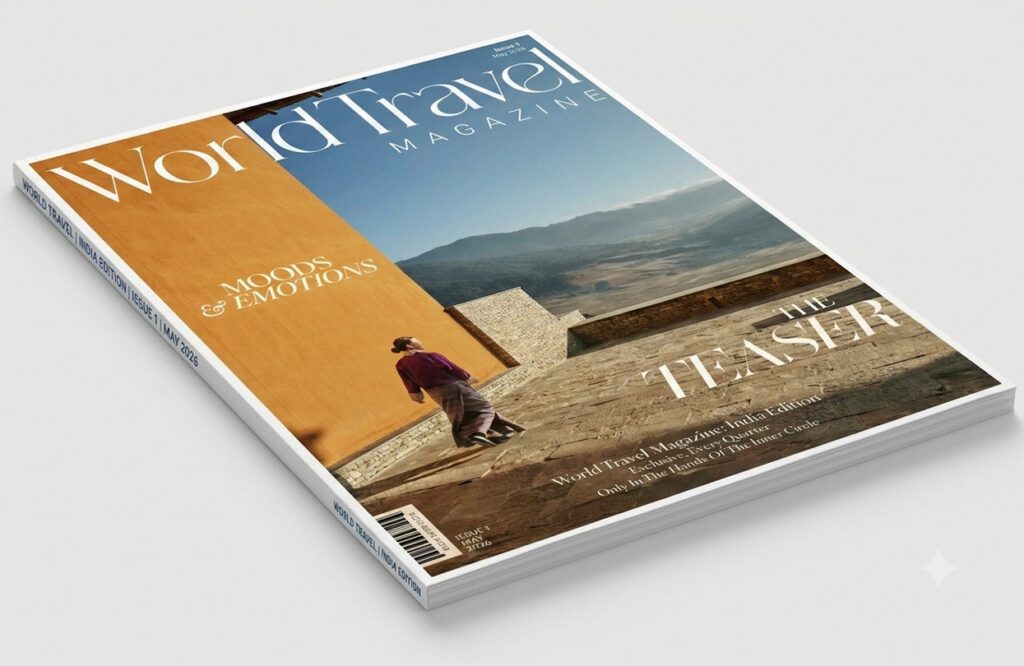
Subscribe to the latest edition now by clicking here.
© This article was first published online in July 2026 – World Travel Magazine.