
|
Listen To Article
|
You notice it within an hour of landing. Not in the airport, though Incheon does its own quiet showing-off. You notice it in a taxi through the tunnels, when the driver plays something soft on the speakers and the streets outside look like every rendering of a near-future city that architects have been trying to sell you for a decade. Except this one is real, and lived-in, and has been for a while. Seoul isn’t performing the future. It’s just what Seoul happens to look like on a Tuesday.
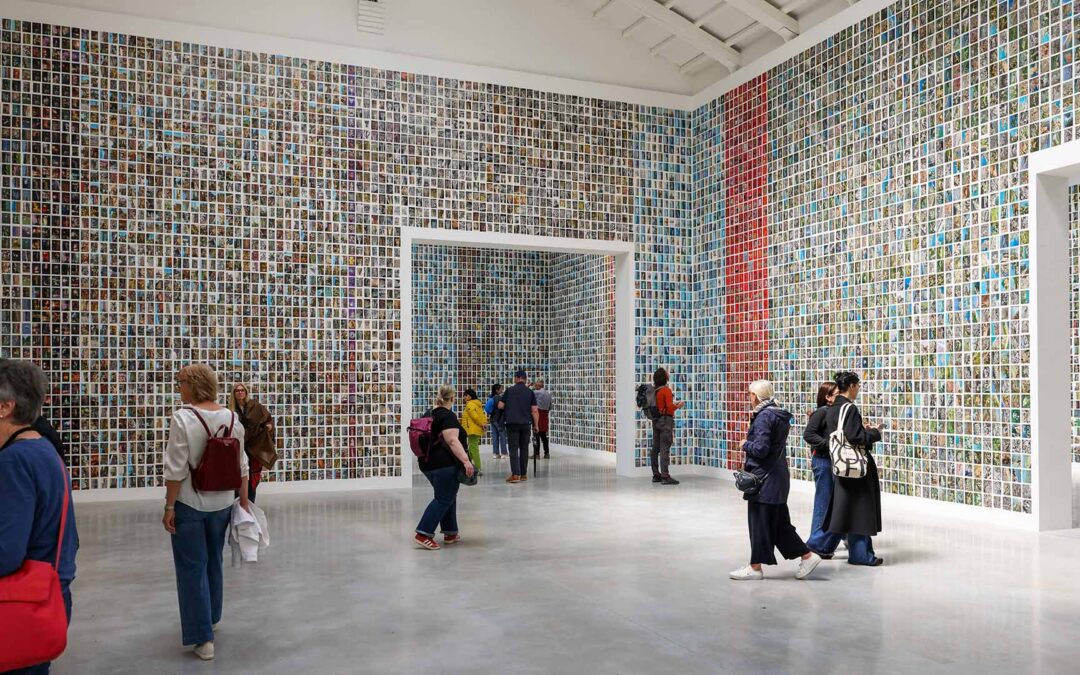
This is the thing about Seoul in 2026. Other cities in Asia work terribly hard to appear sophisticated — the freshly imported chef, the branded lobby, the design language cribbed from an architecture monograph. Seoul has stopped bothering. The confidence is baseline. When Frieze arrived here in 2022 and turned September into an art-world fixture — the fifth edition runs at COEX from the second to the fifth — the tone from the local scene was gracious rather than grateful. Of course Frieze wanted Seoul. Where else were they going to go.
View this post on Instagram
Start with the art, because it’s the shortest walk to the argument. Hannam-dong holds the Leeum, and the Leeum holds a collection most Western museums would sell an atrium for. Around it, the streets have thickened with galleries — some blue-chip international, some quietly Korean, some so new the paint on the door hasn’t cured. Bukchon is the counterweight: hanok houses stacked up the hillside, ceramic studios behind wooden gates, a certain hush the city knows how to enforce when it wants to. Then Seongsu, which the international press insists on calling Brooklyn as if that were still a compliment. It’s the converted shoe factories, the concept stores that sell one thing beautifully, the coffee bars where the barista treats a pour-over with the seriousness of a Kyoto tea ceremony and none of the piety. It’s also where the young Korean design world actually lives, which is why it doesn’t feel like a set.
Then the food, which is by any honest measure among the two or three most exciting scenes in the world right now. Mingles picked up its third Michelin star in early 2025, and the significance is worth pausing on. For a while it was the only three-star kitchen in Korea, and Kang Mingoo got there by taking jang — the fermented pastes that have quietly held Korean cooking together for centuries — completely seriously as a fine-dining vocabulary. A few kilometres away, Onjium works across from the wall of Gyeongbokgung Palace, one Michelin star and a research institute attached, chef Cho Eun-hee reading Joseon-era manuscripts to figure out what a queen actually ate for lunch. This is what Korean fine dining does now. It goes to the archive and comes back with dinner. And then, because Seoul is Seoul, you descend into the basement food hall at Shinsegae or the Hyundai in Yeouido and find a cheese counter, a wagashi maker, and three of the country’s best kimchi producers within a hundred metres of each other, any of which would run a Michelin recommendation elsewhere.
View this post on Instagram
The wider engine — the reason Korean film, music, beauty, and design set the pace globally in 2026 — reads differently from the inside. From the outside it looks like an export machine. From the inside it looks like a city that takes craft, surface, and detail seriously at every possible level, and always has. The beauty counter at Olive Young operates with the technical rigour most cities reserve for their concert halls. The stationery in a Gwanghwamun bookshop is better designed than the branding of most Milan hotels. The whole city runs on the assumption that things should be well made and well presented, and that assumption reaches from the couture atelier in Cheongdam to the convenience-store rice ball.
The luxury infrastructure has finally caught up to what the city already was. The Josun Palace, the Signiel above Lotte World Tower, the Four Seasons in Jongno — the properties are genuinely at level, and the service culture is the quiet Korean kind that doesn’t need to be told twice. Add the wellness apparatus, which is where Seoul is currently ahead of everywhere. The dermatology clinics that treat a facial the way Zurich treats private banking. The jjimjilbang that turn a hangover into a project. The medicinal-tea places where the herbalist takes your pulse before pouring. World Travel Magazine has been watching this settle into a proper luxury circuit for three years now, and it’s ready.
A word on the practical. July in Seoul is warm, sometimes very warm, occasionally wet. The city solves this the way it solves most things: by moving indoors, on purpose, with taste. The gallery districts are climate-controlled. The department store food halls are their own micro-cities. The dining rooms are cold in the good way. Fly Air India or Korean Air non-stop from Delhi in around seven hours and you are, functionally, closer to Seoul than to most of Europe.
Late one Wednesday I was walking Seongsu after dinner. A concept store was still open past ten — one wall of Korean ceramics, one of Belgian shoes, a soundtrack of something ambient and unfamiliar and quite good. Nobody was performing anything. A woman behind the counter was reading. Outside, the city hummed at the pitch it always hums at, which is somewhere between confident and slightly amused. Seoul isn’t catching up to anywhere. Book it before everyone else works that out too. ◼
Subscribe to the latest edition now by clicking here.
© This article was first published online in July 2026 – World Travel Magazine.