[vc_row][vc_column][vc_column_text]Exploring the royal and merchant trails of Rajasthan’s Bikaner
Bikaner, a small town in Rajasthan, India, can surprise you with its opulence. The best way to experience this once flourishing trade town on the Silk Route is to embark on a culinary journey that involves a royal and merchant exploration trail. And it can begin at Narendra Bhawan, the home of the last Maharaja of Bikaner, Narendra Singhji.
Narendra Bhavan, now a luxury boutique hotel, is where the erudite and eccentric Maharaja spent his final days with his 100 dogs, 500 cows and books (including numerous first editions). Ming vases, Dresden crystals, usta gold paintings, Chinese tapestries and other antiques dot the place. Here the Maharaja’s passions have been translated into culinary meditations such as the Literary Lunch and Le Diner Dans le Noir (Dinner in the Dark). Having an elaborate dinner in antique cutlery and crockery while blindfolded can be nerve-wracking and exhilarating. And sensual too!
The Literary lunch kicks off with a passage from Sylvia Plath’s The Bell Jar: “I had developed a passionate taste for cold vichyssoise and caviar and anchovy paste.” The words mingle with braised leeks, goat’s cheese, anchovy paste with balsamic caviar and pomegranate blood under a bell jar.
[/vc_column_text][/vc_column][/vc_row][vc_row][vc_column][vc_column_text]
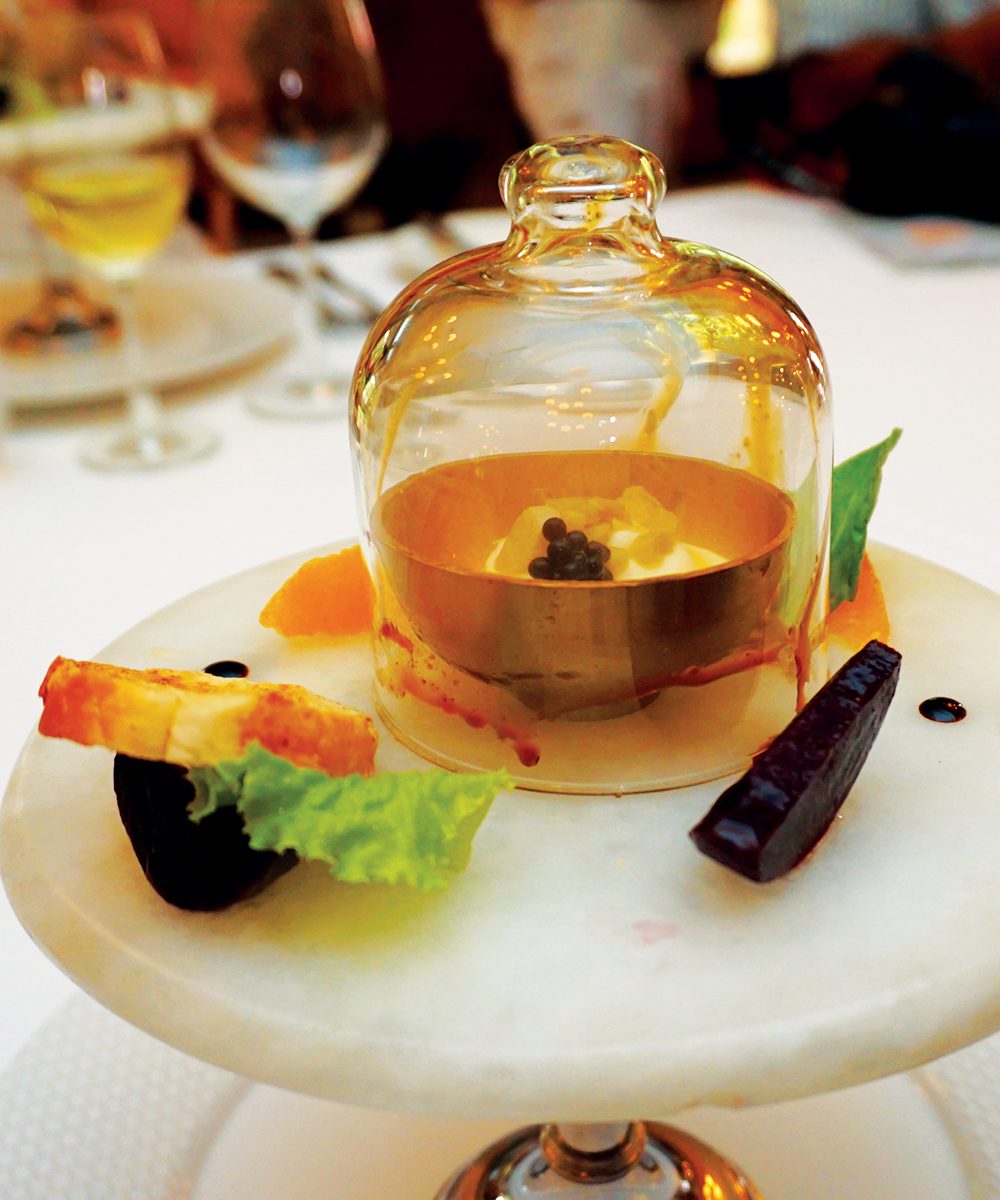
Narendra Bhavan Salt Roasted Beet – The Bell Jar by Sylvia Plath
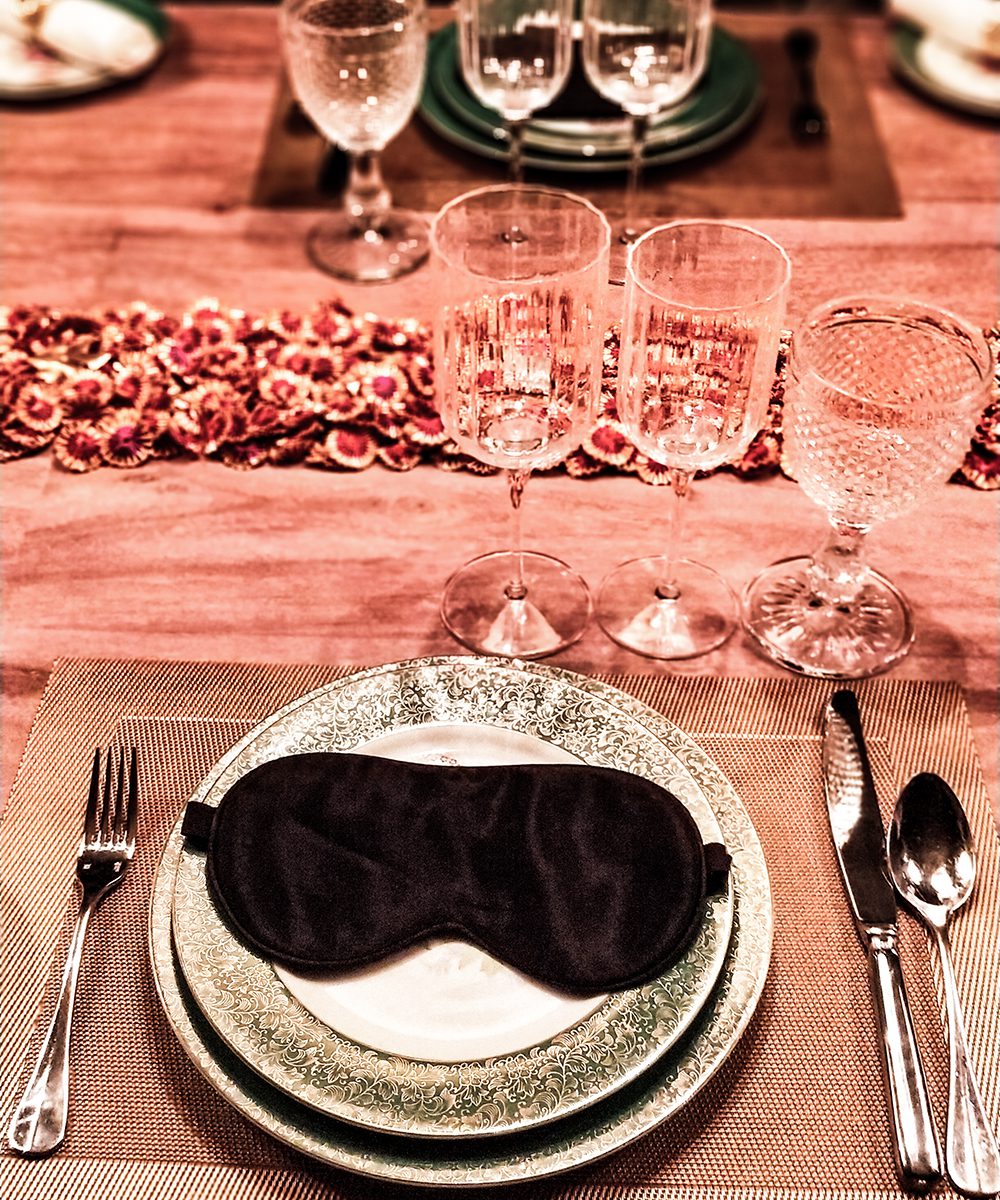
Narendra Bhavan Le Diner Dans le Noir (Dinner in the Dark)
[/vc_column_text][/vc_column][/vc_row][vc_row][vc_column][vc_column_text]
The Literary Lunch, is civilisation at its best. It’s a culinary experience where the menu is paired with literary classics with inferences of food. Shellfish extract with cognac and crushed ship biscuit is brought alive from the pages of Moby Dick. Gnocchi is paired with The Brotherhood of the Grape by John Fante and so on.
Another way to enjoy the royal cuisine is to, opt for Narendra Bhawan’s tour of Bikaner’s palaces and forts, which ends with a royal meal at the Gold Room (embellished with 45 kilograms of gold) in the Laxmi Vilas Palace, erstwhile royal residence now turned into a hotel. The elaborate meal is inspired by the 1927 royal banquet, the menu of which can be seen at the Sadul Museum in the Lallgarh Palace nearby.
The royal tour includes a visit to the Junagarh Fort. Built over 350 years, this palace-fort is a maze of pavilions, mahals (luxurious suites), intricately carved balconies, and miles of walls embedded with precious stones.
[/vc_column_text][/vc_column][/vc_row][vc_row][vc_column][vc_column_text]
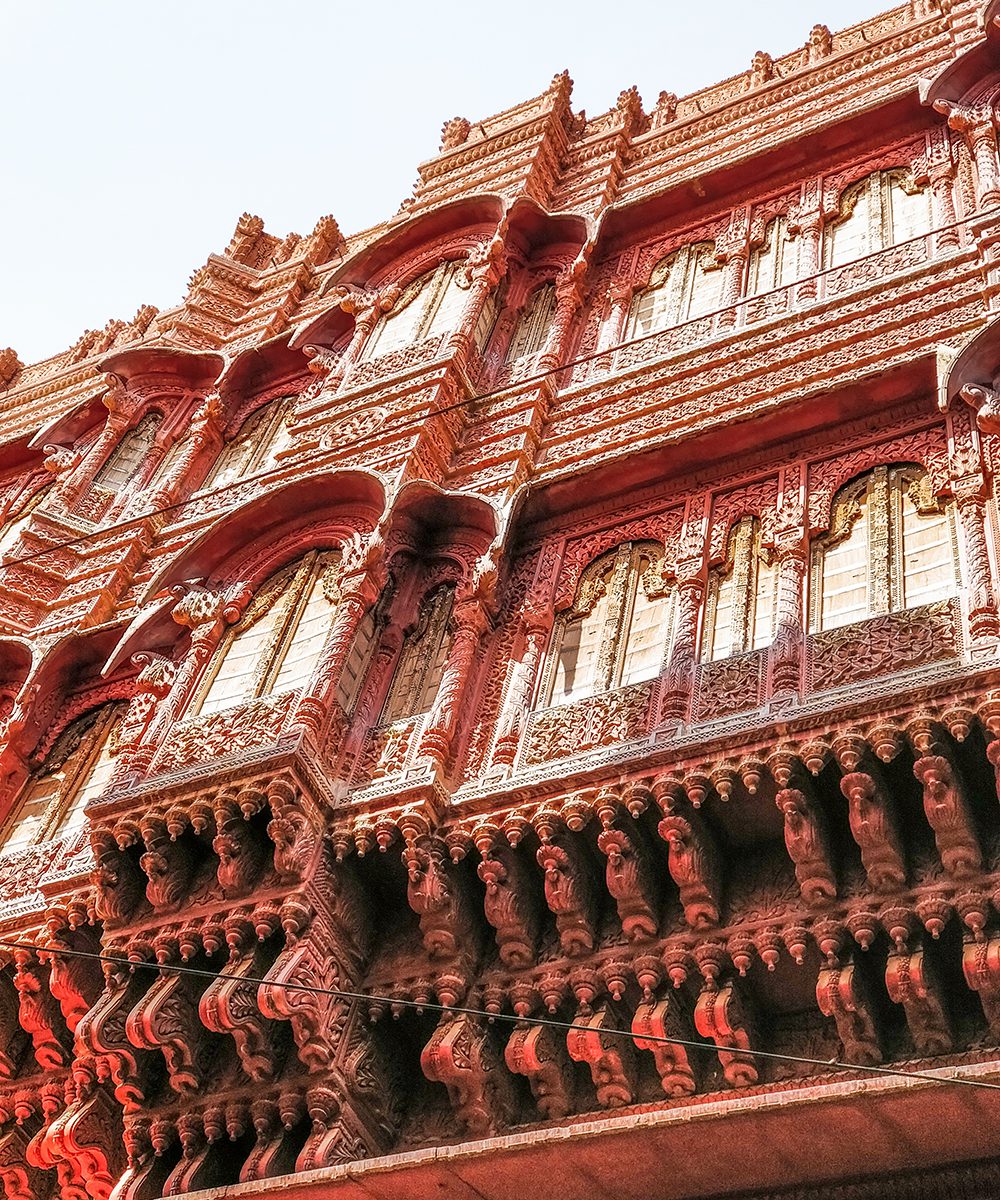
Rampuria Haveli ornatene exterior
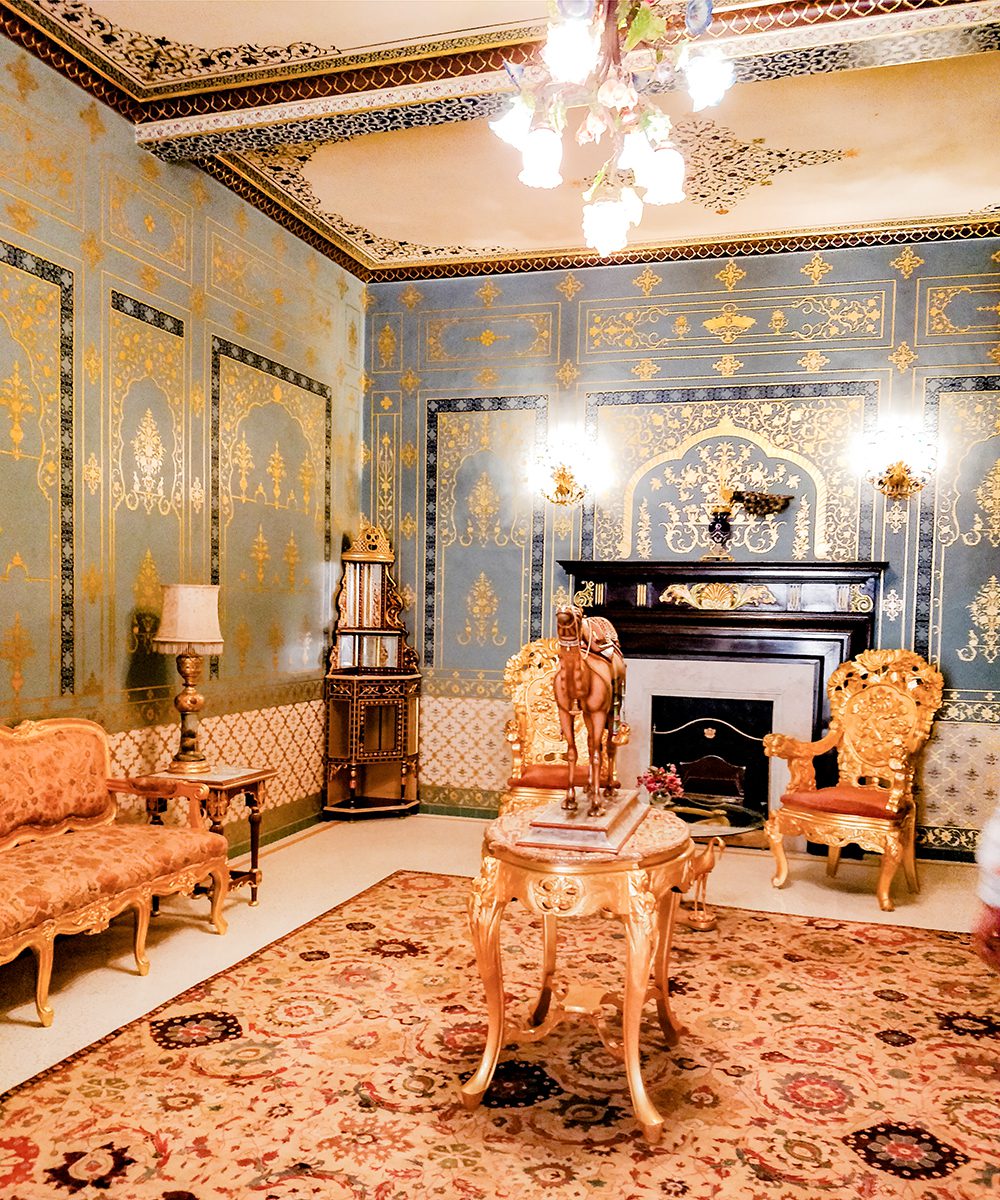
Havelis of Rampuria gilded interiors
[/vc_column_text][/vc_column][/vc_row][vc_row][vc_column][vc_column_text]
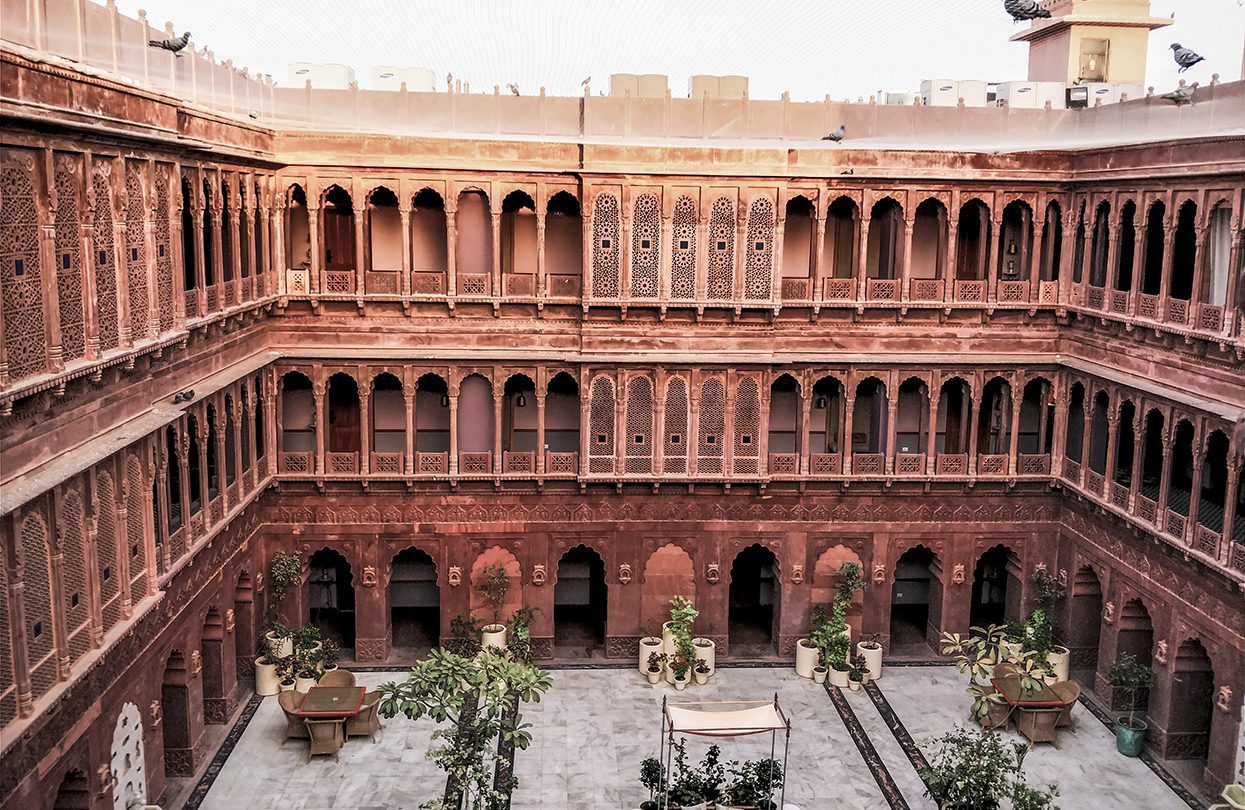
Then there is the merchant exploration trail to Rampuria, a heritage site of grand mansions. The most famous ones are the Rampuria Havelis —a group of seven mansions built by three wealthy brothers. These exquisitely carved pinkish-red Dulmeira stone mansions boast of hundreds of rooms, gold chandeliers and other gilded accoutrements. The ornateness of a haveli was directly proportional to the wealth of its residents. The Rampuria mansions are an amalgamation of Rajputana, European and British architecture.
The trail culminates with a luxurious Marwari meal at Punam Chand Haveli, which was once the residence of a wealthy merchant.
A grandiose evening in Bikaner would mean sipping cocktails by an oasis deep in the desert. Sundowners on the shores of Darbari Lake, which was once a favourite hunting ground of the royals of Bikaner, feasting on a royal hunters meal of quail, rabbit and goat while listening to a flautist playing traditional Rajasthani music is a fitting finale. In Bikaner you can experience an era when grandeur was de riguer. ◼
[/vc_column_text][vc_column_text]Subscribe to the latest edition now by clicking here.
© This article was first published in the Aug Sept 2019 edition of World Travel Magazine.[/vc_column_text][/vc_column][/vc_row]