[vc_row][vc_column][vc_column_text]Africa is a continent famed for its raw, beautiful landscapes and myriad of colourful communities. Serra Cafema, a private camp located in Namibia, offers guests an authentic experience of staying in the desert and interacting with the local community without skimping on the luxury quotient.
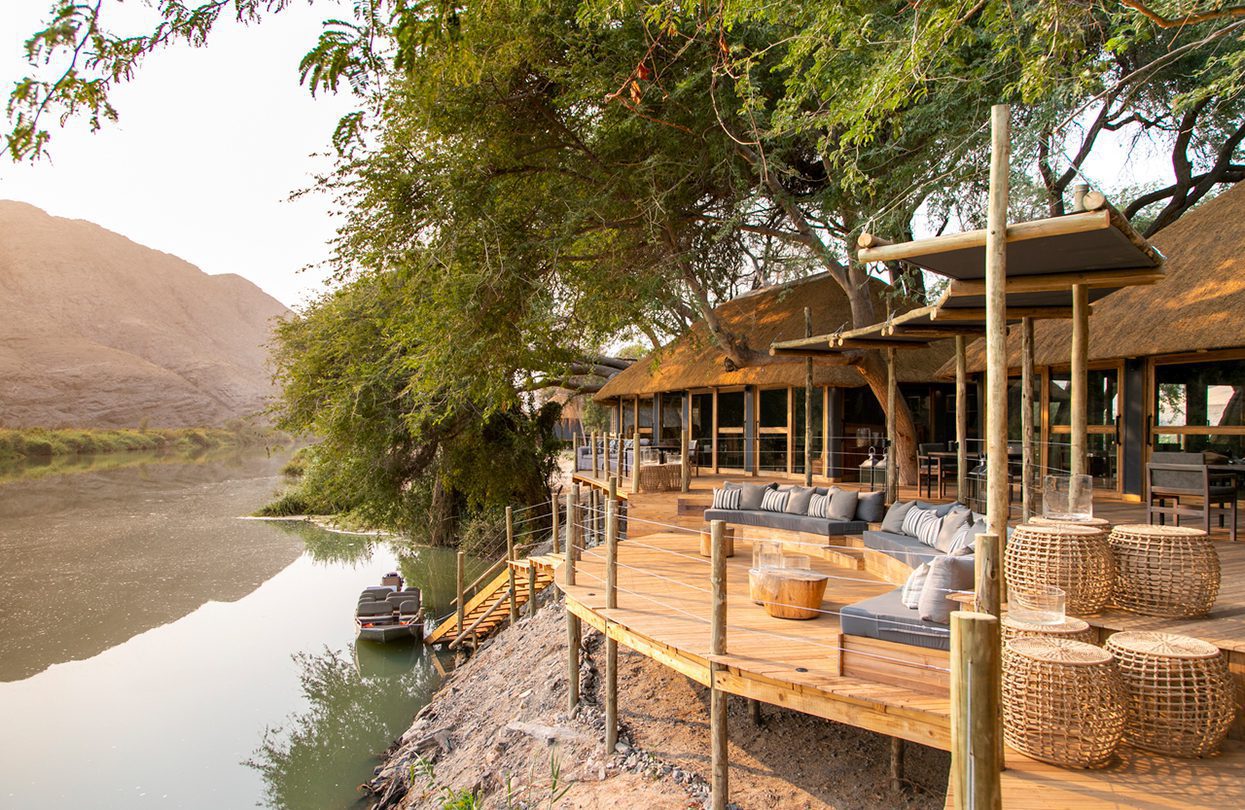
Serra Cafema is one of southern Africa’s most remote camps, perched on the banks of the Kunene River and melding seamlessly amidst the verdant trees. To see a rich, bubbling river amidst one of the world’s driest desert is truly a wonder, second to the majestic landscape that surrounds the camp.[/vc_column_text][/vc_column][/vc_row][vc_row][vc_column][vc_column_text]
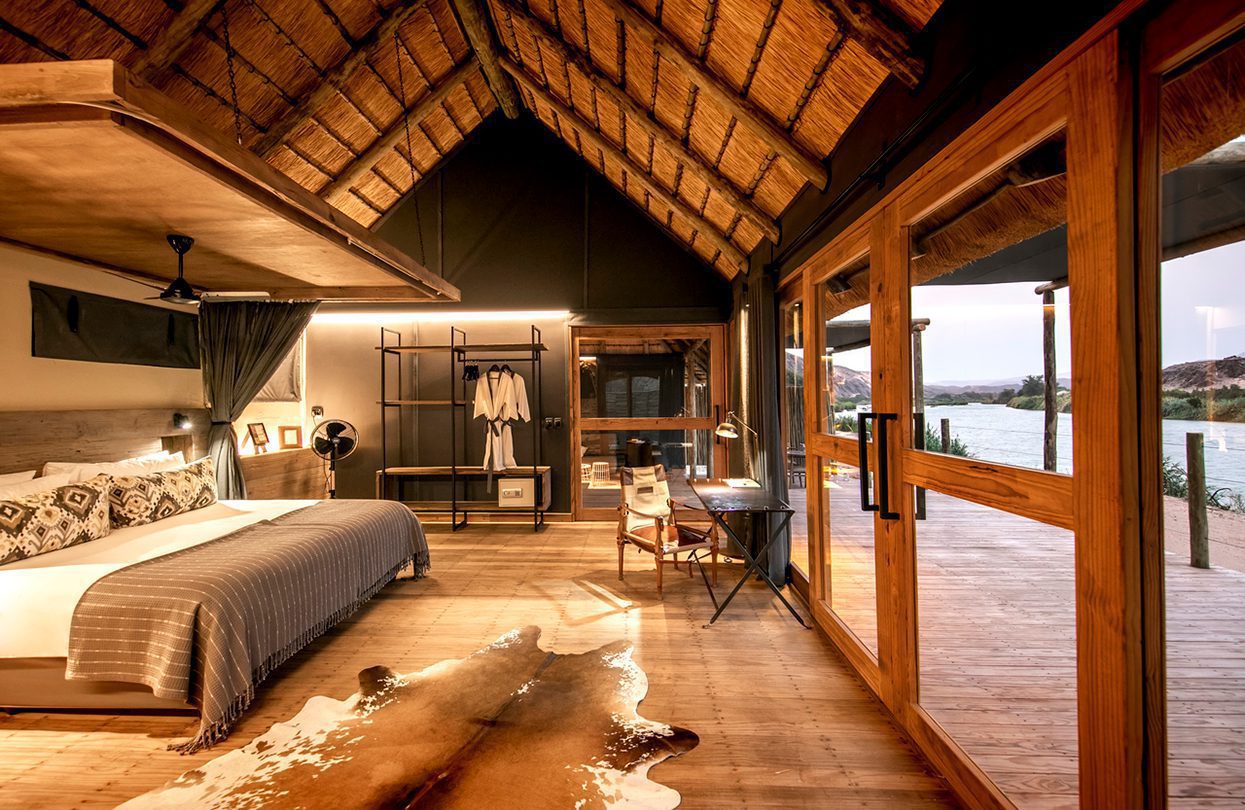
Tents at Serra Cafema mix traditional aesthetics with smooth luxury
[/vc_column_text][/vc_column][/vc_row][vc_row][vc_column][vc_column_text]Though the luxurious accommodations are a given, they are not the main draw of Serra Cafema. Instead, they serve as a means for visitors to learn more about the local community and encourage respectful interaction with the semi-nomadic Himba community that shares the area with visitors.[/vc_column_text][/vc_column][/vc_row][vc_row][vc_column][vc_empty_space][vc_column_text]
Read: Destinations To Watch In 2019 – Namibia→
[/vc_column_text][vc_empty_space][/vc_column][/vc_row][vc_row][vc_column][vc_column_text]The wondrous nature of Namibia is incorporated seamlessly into the camp, with looming ana trees preserved and utilised as shade. Serra Cafema, which is styled and organised to emulate the structure of an authentic Himba village, is also entirely solar powered.
Each of the eight spacious lodgings have sprawling decks that overlook the Kunene River and the mountains of Angola, and are replete with sunken living rooms, oversized canopy beds, outdoor showers, and open-concept dining rooms. The elements that separate Serra Cafema from other lodges lies in the finer details of its opulent fittings.[/vc_column_text][/vc_column][/vc_row][vc_row][vc_column][vc_column_text]
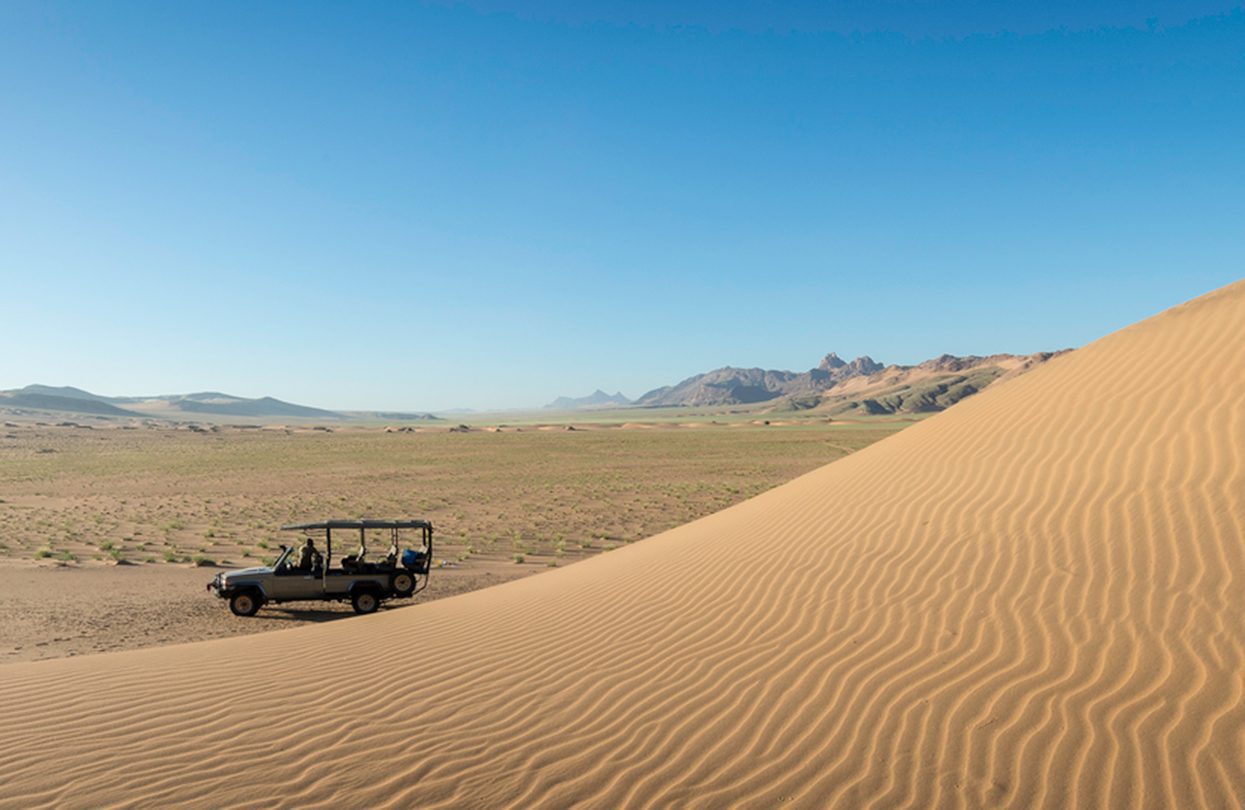
Explore the sprawling dunes at Serra Cafema in style and comfort
[/vc_column_text][/vc_column][/vc_row][vc_row][vc_column][vc_column_text]Woodwork in the camp was designed and crafted by TABLED, a social enterprise made of orphans working for a better future through crafting furniture. Leather plays a big role in the Himba community, which was why local labourers were commissioned to produce rich upholstery and leather touches that can be seen throughout Serra Cafema.[/vc_column_text][/vc_column][/vc_row][vc_row][vc_column][vc_empty_space][vc_column_text]
Read: Ultimate 4×4 horse-back safari experience→
[/vc_column_text][vc_empty_space][/vc_column][/vc_row][vc_row][vc_column][vc_column_text]The camp also has a mutually-beneficial partnership with the Marienfluss Conservancy, an organisation owned primarily by the Himba people. Through this partnership, the native Himba people benefit from lease fees, employment, as well as skill transfer.[/vc_column_text][/vc_column][/vc_row][vc_row][vc_column][vc_column_text]
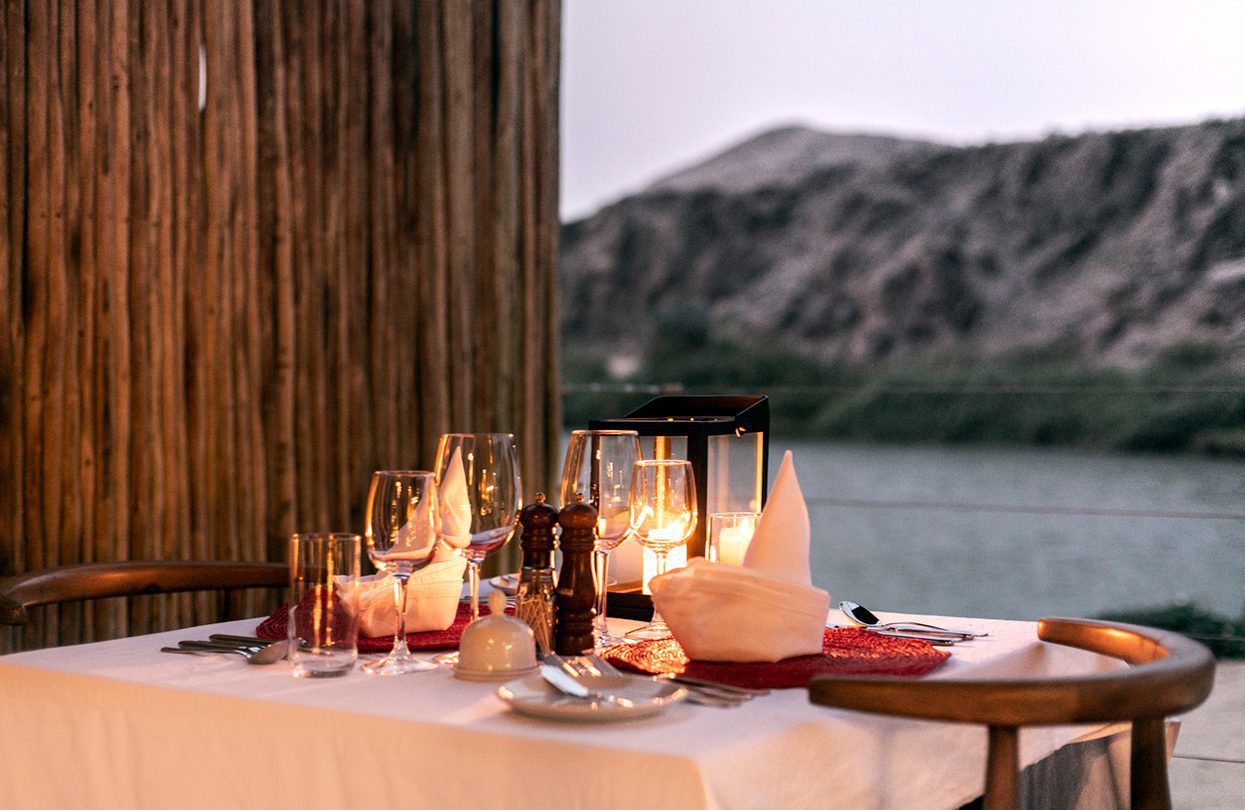
Have dinner in the comfort of your tent overlooking Serra Cafema
[/vc_column_text][/vc_column][/vc_row][vc_row][vc_column][vc_column_text]Every detail, right down to the pleasant perfume used to scent villas – produced by a local group of Himba women who harvest resin from the Omumbiri tree – have been thoughtfully crafted out in a way that celebrates Namibia while also giving back to the locals in a sustainable, respectful way. ◼[/vc_column_text][vc_column_text]Subscribe to the latest edition now by clicking here.
© This article was first published online in Jan 2019 – World Travel Magazine.[/vc_column_text][/vc_column][/vc_row]