|
Listen To Article
|
In July, Phuket is green. Not the marketing green of a rice terrace at golden hour — the actual green of a coast in its wet monsoon, where the Andaman Sea turns opaque, the longtails stay tied up, and the beach clubs run their low-season rates for a reason. This is the Thailand most people picture when they picture Thailand, and right now it is the wrong Thailand.
Two hundred kilometres east, across a narrow isthmus, the calendar reads differently. Koh Samui, Koh Phangan, Koh Tao and the far-eastern Koh Kood are in their driest, clearest, most flattering window of the year. Same country. Same week. Opposite weather. This is the signal most travellers never learn to read: Thailand doesn’t have a season. It has two, running on two coasts, out of phase by roughly six months.
The mechanics are simple and almost nobody bothers with them. The southwest monsoon, which soaks the Andaman side from May through October, largely spares the Gulf of Thailand, which catches its rain later, from the northeast, around November. So the months that empty Phuket fill Samui with sun. The guidebook that tells you to visit Thailand “in winter” is describing one coast and quietly ignoring the other. Read the whole map and the arrow points, in July, unmistakably east.
Start with the anchor. Koh Samui is not a discovery — it is a destination that has quietly assembled a genuinely serious luxury bench while the crowds looked elsewhere. Six Senses Samui sits on a headland above the water at the island’s northern tip, its villas stepped down a slope toward the Gulf, and in July it delivers exactly what it promises: flat morning seas, dry evenings, and the kind of light that makes the infinity edge disappear. Four Seasons Koh Samui, on the quieter west coast at Laem Yai, spends these months doing its best work — long swimmable afternoons, sunsets that arrive on schedule rather than behind a wall of cloud. These are not shoulder-season hotels making the most of a bad hand. July is their hand.
Connectivity has caught up with the offering, which is what turns a pattern into an opportunity. Bangkok Airways still runs the Samui route dense enough to feel like a shuttle — hundreds of Bangkok flights a week — but the more telling signal is the new direct service from Kuala Lumpur’s Subang and the terminal expansion now underway to lift Samui’s airport toward six million passengers a year. An island gets easier to reach at precisely the moment its best season is least understood. That gap — between how good July is and how few people have priced it in — is the entire trade.
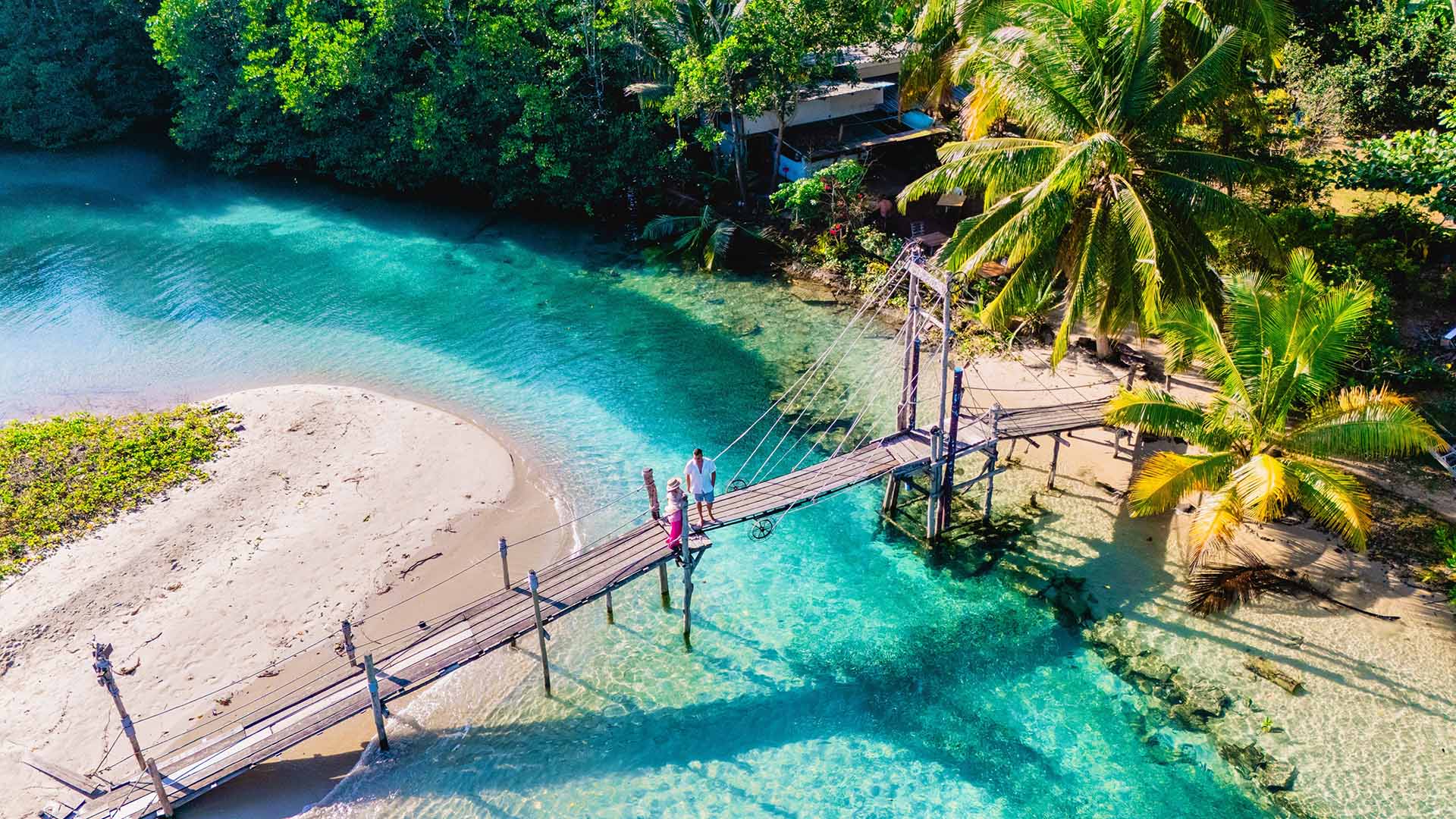
Then there is the frontier. Fly to Trat, transfer by boat, and the Gulf keeps going east to Koh Kood, an island still measured in dirt roads and empty coves, where Soneva Kiri occupies a scale of privacy that no amount of Samui polish can replicate. This is the one for the traveller who collects places before they have a consensus. The villas run one to five bedrooms, each with its own pool; the resort’s signature is Treepod Dining, where a bamboo pod is winched thirty-six feet into the forest canopy and a waiter descends by zipline to serve you above the treetops. It reads as theatre. It plays as something rarer — a resort that treats its island as the point rather than the backdrop, in a corner of the Gulf that July renders flat, warm and almost entirely yours. Koh Kood is the signal to watch precisely because so few have watched it yet.

Island of Koh Kood, Image by fokke baarssen, Shutterstock
Koh Phangan deserves rescuing from its own reputation. The full-moon party is real, monthly, and confined to one beach on the south coast; the rest of the island has spent the last decade becoming something else. The north, around Chaloklum and Thong Nai Pan, has grown into one of the region’s more serious wellness addresses — fasting programmes, breathwork, proper Thai spa traditions rather than the resort-menu version, drawing the kind of traveller who comes to reset rather than to be seen. In July the northern bays are calm and the ferries from Samui take under an hour, which makes a split stay effortless: sophistication on one island, restoration on the next, no monsoon in between.
The practical read is the part worth acting on. July pricing and availability across the Gulf favour whoever understood the calendar first — this is high season by weather and low season by habit, a mismatch that rewards the informed. The seas matter too: the Gulf’s calmer July water is why Koh Tao remains one of Asia’s most reliable dive-training grounds through these months, and why families who would find the Andaman surf too rough find the Gulf’s flat bays ideal. Route it as a triangle — Bangkok in, Samui as base, Phangan or Koh Kood as the second act, Bangkok out — and the whole thing runs on short hops and dry skies.
One more note for the table. Thai cooking is the quiet hero of any Gulf itinerary for anyone who doesn’t eat meat: the green curries, the som tam, the coconut-and-lemongrass architecture of the food adapts to vegetarian without apology or downgrade, and the island kitchens — from Soneva Kiri’s eight dining rooms to Samui’s beach shacks — treat it as a cuisine rather than a concession.
The World Travel Magazine view is that the smartest travellers don’t fight the season — they read it, and in July the read is east. Watch Koh Kood as it moves from frontier to fixture, and watch the drone and ferry links now being drawn between the Gulf islands, because the next signal is already forming: when the calendar flip stops being a secret, the islands that traded on being empty will have to trade on something else. Go while empty is still the offer. ◼
Subscribe to the latest edition now by clicking here.
© This article was first published online in July 2026 – World Travel Magazine.